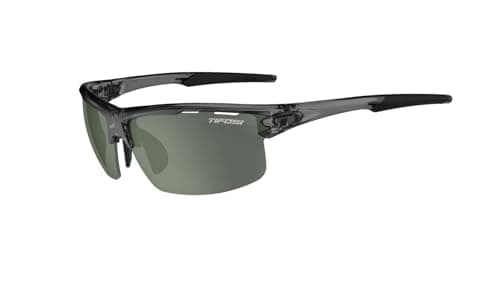
Why a golf lens is different from a normal one
General sunglasses are built to cut brightness. A golf lens is built to do something more specific: increase the contrast between green and white, so the ball stands out against grass and the subtle changes in the putting surface become easier to read.
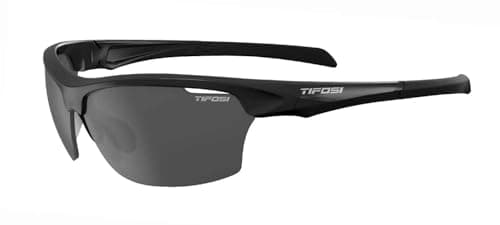
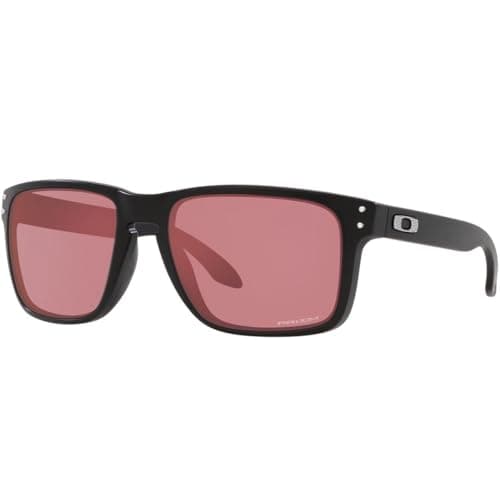
Manufacturers do this with a tint that suppresses parts of the spectrum and lifts others. Oakley calls its version Prizm Golf, Tifosi calls its version an Enliven or golf tint. The claim is theirs and we are repeating it rather than testing it — but the underlying idea, selective filtering to raise contrast, is straightforward optics rather than marketing invention.
The polarization question
Polarized lenses cut glare off flat surfaces, which is superb on water and useful on a wet fairway. There is one genuine trade-off worth knowing before you buy: polarization interacts badly with some LCD screens, so a golfer reading a rangefinder display or a phone through polarized lenses may see it dim or blank at certain angles.
In practice most golfers tilt their head and get on with it. But if the person you are buying for is a heavy rangefinder or GPS user, a non-polarized golf tint is the safer choice, and it is not a downgrade — plenty of dedicated golf lenses are deliberately not polarized for exactly this reason.
Fit matters more than lens quality
The single most common complaint about sunglasses on a golf course is not optical, it is that they slide down the nose during a swing and end up in a pocket for the rest of the round. Sports frames solve this with grippy nose pads and temple arms — often with a rubber compound that grips harder when damp.
That is why an eighty-dollar sports frame is frequently a better golf gift than a two-hundred-dollar fashion frame. Weight matters too: anything under about 30 grams stops being noticeable, and a frame that is not noticeable is a frame that stays on.
How to pick a shape without knowing their face
You do not need to. Sunglasses have no size in the sense that shoes and gloves do, and the two things that matter — nose bridge and frame width — are forgiving on a sports frame because the arms flex.
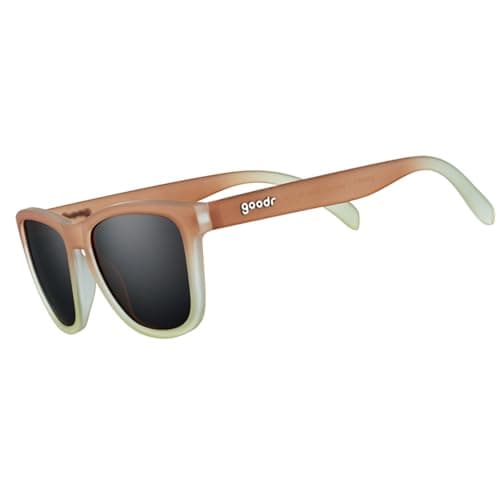
Two practical rules. If they wear big frames, avoid the smaller shapes: goodr's OG fit and similar medium frames run closer to small than universal. And if they wear a baseball cap on the course, which almost every golfer does, a lower-profile frame sits better under the brim than a tall wraparound.
The price tiers, honestly
At $30 you get a golf tint on a light sports frame that will not embarrass anyone. That is a real gift, and the low price is genuinely useful because golf sunglasses get sat on, lost and left on cart roofs more than any other accessory in this guide.
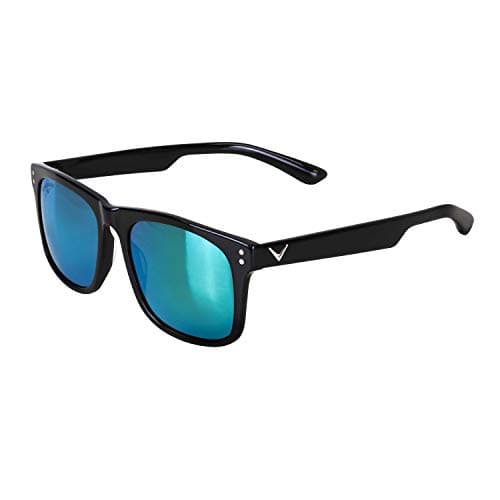
At $100 you are buying a golf brand's own line — the name on the arm does the gift work, because it says the present was chosen for their hobby rather than picked off a rack.
At $180 and up you are buying Oakley: the frame everyone recognizes and a lens the manufacturer engineers specifically for this sport. It is a genuine luxury version of a thing they already own, which is the definition of a good present for a golfer who has everything.