The one question that decides everything
Golf bags split into two types that are not interchangeable, and picking the wrong one means giving someone a downgrade wrapped in a bow.
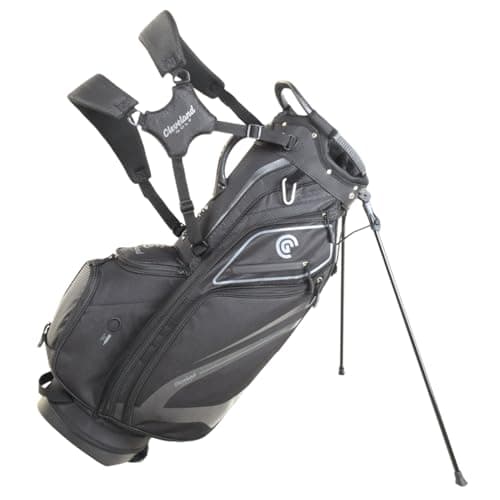
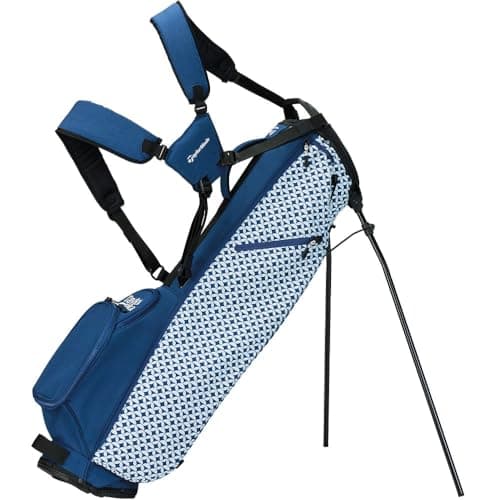
Stand bags(also called carry bags) are light, have two legs that flip out so the bag stands up, and have two shoulder straps so they're carried like a backpack. They're for golfers who walk.
Cart bagsare heavier, hold much more, and have a flat base and a strap channel designed for sitting on the back of a golf cart. They usually have no useful carrying strap at all, because they're not meant to be carried.
The tell is easy: look for the legs. Two thin metal legs that fold out from the back means a stand bag and a golfer who walks. Full comparison in stand bags vs cart bags.
What "4-way" and "14-way" mean
The top of a golf bag is divided into slots. A 4-way top has four compartments that clubs share; a 14-way top has one slot per club, since a full set is fourteen clubs.
More dividers means less rattling and tangling, and it's much easier to find a club. It also adds weight — which is why carry bags tend toward 4 or 5 dividers and cart bags, where weight doesn't matter, go to 14.
Weight is the whole argument for a walker
A golfer walking eighteen holes covers around five miles carrying everything on their back for four hours. Every ounce is felt by the end.
Ultralight bags get light by having less of everything — fewer pockets, less padding, fewer dividers. That's a genuine trade, not a flaw: a golfer who carries a jacket, a cooler and three dozen balls will find an ultralight bag cramped, while one who takes clubs and a bottle of water will love it.
Should you buy someone a bag at all?
Honestly, sometimes not. A golf bag is visible, personal, and usually chosen deliberately — it sits next to them for four hours in front of their friends. Replacing a functional bag somebody picked themselves is a harder gift to land than its price suggests.
Where a bag isa great gift: when their current one is visibly worn out, when they've switched from riding to walking (or the reverse) and are using the wrong type, or when they don't own a small bag for quick nine-hole rounds.
The under-appreciated option
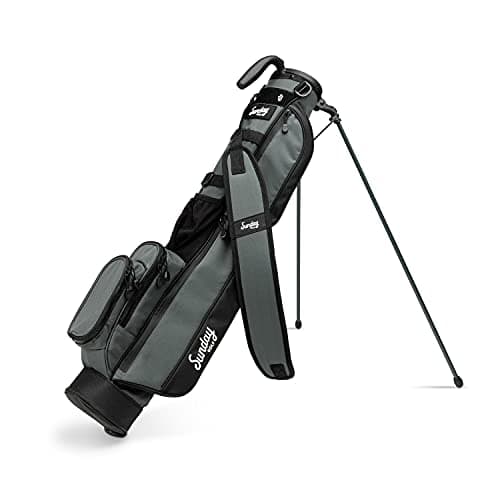
A small "Sunday bag" — built for a partial set rather than a full fourteen — is the bag most golfers don't own and would use more than they expect. Range trips, par-3 courses, a quick nine after work. Because it's a second bag rather than a replacement, it also sidesteps the whole problem above.
One last filter worth applying: if the recipient walks rather than rides, bag weight stops being a specification and becomes the whole point. Gifts for golfers who walk re-sorts this category and the push carts around that one constraint.
If what you actually want to know is how much of this is worth paying for, the short answer is that everything above the mid band is spent removing ounces rather than adding capacity - how much should you spend on a golf bag takes the three price bands in turn and says who each one is for.
Once the bag is chosen, where it lives for the other six days of the week matters more than most golfers think. How to store golf clubs covers the garage, the car trunk and the small apartment, and makes the case that moisture rather than cold is the thing that actually damages a set.
Before you replace one, check whether it just needs cleaning
A bag that looks finished is sometimes a bag that has been standing on wet grass for three seasons. How to clean a golf bag covers the manufacturer-published method and, more usefully, the four failures that mean the bag is genuinely past it rather than dirty: torn fabric, zips that no longer close, a collapsing structure, and a smell that survives a deep clean. The last one is the decisive test, and it is the reason a cheap bag that lived in a damp garage is not worth saving.