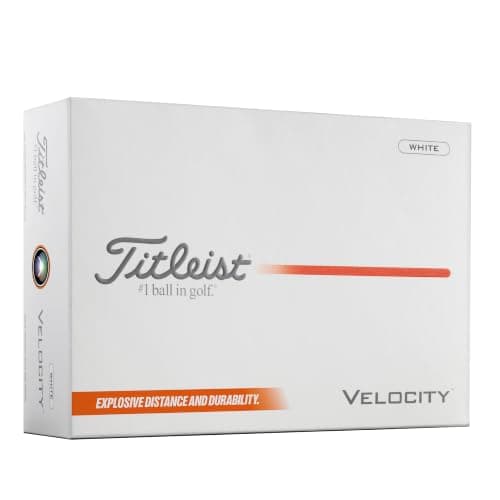
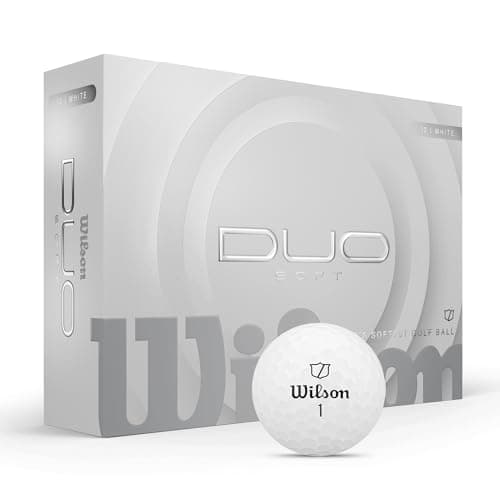
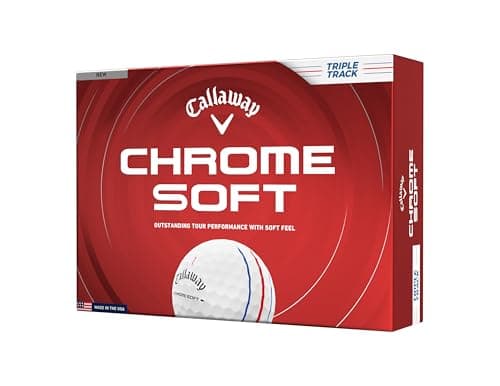
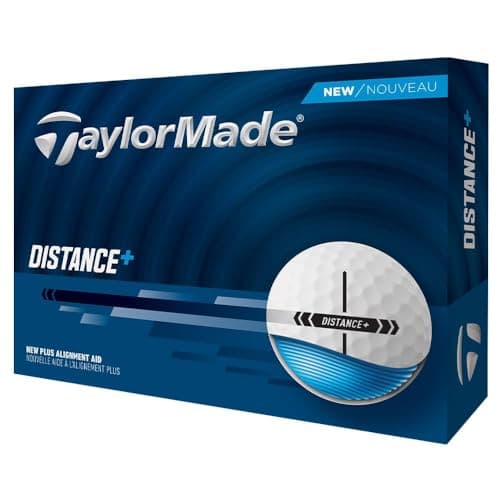
The only spec you need to understand
Golf ball marketing is dense with numbers. Almost all of it is noise for a gift buyer, and exactly one figure is worth knowing: compression.
Compression is how much the ball squashes when it's hit. Manufacturers publish it as a number, roughly 30 to 100. A lower number means a softer ball that deforms more easily, which means a slower swing can still compress it properly. A higher number needs a faster swing to get the same effect.
The practical translation: soft ball for a slower or newer golfer, firmer ball for someone who hits it hard.If you don't know which they are, pick soft — the penalty for a soft ball in fast hands is much smaller than the penalty the other way round. We wrote this up properly in golf ball compression explained.
Why tour balls cost twice as much
The premium balls — Pro V1, Chrome Soft and their equivalents — have a urethane cover. Cheaper balls use a harder plastic called ionomer.
Urethane is softer, which lets the clubface grip the ball and put spin on it. For a good player, that spin is control: a shot that lands on the green and stops rather than bouncing over the back. For a player who can't generate that spin consistently, it's an expense that does very little.
This is the entire argument, and it's why "buy the best ball" is bad gift advice. The best ball for a golfer of two years' standing is not the one on television.
The two-piece / three-piece thing
You'll see balls described as two-piece, three-piece or more. That's the number of distinct layers inside. More layers means more ways to tune how the ball behaves at different swing speeds; it also means more cost.
For gift purposes: two-piece balls are simple, durable and cheap and are what most amateur golfers should play. Anything with more layers is aimed at a player who can tell the difference. That's the whole summary. There is a longer version in soft versus distance balls.
How many balls does a golfer actually need?
More than you'd think. A reasonable club golfer might lose one or two a round; a beginner can lose six or more. That is why balls work as a gift at all — they are one of the few things in golf that genuinely get consumed rather than accumulated.
It also means a single dozen is a modest gift for a keen golfer and a substantial one for a casual player. Two dozen of a mid-priced ball is often a better present than one dozen of the expensive one. See how many golf balls a golfer needs.
Brand loyalty is real, and it matters
Golfers get genuinely attached to one ball model. Switching changes how shots feel and behave around the green, so it's a real decision for them rather than a free upgrade you're handing over.
If you can see what's in their bag, match it — that is the highest-confidence golf gift available, and it requires no judgment from you at all. If you can't, a soft ball from a major brand is the safest default.
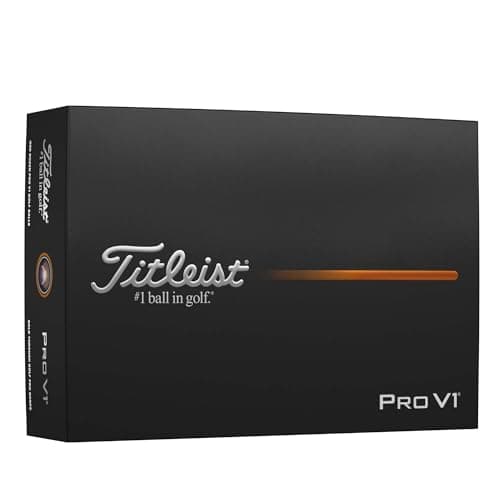
One last thing if a premium dozen is the plan and you have seen the Titleist name on their box. There are two Pro V1 models, they cost the same, and the x is not the upgrade - Pro V1 vs Pro V1x explains what the letter actually changes and which to buy when you cannot check.