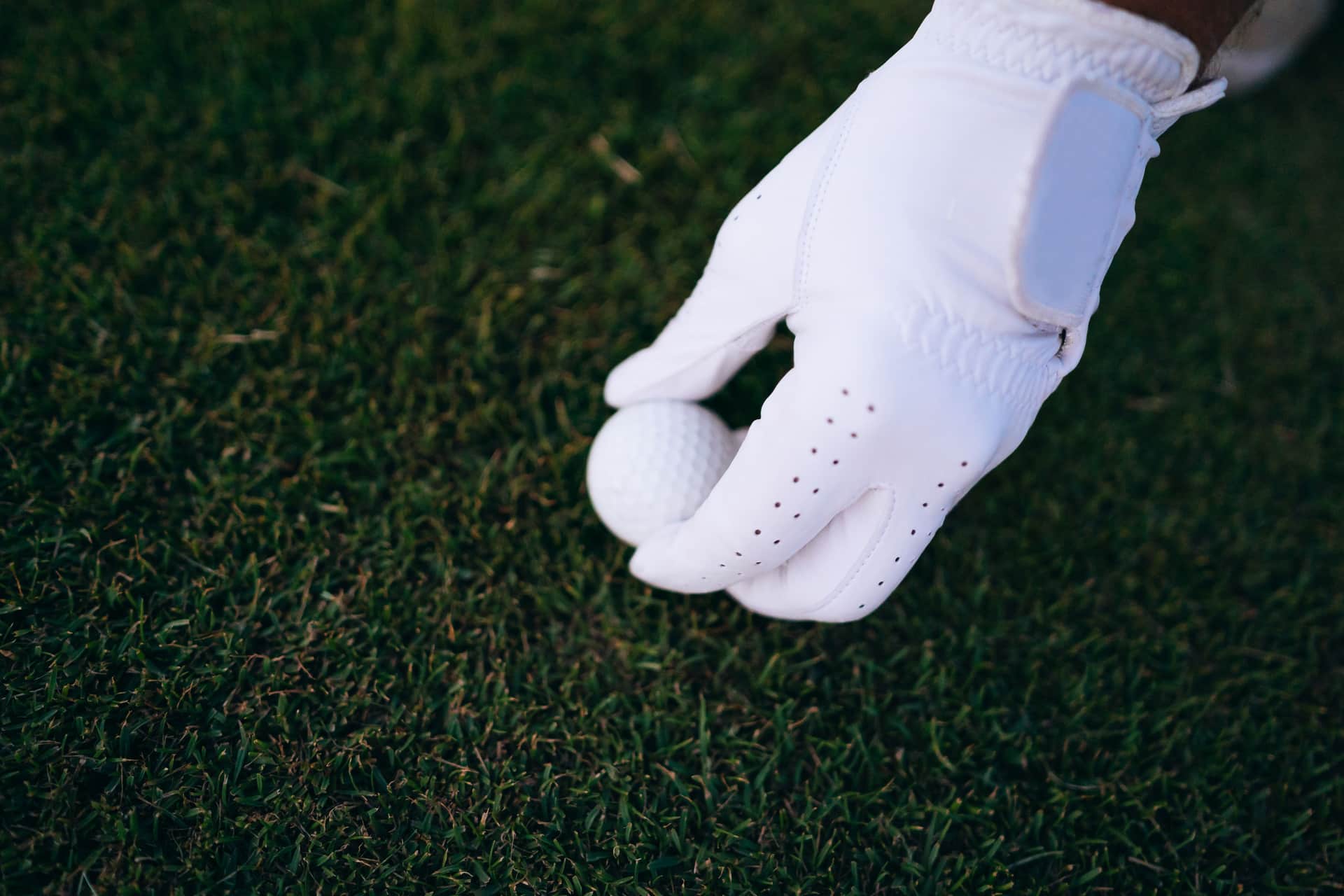
1. Buying a glove for the wrong hand
This is the most common single mistake and it makes the gift completely unusable rather than merely imperfect.
Golfers wear one glove, on their weaker hand — the one at the top of the grip. So a right-handed golfer wears a glove on the lefthand and buys one labeled "worn on left hand". A left-handed golfer does the opposite.
Every listing states this explicitly in the product title, so it's easy to get right once you know it exists. It's just very easy to get wrong if you don't. Full explanation here.
2. Buying shoes or apparel without a verified size
Golf shoes are worn for around five miles of walking on uneven, often wet ground, while making a movement that puts real lateral force through the foot. They need a length and a width, and sizing conventions differ meaningfully between brands.
Estimating from someone's normal shoe size is not good enough. If you can read the size off a pair in their closet, go ahead; if not, buy something else and offer to go shopping together. See our golf shoe guide, which spends most of its length on exactly this.
3. Buying clubs or a putter
Golf clubs are fitted to a person's height, arm length, swing speed and hand size. A set bought blind is likely to be wrong in a way the recipient can't diagnose — they won't think "these clubs are too long for me", they'll just play badly and assume it's them.
A putter is worse. It's the most personal club in the bag, golfers are genuinely superstitious about them, and a putter someone didn't choose almost never gets used.
If clubs really are what's needed, contribute toward a fitting or toward a set they pick themselves. Less fun to wrap, far more useful.
4. Buying off-brand golf balls
A dozen unbranded golf balls costs about what a good towel does, and any golfer identifies them instantly. The gift then communicates a budget rather than a thought.
This isn't snobbery about performance — cheap balls are legal and they fly. It's that golf balls are one of the few things in the game where the brand is printed on the object and visible to everyone in the group.
If your budget is genuinely tight, the cheapest brand-name dozen beats a bigger box of something unrecognized, and a $10 magnetic towel they use every round beats both.
5. Duplicating something expensive
Rangefinders, GPS watches, push carts and bags all last for years, and nobody needs two. These are also the most common "big" golf gifts, which is exactly why the duplication happens.
The check takes thirty seconds: look at the outside of their golf bag for a small rectangular pouch about the size of a chunky compact camera, usually clipped or magnetized to the strap. That's a rangefinder case. If it's there, look at what to buy a golfer who has everything instead.
The honorable mentions
Lessons, bought unprompted.A generous idea that can read as a comment on how they play. Fine if they've said they want to improve; risky if they haven't raised it.
A replacement bag they didn't ask for. Bags are visible, personal and usually chosen deliberately. Replacing a functional one is harder to land than the price suggests.
Novelty items as the main gift. Perfect in a stocking, thin as the primary present.
One mistake that is not about the product at all: assuming a golf club can be wrapped. The silhouette gives it away every time, which is why how to wrap a golf club as a gift spends as much time on disguising it as on the paper - and makes the case for not surprising anybody with a club whose hand and flex you cannot confirm.