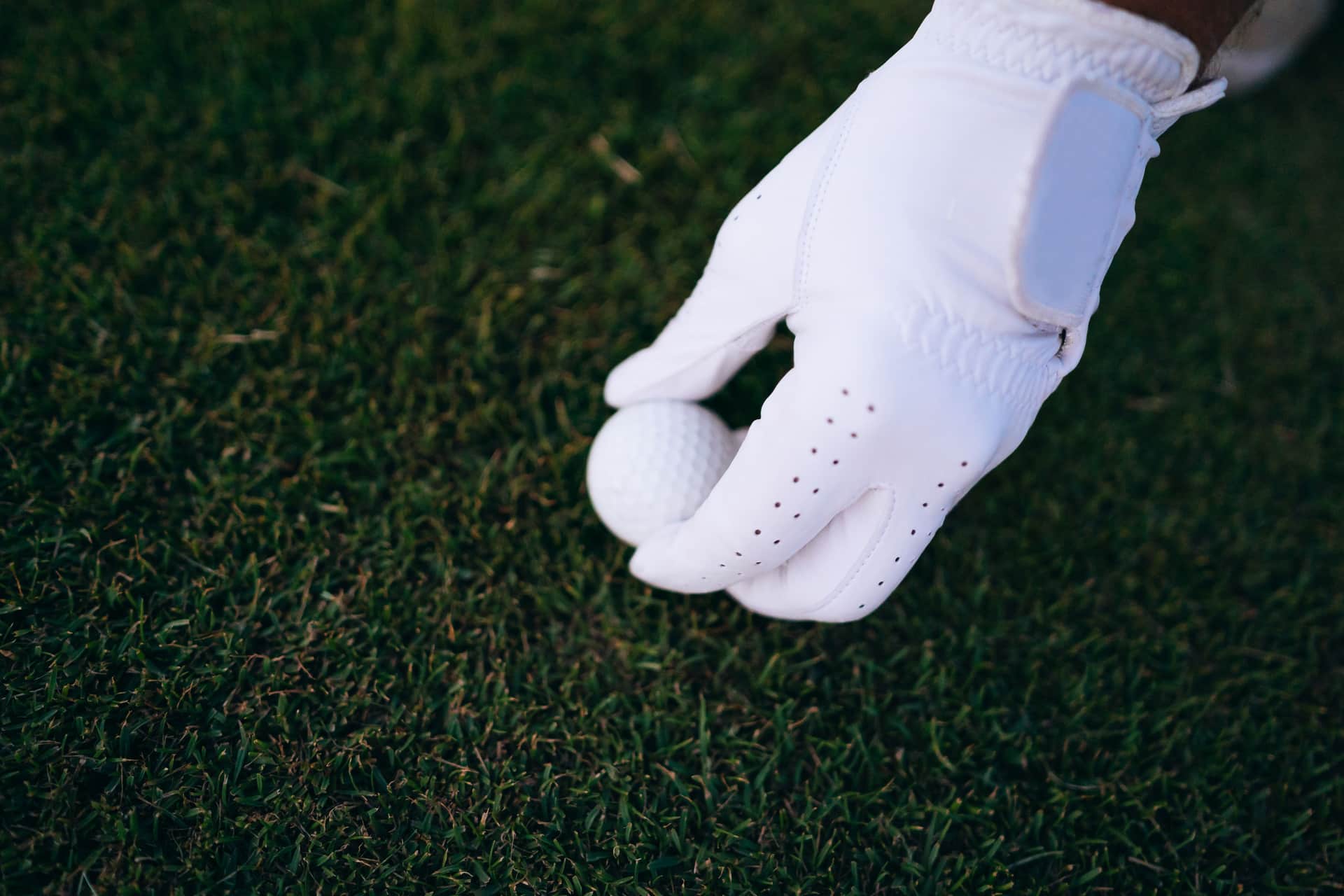
What leather does better
One thing, and it's the thing serious golfers care about: feel.
Leather can be made much thinner than synthetic while still gripping, which means less material between the hand and the club. A golfer who plays weekly notices that immediately and most of them prefer it.
Leather also molds to the hand over the first few rounds, so a leather glove fits better after a month than it did new — assuming it was the right size to begin with.
What synthetic does better
Everything else, honestly.
It lasts. A synthetic glove survives several times as many rounds as a leather one before the palm goes shiny or the thumb splits.
It handles moisture. Leather goes slick when soaked and then dries stiff and slightly shrunken. Synthetic shrugs that off, which matters for anyone playing early mornings or in a humid climate.
It costs less.Often much less, and it's frequently sold in two-packs — which is why rotating two gloves is practical at synthetic prices and expensive at leather ones.
Hybrids
Most mid-price gloves are actually a mix: leather across the palm where feel matters, synthetic across the back of the hand where flexibility and durability do.
This is a genuinely sensible design rather than a compromise, and hybrids are what a lot of golfers end up buying without particularly noticing. If a listing mentions leather palm and synthetic back, that's what it is.
Which to buy as a gift
The reasoning is about consumption rather than quality.
Gloves wear out on a schedule, and most golfers put off replacing them — playing on with one that's gone stiff. A two-pack of synthetic gloves means they replace it now and have a spare, and rotating the two makes both last longer than either would alone.
A single premium leather glove costs about the same and gives them one glove that wears out faster. As a gift, the two-pack is the better object even though the leather one is the nicer object.
The exception:a golfer who plays weekly and has opinions about equipment will genuinely appreciate a good leather glove, because it's an upgrade they feel every shot. If that's who you're buying for, buy leather.
Rain gloves are a third category
Worth knowing about because they confuse the picture. Rain gloves are a synthetic knit that grips better wet than dry, sold in pairs and worn on both hands.
They're not a leather-or-synthetic choice — they're a separate product for a separate situation, and almost nobody buys them for themselves, which makes them an unusually good gift. Our glove guide includes a pair.