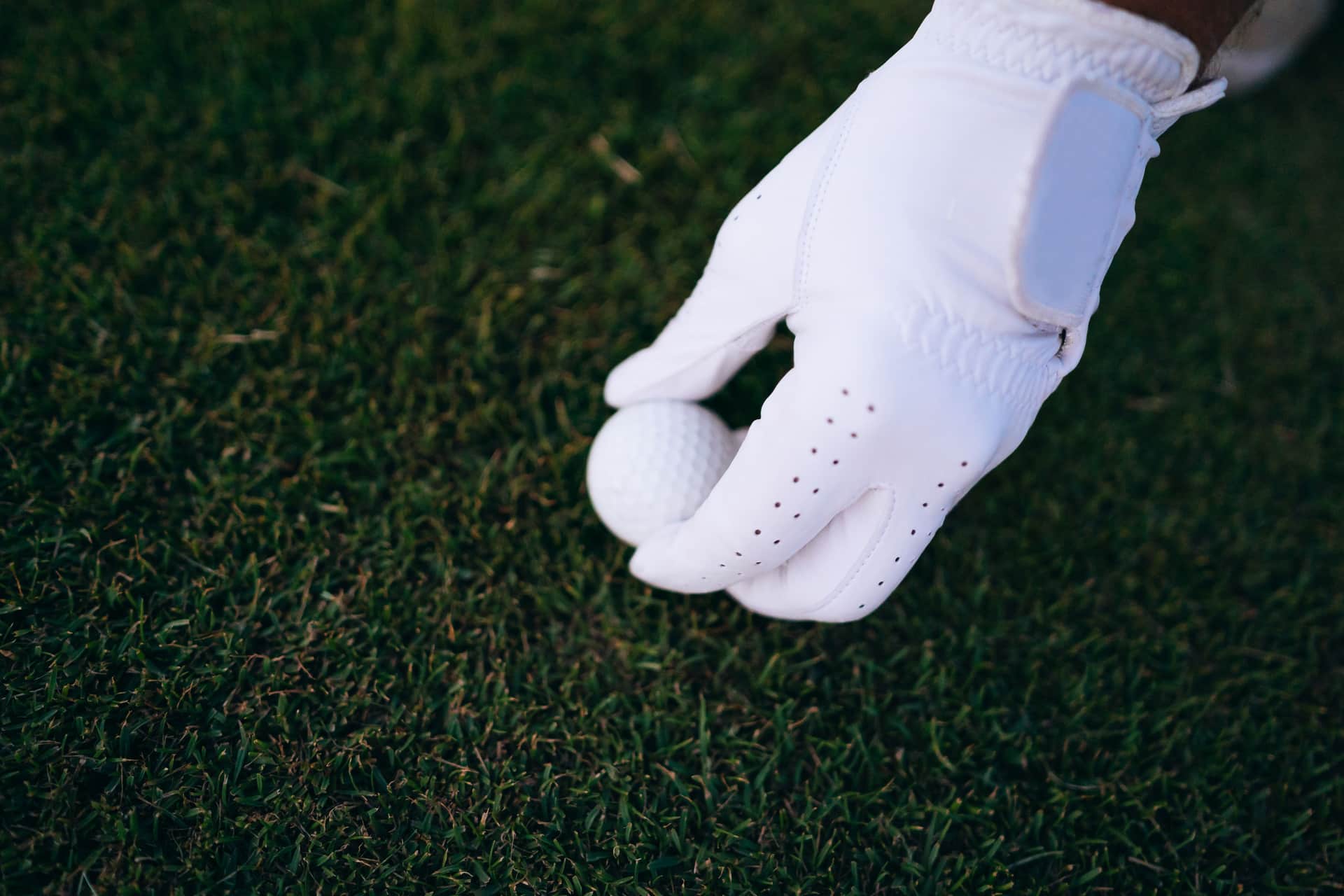
1. Material — the real decision
Golf gloves are made from leather, a synthetic, or a mix of the two, and this is a genuine trade rather than a better/worse.
Leatheris thinner and softer, so there's less between hand and club. Golfers who play a lot generally prefer it and can feel the difference immediately. It also wears out faster and goes slick when soaked, then stiff when it dries.
Synthetic is thicker and less refined but considerably more durable, and it handles sweat and damp better. For a golfer who plays a few times a month, it lasts several times longer.
Hybrids put leather on the palm where feel matters and synthetic across the back where flexibility and durability do. Most of the popular mid-price gloves are built this way. Full comparison: leather vs synthetic.
2. Fit — more important than material
A golf glove should be genuinely snug, like a second skin. Loose material in the palm bunches under the grip, which is worse than wearing no glove at all — it moves when the club moves, which is the exact opposite of the point.
The check: a properly fitting glove has no slack across the palm and no spare material at the fingertips. New leather gloves feel slightly tight and give a little with use; synthetic ones don't stretch much, so buy those closer to true.
This is why getting the size right matters more than which glove you buy.
3. The thumb seam
Golf gloves nearly always fail at the thumb first. The thumb sits along the grip and flexes on every swing, and the seam there takes the strain.
Better gloves reinforce it — extra stitching, a doubled panel, or a seam placed away from the wear point. It's not a headline feature and it's the single biggest difference in how long a glove lasts.
4. Breathability
Sweat is what kills gloves, so anything that helps a glove dry between shots extends its life. Most decent gloves have perforations across the knuckles and mesh or elasticated panels between the fingers.
This matters more in hot climates than temperate ones, but it costs nothing extra and is a reasonable signal that a glove was designed rather than just manufactured.
What doesn't matter much
- The brand on the back. Fit and material do the work. A well-fitting mid-price glove beats a badly-fitting premium one every time.
- Color. White is traditional and shows wear sooner, which is arguably a feature.
- Marketing names for the material. Every brand has a proprietary name for its synthetic. They are all broadly similar.
What to buy
For a gift, a two-pack of hard-wearing synthetic gloves is the strongest default: it costs less than one premium leather glove, and rotating two makes both last longer. Our golf glove guide has the specific picks, including the padded ones built for arthritic hands.