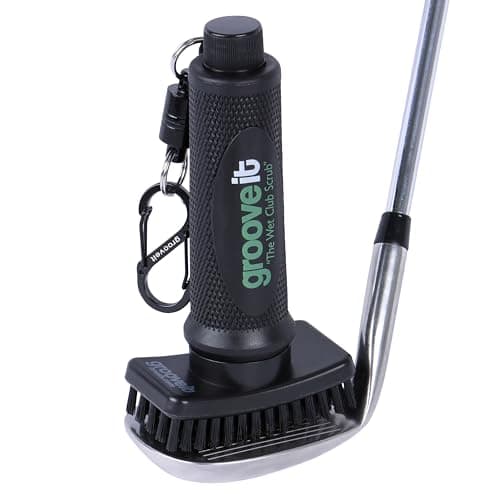
Why clean clubs are not a vanity thing
The grooves on an iron or a wedge are what put spin on the ball, and spin is what makes a shot stop near the hole instead of running off the back of the green. Pack those grooves with dried mud and grass and they stop working - the ball comes off the face with less spin and goes further than the golfer expected, which is the worst kind of error because it is invisible until the ball lands.
This is the useful thing to understand if you do not play. A golf brush is not polish. It is the difference between a wedge that does its job and one that quietly does not, and it is the cheapest performance gift on this entire site.
The one split that decides this: water
Everything in this category is either a dry brush or a water brush, and the gap between them is bigger than the price difference suggests.
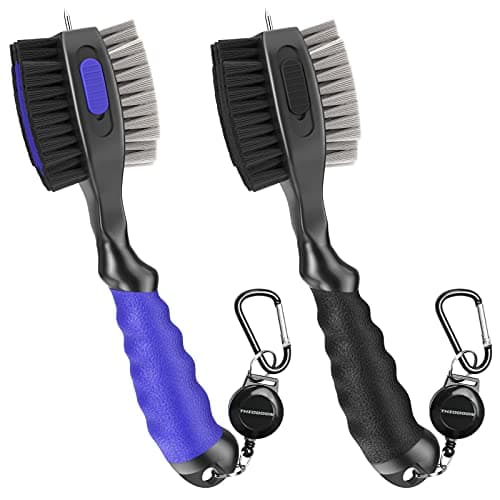
A dry brush scrapes. It works on fresh, wet mud straight off the fairway and it is close to useless on dirt that has dried into the groove, which is what you actually find in a golf bag. It costs a few dollars, weighs nothing, and every golfer should own one.
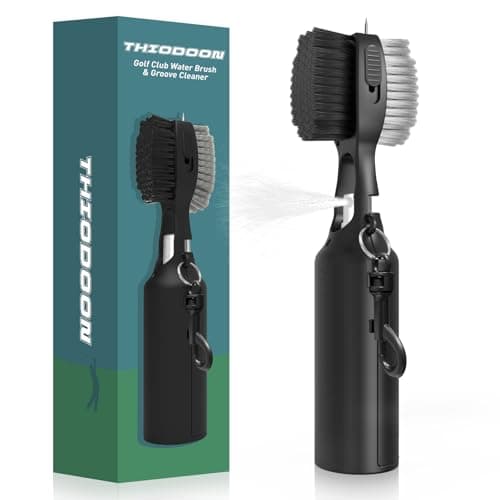
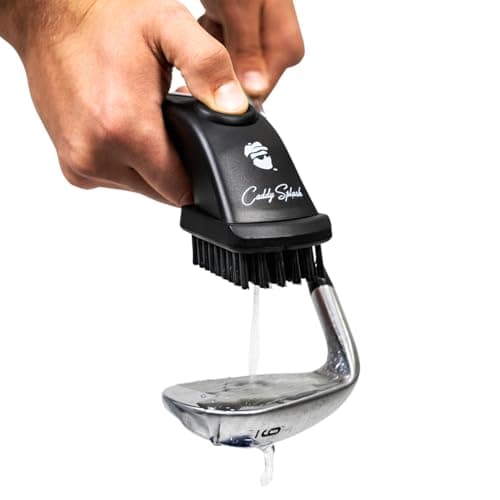
A water brush carries a few ounces of water in the handle and releases it through the bristles with a pump, a spray bottle or a button. Water softens dried dirt so the bristles can lift it out rather than push it around. On the course, between shots, it is the only one of the two that genuinely cleans a face.
If you are buying a gift, buy a water brush. The dry brush is the thing you add to make up a bigger present, which is exactly what the two-pack on this page is for.
Nylon bristles, steel bristles, and the mistake people make
Most brushes here have two sides. The nylon side is for everything - irons, wedges, the crown of a driver, the face of a putter. The steel side is for grooves only, on an iron or a wedge, and it is there because a wedge that has not been cleaned in a season needs more than a nylon brush.
The mistake is using steel bristles anywhere else. Dragged across the painted crown of a driver or a soft-finish putter, steel leaves marks that do not come out. If the recipient is precious about their clubs, or you suspect they will grab whichever side is facing up, a nylon-only brush is the kinder gift.
The two things that break golf brushes
Leaking. A water brush lives clipped to a golf bag, and a golf bag spends its life being tipped into a car trunk. A reservoir that leaks empties itself into a pocket holding a phone, a glove and a scorecard, and that is the end of the brush - not because it stopped working, but because the owner stopped trusting it. The Grooveit is the only listing here that states an anti-leak design in writing, which is why it is the top pick.
The pump. Whatever pushes the water through - a plunger, a squeeze bottle or a button - is the part that fails, usually in the second season. This is also the only place in the category where a warranty exists: the Grooveit listing quotes three years, and nothing else here quotes anything. For a product this cheap that is a real differentiator rather than a marketing line.
Kit or brush? It depends on what you want the gift to be
A brush on a clip is an accessory. It is a genuinely good thing to receive and it looks like almost nothing when it is unwrapped, which is a real problem if it is the main present.
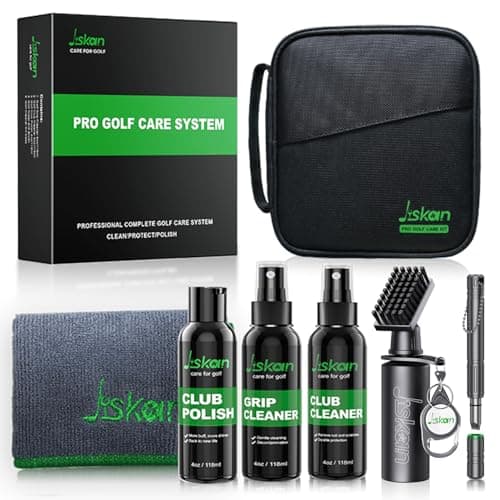
A boxed kit solves the presentation problem and adds the two items a golfer is least likely to own: a grip cleaner and a club polish. The grip cleaner is the one worth caring about - grips go slick from hand oil and sunscreen long before they look worn, and a golfer who cleans their grips twice a season notices it in a way they never notice a clean groove. That is the argument for the Jiskan kit, and it is also the argument against assuming more pieces is better: the same logic applies here as on ready-made gift sets, where the piece count is the least informative number on the box.
One caution on kits: several include a groove sharpener. In the hands of someone who cares about spin that is a legitimate tool. In the hands of a beginner it is a way to take metal off a clubface that did not need it, and sharpening grooves past their original specification can also take a club outside what the Rules of Golf permit for competition. If the recipient plays a few times a year, the sharpener is the one part of the kit to tell them to leave in the case.
What to pair it with
A brush and a towel are the same gift in two halves, and almost nobody buys both. A magnetic golf towel clips where the brush clips and does the drying the brush cannot, and the pair comes in under thirty dollars for most combinations here. Add a divot tool and you have covered the three things a golfer reaches for every single round.
If you want the whole thing to arrive looking like a present rather than a parcel of small objects, what to put in a golf gift basket is the page for assembling it, and golf gifts under $25 is where most of this category lives.
What we left off
Ultrasonic cleaners. They work and they are a genuinely satisfying object, but they live on a workbench and clean clubs between rounds rather than during one. That is a different gift from a brush, and a much worse one if the recipient has no garage.
Regripping kits. Grips need fitting to a hand and installing with solvent and a vice. We do not recommend grips as a gift anywhere on this site, for the same reason we do not recommend fitted irons.
Unbranded multi-tool brushes. The ones that fold a brush, a groove spike, a divot tool and a bottle opener into one object. Each function is worse than the dedicated version, and the divot tool in particular is usually too flimsy to lift a plug of turf - which is the one thing it has to do.