Why the piece count is the wrong number
Search this category and every listing leads with a number. Nine pieces. Twelve pieces. Twenty-one pieces. It is the one figure every seller puts in the title, which is the first clue that it is a marketing number rather than a useful one.
Here is what happens when you take the number apart. A twelve-piece set is very often a tumbler, a towel, a pair of socks, a keyring, a bracelet, a bag of tees, a plastic ball marker, a thank-you card and a gift box — and the box, the card and the bracelet are three of the twelve. Of what is left, a golfer might carry two items onto a course.
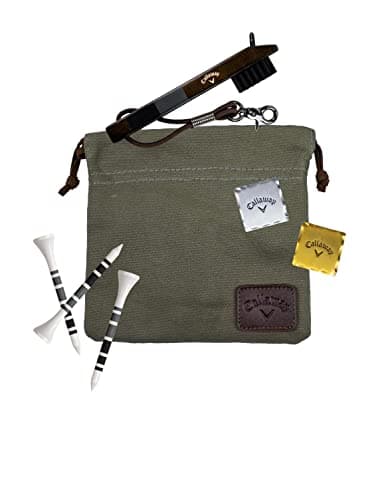
A four-piece set that is a pouch, a divot tool, a marker and a bag of tees is worse on the number and better on the gift, because all four of those things go in the bag and stay there. That inversion is the whole category in one sentence, and it is why this page ranks the way it does.
None of this makes gift sets a bad idea. A pre-assembled box genuinely solves a real problem — it is one thing to buy, one thing to wrap, and it requires you to know nothing about golf. It just has to be the right box.
What we looked for
We do not test golf products — our method is public — so these are judgments reasoned from what each listing publishes about its contents and from what those contents have to do in a golf bag. Five things separate a set worth giving from a box of filler:
- An enumerated contents list. The contents are the product here. Any set whose listing will not say precisely what is in the box did not make this page, because there is nothing to evaluate.
- A name the golfer knows. Golf is a brand-conscious hobby and the logo on the pouch is visible to everyone in the group. This is the one category where the badge is doing real work.
- Carry rate. How many items would survive the first bag audit. Tees, markers, divot tools, towels and pouches survive. Socks, bracelets and keyrings do not.
- No fake instruments. Covered in its own section below. This is the one genuinely misleading thing the category does.
- An honest reason to skip it. Every pick above carries the buyer it is wrong for, and for gift sets that reason is usually the recipient rather than the box.
The fake-instrument problem
This is the one part of the category that crosses from padding into misleading, and it is worth knowing before you shop rather than after.
A number of accessory sets in the $20 to $40 range list a rangefinder among their contents. Some list a telescope or a green reader. What is in those boxes is a small optical tube — a fixed magnifier you look through. It is not a laser rangefinder, it does not measure anything, and it will not tell a golfer the distance to the pin.
A real laser rangefinder is an electronic device that fires a beam at the flag and times the return, and it starts around a hundred dollars for the cheapest credible model. If you want to give one, that is a category of its own — the rangefinder page covers what is actually worth buying, and the guide to what they do explains why golfers want them.
Buying a $30 set because it contains a "rangefinder" means handing a golfer a plastic tube. They will know within a second what it is, which is exactly the moment a gift you chose carefully stops feeling careful. None of the picks on this page contain one.
The four things a golf gift set can be built around
Once you stop counting pieces, the sets divide neatly into four kinds, and picking between them is really a question about the golfer rather than the product.
- Built around bag accessories. A pouch, a divot tool, markers, tees. These have the highest carry rate in the category and are the least exciting to unwrap. Best for someone who genuinely plays.
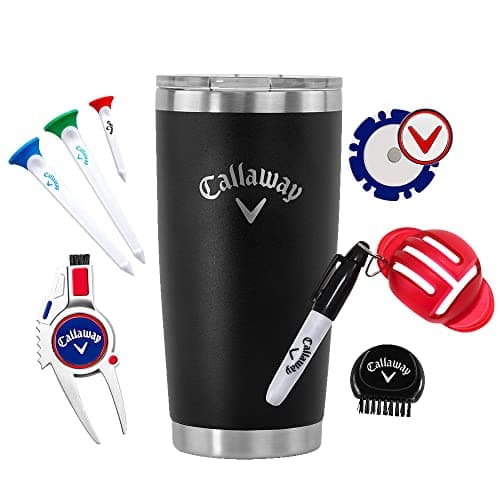
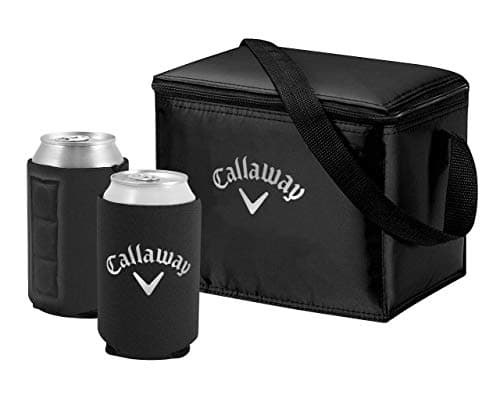
- Built around a drink. A tumbler or a cooler with accessories attached. The tumbler is the part that gets used, and it gets used at a desk as much as on a course, which widens who the gift works for.
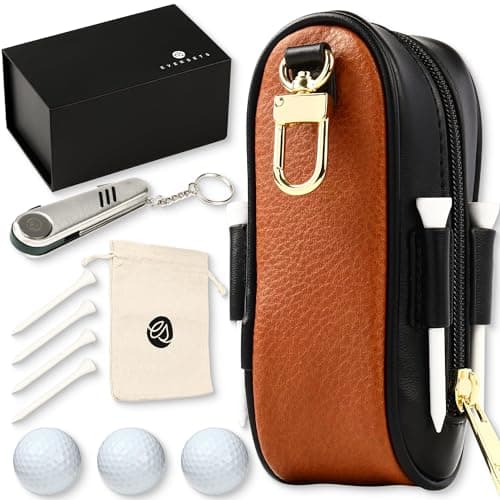
- Built around the case. A zipped leather-look wallet with a small amount in it. These are made to be handed over — they photograph well, they unbox well, and they are the standard tournament prize for exactly that reason.
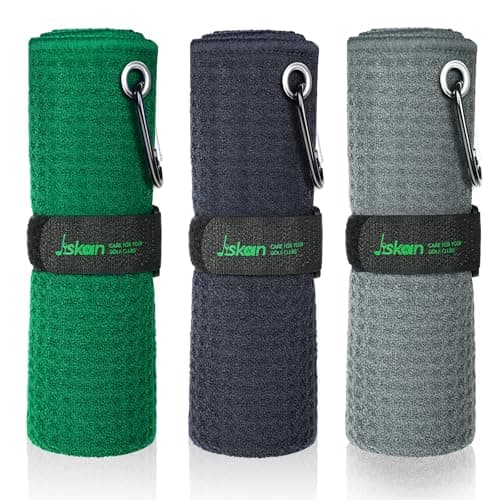
- Built around a consumable. Towels, tees, balls. The least memorable to open and the most certain to be used up, which makes it the honest choice for a second gift rather than a main one.
Who a gift set is genuinely right for
The strongest case for a set is a golfer you do not know well. A colleague, a client, a friend's husband, the person whose name came out of the hat. You cannot ask what is in their bag, you cannot risk a size, and you need something that reads as considered without being personal. A branded accessory box does that job better than almost anything at the price, which is why it dominates Secret Santa and coworker gifting.
The second strong case is a tournament or a corporate outing, where you need several identical gifts that look generous on a prize table. That is a different requirement from a personal gift — presentation is doing most of the work — and it is why the case-led sets exist.
Who it is wrong for
A golfer who plays every week is the difficult case. They already own tees, they already own a divot tool, they have three towels, and the pouch in the set is competing with the one already clipped to their bag. A set is not a bad gift for them so much as an invisible one — everything in it is a duplicate of something they chose themselves.
For that golfer, the honest move is to abandon the set format and buy one better version of one thing they already use. That is what the golfers who have everything page is for.
A set is also wrong when it is standing in for a decision you could easily make. If you know they walk the course, a push cart is a better gift than any box on this page. If you know they lose balls, a dozen of the right golf balls is. The set is the answer to not knowing, and it stops being the best answer the moment you do.
Buying a set versus building a basket
The alternative to a ready-made box is assembling your own, and the two go wrong in opposite directions. A bought set is coherent and slightly generic. A built basket is personal and much easier to get wrong, because every item in it is a decision you had to make about a hobby you may not play.
The practical difference is money and time. A pre-made set at around thirty dollars contains items that would cost more than that bought separately, because the seller is buying tees and markers by the thousand. A built basket costs more and looks like more, and it is the better option when you know the person well enough for the choices to say something.
If you want to build rather than buy, we have a checklist for it: what to put in a golf gift basket walks through what belongs in one and what to leave out.
What to skip
Anything with a piece count in the title and no contents list. A twenty-one-piece kit shown as a photograph with nothing enumerated is a box you are buying blind, and the number is high because the small items are cheap.
Sets built around apparel. Socks and hats are the most common filler because they are cheap and they photograph as a real item. They are also the two things in the box with a size and a taste attached, which is precisely what you were buying a set to avoid.
Sets whose main item is a tumbler you would not buy alone. A tumbler-led set is fine when the tumbler is good. If the listing does not say double-walled and insulated, the tumbler is the filler and the accessories are the gift.
Novelty ball sets as the main gift. Six printed balls and three tees in a box is a card, not a present. They work as an add-on — the funny golf gifts page covers where a joke lands and where it does not.
Anything advertised as a rangefinder set under about $50. Covered above.
How to choose one in two minutes
Read the contents list and cross off anything that is not tees, a marker, a divot tool, a towel, a pouch, a cooler or a tumbler. Whatever is left is the gift. If that is three or four items from a name the golfer knows, buy it. If it is one item and eleven pieces of packaging, move on.
Then check the price band the set sits in. Most good ones land between twenty and forty dollars, which is the same territory as golf gifts under $50. Above that you are usually paying for a bigger tumbler, and below it you are usually paying for a smaller box of the same three things.
If the piece-count problem on this page puts you off ready-made sets altogether, the nearest honest alternative is a category where the box contains one good object instead of eleven mediocre ones. Best golf drinkware covers glasses, flasks and decanter sets, ranked on whether the golf is built into the glass or printed on it.