Why a book is a better golf gift than it sounds
Almost every golf gift carries a variable you can't check. Shoes need a size and a width, gloves need a hand, a bag needs to match whether they walk or ride. A book needs none of it. It can't be the wrong size, it can't clash with anything they own, and it costs about what a sleeve of premium balls costs — which makes it the rare gift that looks considered without being expensive.
It is also nearly impossible to duplicate badly. A golfer who already owns the book you bought will tell you so and mean it as a compliment, which is not how a second rangefinder lands. For more gifts with no measurement attached, see golf gifts that need no size.
So the risk in this category isn't fit. It's tone — and the edition you click. Those are the two things the rest of this page is about.
The one rule: don't give instruction unless they asked
This is the whole page in a sentence. The golf-book shelf is dominated by swing instruction, so it's where a gift buyer naturally lands, and it's the one corner of the category that can go wrong on Christmas morning. A swing manual given unprompted carries a message whether you intend one or not: I have been watching you play, and I think you need this.
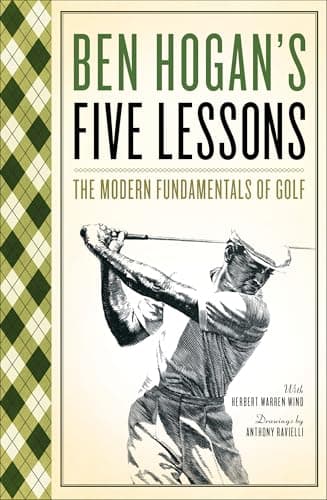
The same book requested is a completely different object. A golfer who has said out loud that they're fighting a slice, or who has just started lessons, will be delighted with the Hogan. A golfer who thinks their game is fine will read the cover twice and put it down.
So the default gift here is a book that has nothing to say about the recipient: a season on tour, a road trip, a set of photographs, a collection of stories from an old teacher. Five of the seven picks below are that kind of book. The two instruction titles sit at the bottom on purpose, and both say so on their own cards.
What we looked for
We don't review books any more than we test golf gear — our method is public — so what follows are judgments about each title as a gift, reasoned from what the publisher states about it and from what the book is for. Six things decided this list:
- Is it a present or a homework assignment? The first question, and the one that sorted the whole page. Anything that implies criticism of how they play got demoted, not deleted.
- Does it survive the equipment cycle?Golf books tied to current technology date in about three years. Every title here is either about people or about a fundamental that hasn't moved.
- Is it in print in a normal edition?Every pick is a current, ordinary, in-stock listing — not a collector's reprint, not a signed copy, not an import.
- Will they finish it? The shortest pick here is a 127-page instruction book and the longest is a 544-page season on tour, and that gap genuinely matters. A golfer who reads on planes and a golfer who reads ten minutes before sleep want different books.
- Does it cost what a book should cost? We link the cheapest legitimate edition of each title, even where a far more expensive version of exactly the same text exists.
- An honest reason to skip it. Every pick carries one. In this category it is nearly always about the reader rather than the book.
The edition trap, and it is a real one
This is the thing worth knowing before you buy any golf book online, and it is the closest thing this category has to the piece-count problem on golf gift sets. One title does not mean one listing. Search any golf classic and you will get, mixed together on the same screen:
- The ordinary current edition. What you want. Usually the cheapest thing on the page, and usually the one with the most reviews.
- Hand-rebound leather copies. Third-party binders buy the standard edition, rebind it in bonded leather and list it at several times the price. It is the same text. As a gift it looks magnificent and it is entirely your call — just know that is what the extra money buys.
- Multi-book bundles and collections. Two or four titles by the same author shrink-wrapped together, often at a much higher price than buying the one book you actually meant.
- Foreign-language editions. These sit in American search results more often than you would expect, and the cover looks familiar enough to click.
- "Summary of…" booklets. Third-party study notes about a famous book, sold at a few dollars, with a cover designed to look like the real thing. These are not the book. If the title begins with the word Summary, close the tab.
Every buy link on this page points at the ordinary, in-print, lowest-priced legitimate edition of the real title. If you want the handsome rebound version of one of them as a centerpiece gift, buy it deliberately rather than by accident.
Match the book to the golfer
The picks above are ranked by how safe they are to give blind. If you know a little more than that, this is the shorter route:
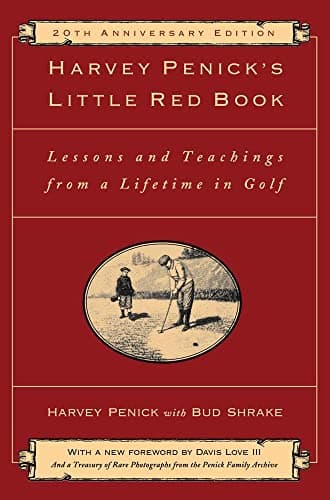
- You know almost nothing about them. The Penick. It is short, it is anecdote rather than technique, and it works for a beginner and a scratch golfer alike.
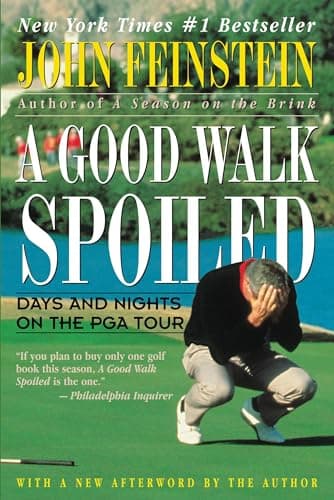
- They have the tournament on every Sunday. The Feinstein. It is the inside of the world they already watch.
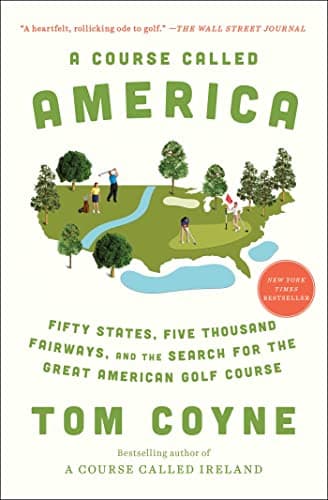
- They talk about courses they want to play. The Coyne. Fifty states of them, which is a longer list than any one trip will ever get through.
- They own every piece of equipment already. The photography book. Ours is the one pick here that is an object as much as a book — the same logic as the gifts for golfers who have everything page.
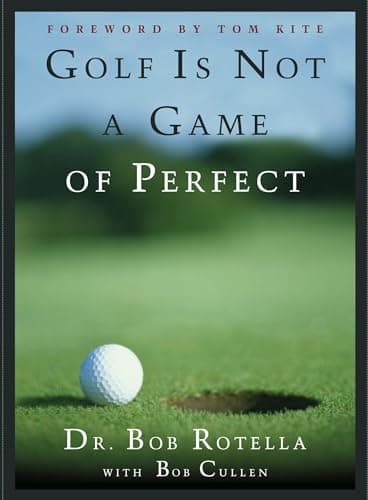
- They get furious with themselves. The Rotella — carefully. Read its skip reason first; this one can land as a comment on their temper rather than their golf.
- They have asked for help, or just started lessons. The Hogan.
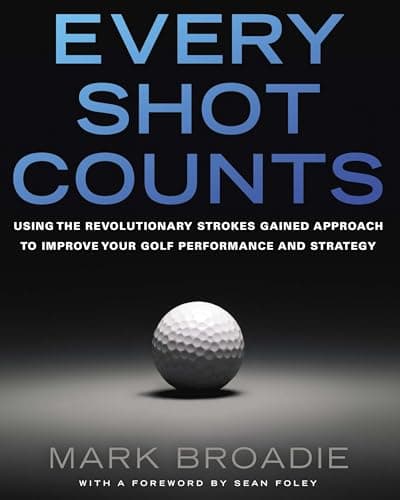
- They log every round in an app. The Broadie.
Hardcover, paperback or audiobook?
For a gift, paperback is not a downgrade — it is what most of these titles are normally sold as, and the gap in price between formats is usually bigger than the gap in experience. The exception is the photography book, where the hardcover is the product; a picture book in any other format defeats the purpose.
Audiobooks are the one format we'd avoid as a present. They're often tied to a subscription the recipient may or may not have, there is nothing to hand over on the day, and instruction with diagrams in it does not survive the translation. If they listen rather than read, a gift card to their own audiobook service is the honest answer, and this page isn't it.
What to skip
Anything with a year in the title. Annual golf guides, yardage annuals and equipment round-ups are stale within a season and read as stale on arrival.
Joke books and "golf excuses" novelties. They turn up in every golf book search and they are a stocking filler, not a present. If a laugh is the goal, the funny golf gifts page has things that survive longer than the first read.
A swing book for a beginner who hasn't had a lesson. Technique from a page, with no one watching, is how bad habits get set. A beginner is better served by the gear on the beginners page and by the Penick, which is about temperament more than mechanics.
Biographies of a player they don't like.Golf fandom is more partisan than it looks from outside. If you can't name who they follow, stay with the books that aren't about one person.
How to check without asking
Two things answer this. First: do they read at all? A bookshelf, a night-stand pile or a Kindle in the kitchen is the tell, and if there isn't one, a book is a polite ornament — something from golf gifts under $25 will get more use.
Second: have they ever asked anyone for help with their swing, out loud? If yes, the instruction picks open up. If no, or if you can't remember, take one of the first four and you cannot get the tone wrong. When in doubt, the Penick is the one nobody has ever been offended to receive.