How this page is filtered
Every glove below qualified for the under-$25 band on a price we fetched from the Amazon product API, never one typed in. A glove with no verified price does not appear, and one that moves above $25 drops off rather than sitting under a heading it does not fit. The number beside each pick is a separate request-time read with its own checked date.
This is one of the few bands on the site where the cap costs you almost nothing. The whole glove category runs from about $13 to about $31, so $25 captures the best-selling glove in golf, a real leather option, and the left-handed listing. The gloves it excludes are premium tour models and rain gloves, not better everyday gloves.
The hand. Read this before you read anything else
This is the single most common way a golf gift goes wrong, and it is worth more words than any specification on the page.
A golfer wears one glove, on the lead hand — the hand nearer the target, which is the upper hand on the grip. For a right-handed golfer that is the left hand. So a right-handed golfer buys a glove described as worn on the left hand, and a left-handed golfer buys one described as worn on the right hand.
Two traps follow from that. First, listings are titled inconsistently: some say "left hand glove", meaning worn on the left hand, and some say "for right-handed golfer", meaning the same thing. Read the listing, not the headline. Second, handedness in golf does not reliably follow the writing hand — plenty of right-handed people play golf left-handed and the reverse. Do not infer it; find a photograph of them swinging, and see which shoulder the club finishes over. Our sizing guide and the hand guide both cover this in full.
The size, which is the second way this goes wrong
A golf glove should feel tight when new — snug across the palm with no loose material at the fingertips. Leather stretches with use, and a glove bought comfortable on day one is loose and slipping inside a fortnight. Gift buyers almost always size up, which is the wrong direction.
Gloves come in S, M, M/L, L and XL, with a separate cadet range for a hand with a wide palm and shorter fingers — a surprisingly common shape and the reason some golfers find every standard glove wrong. The cadet comparison explains how to tell. If you can read the size off a glove they already own, do that; it is printed on the cuff or the inside of the wrist strap.
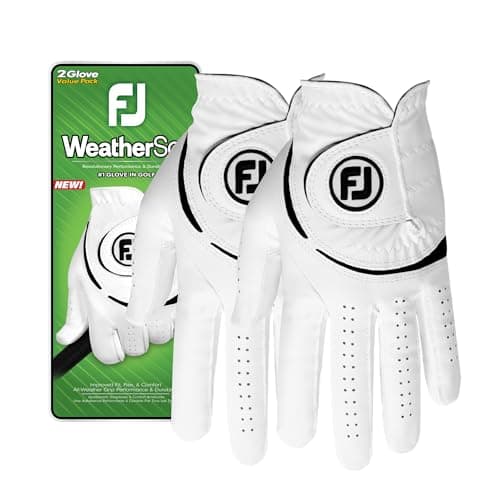
At this price the size question is also less frightening than it sounds, because a glove is a cheap thing bought in multiples. Buying the two-pack top pick in the size you believe is right is a far smaller risk than buying one expensive glove.
Leather or synthetic at this price
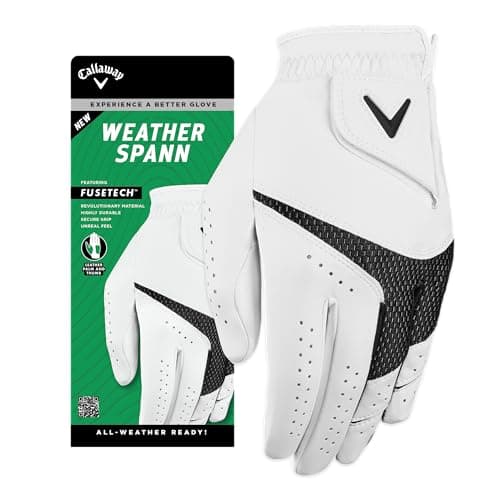
Synthetic gloves — the top pick and the budget pick — are more durable, hold up better when damp, and stay consistent as they age. They feel slightly less connected to the grip than leather. For a golfer who plays in all weathers and does not think much about gloves, synthetic is the right answer.
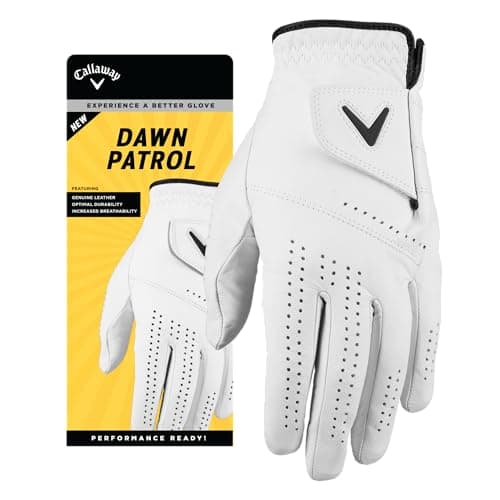
Leather — properly, cabretta leather, a thin sheepskin — gives the thinnest and most direct feel of the grip and is what most better players wear. It also wears out faster, hates being wet, and goes stiff if it dries badly. Under $25 you can have real leather, which is unusual: the Dawn Patrol pick is leather at a synthetic price, and that is the whole reason it is on the page. The full comparison is here.
The practical rule for a gift: if they talk about their golf, buy leather. If they play twice a month, buy the synthetic two-pack.
Why a glove is a better gift than it sounds
A glove is a consumable. It is the only part of a golfer's equipment that genuinely wears out on a schedule — a regular player replaces several a season, and most golfers play a few rounds too long on a glove that has gone shiny and slick because buying one is a chore nobody enjoys.
That is what makes it a good small gift and a good filler inside a bigger one. It is also why the right number to give is more than one. A single glove is a token; two or three gloves in the right hand and size is a gift a golfer notices every time they tee up for the next six months.
Who should not get one
A golfer who plays without a glove. A real minority do, including some very good players, and they will never wear it. The tell is any photograph of their hands on a club.
A golfer whose hand size you cannot find out and cannot ask about. A glove in the wrong size is not used; a box of balls, a towel or a divot tool has no sizing at all and lives in the same price band.
A golfer who has told you they wear a specific model. At this price, buy the model they named — the category is cheap enough that brand loyalty costs you nothing to honor.