How this page is filtered, and why that matters here more than anywhere
Every product above qualified for the under-$200 band on a price we fetched, not a price we typed. If a rangefinder on our shortlist has no verified price it does not appear at all, and if it moves above $200 it drops off rather than sitting under a heading it cannot afford. The live figure beside each pick comes from a separate request-time read and carries its own checked date, stamped above the table.
That matters in this category specifically, because rangefinders discount hard and unpredictably — a unit at $219 in October and $179 in November is completely normal, and it is why a hand-typed price list on a page like this is worthless within weeks. Rangefinders are also one of the categories that genuinely moves on Black Friday, which is worth knowing if you are reading this in November.
What a rangefinder is, in one paragraph
It is a small monocular. The golfer points it at the flag, presses a button, and reads the exact distance. That is the whole product. Before rangefinders, golfers paced off yardage from markers in the fairway and guessed the rest, and the single biggest cause of a bad approach shot in amateur golf is not a bad swing, it is the wrong club for a distance nobody actually knew.
It is also the classic big-ticket golf gift: expensive enough to feel significant, used on every hole of every round, and needs no size, no hand and no brand loyalty. The one thing to check is whether they already own one, because they last for years and nobody needs two. Look for a small rectangular pouch clipped to the outside of their bag.
What $200 does and does not buy
You do get: a laser that reads the flag accurately at golf distances; slope, on three of the four picks here; a magnetic mount on some, which is how the unit sticks to a cart frame instead of rolling around a cup holder; and tournament legality, which is a legal question rather than a price one.
You do not get: the badge, and lock speed. The premium units in this category — our main rangefinder roundup leads on the Bushnell Tour V6, which sits well above this band — are meaningfully faster at grabbing the flag in flat light and at distance. A golfer who has used one will feel the difference. A golfer who has never owned a rangefinder will not notice it exists.
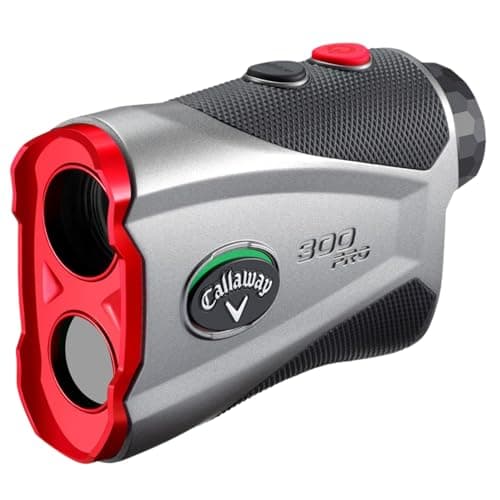
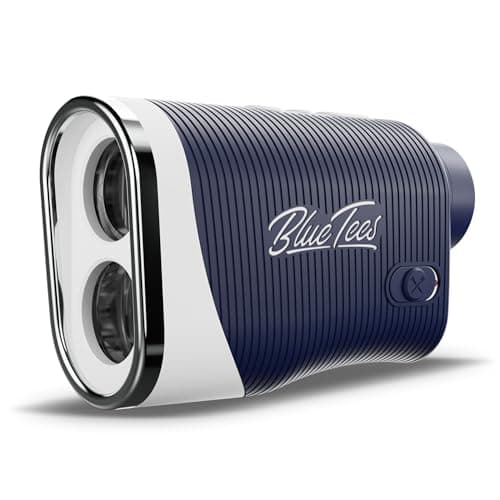
You also do not get the newest generation. Every pick on this page is a model the manufacturer has since moved on from, and that is precisely why the price is here. Blue Tees has moved its laser line on twice since the Series 3 Max+; the Callaway 300 Pro has been in the line for years. For a gift that is usually a feature, because it buys a known-good product at a discount. For a gear-obsessed recipient it is a thing they will notice.
Slope, and the only rule you need to understand
Slope is an adjustment for uphill and downhill shots: the rangefinder measures the true distance and then adds or subtracts for the elevation change, giving a "plays like" number. On a hilly course it is the most useful thing the device does.
It is also not permitted in competition. Which is why the feature that matters is not slope itself but a physical switch that turns it off visibly — so a playing partner or a committee can see the device is in a legal state. That is the whole argument for the Blue Tees pick as the top one on this page, and it is a feature usually reserved for more expensive units. Our guide on whether rangefinders are legal goes through the rule properly, and the slope vs non-slope comparison covers the trade.
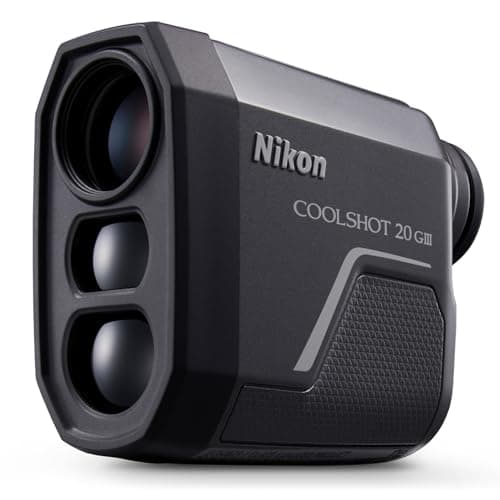
If the recipient only ever plays casual golf, none of this applies and the Nikon — which has no slope at all, an 800-yard published range and the brightest view here because Nikon is an optics company rather than a golf company — is the cleaner buy.
The one feature a beginner notices immediately
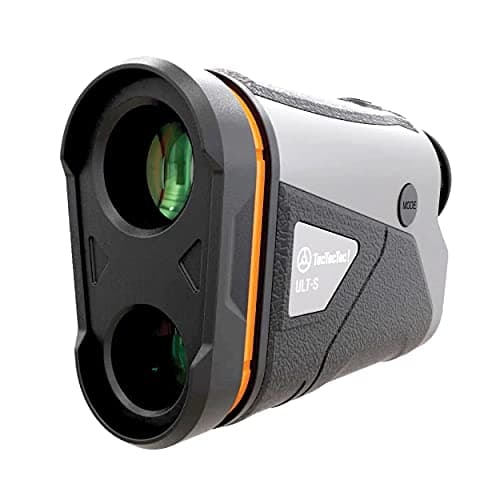
Image stabilization, which only the TecTecTec has at this price. Holding a small monocular at arm's length and trying to hold a flag 150 yards away inside the reticle is harder than it sounds, and the difference between locking on in two seconds and hunting for ten is almost entirely this. For somebody who has never owned a rangefinder, stabilization is worth more than slope.
Who should not buy from this page
Somebody buying for a serious player. There is a genuine performance gap between these and the premium units, and a golfer used to a Bushnell will feel it. Spend up or buy something else.
Somebody buying for a golfer who already has one. See above — check the bag first.
Somebody buying for a golfer who wants distances without aiming at anything. That is a GPS watch, not a laser: it reads the hole from a database instead of measuring the flag, and it is a different product at a similar price. Our watch roundup and the GPS watch vs rangefinder comparison settle that one.