Soft, hard, or the thing in between
There are three shapes in this category and the choice between them is genuinely about how often they fly, not about how much you want to spend.
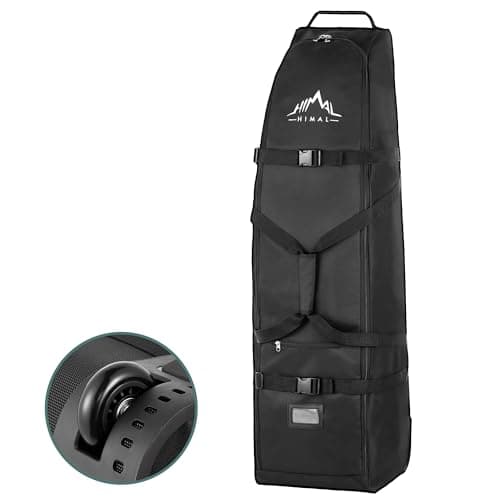
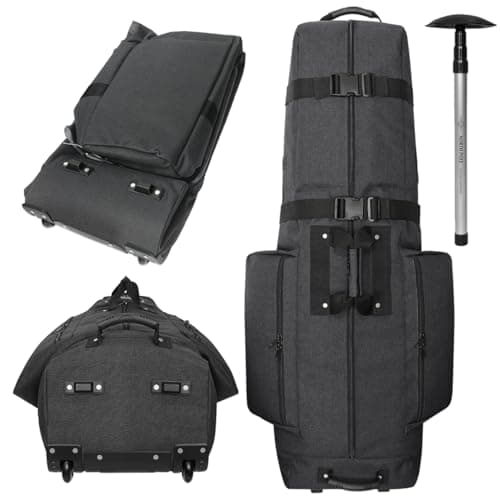
Soft covers are padded fabric bags with wheels. They are light, they fold flat for storage, and they rely on the golf bag inside for their structure. For someone taking one golf trip a year, this is the right answer and the cheapest one.
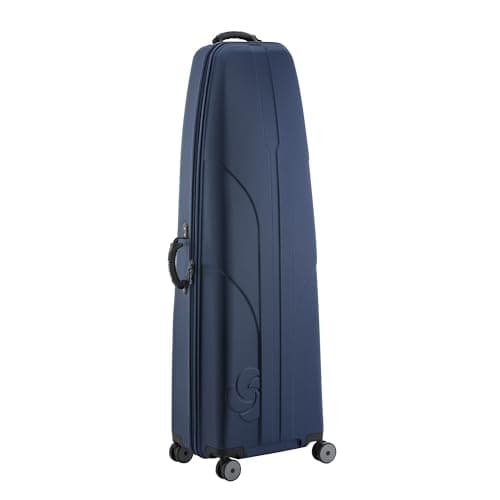
Hard cases are rigid molded shells. They survive anything a baggage handler can do, and they cost you in three ways: money, weight, and a permanent corner of a cupboard for the fifty weeks a year they are not in use.
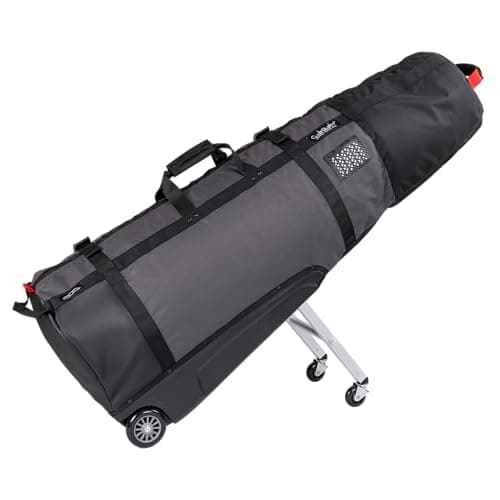
Hybrids — a soft body with a dense foam or rigid panel across the top — protect the part that actually gets damaged while folding away like a soft cover. For most golfers, this is the correct purchase, and it is what we would give.
Why the top of the bag is the part that matters
Golf clubs almost never break in the middle. They break when something heavy lands on the top of the bag and drives the load down through the shafts, and the driver — the longest club, sticking furthest out of the bag — takes it first.
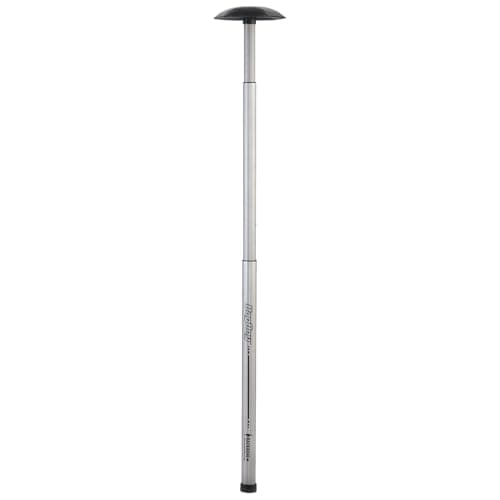
That single fact explains the whole category. It is why hard cases exist, why the good soft covers have thick padding across the top and nowhere else, and why a support pole — a telescoping rod that extends above the longest club and takes the crushing force itself — is the most cost-effective forty dollars in golf travel.
Wheels, and why four beat two
A packed golf travel bag weighs forty pounds or more once clubs, shoes and clothing are in it. On two in-line wheels, the golfer is holding up a share of that weight the whole way through the terminal, one-handed, while pulling luggage with the other.
Four-wheel systems — spinners on hard cases, or Sun Mountain's retractable legs on the ClubGlider line — put all the weight on the floor. It sounds like a small thing and it is the single most-praised feature by people who travel with clubs regularly. If the person you are buying for takes several golf trips a year, this is where the money should go.
What else goes in the bag
Travel bags are big, and golfers fill the space. Shoes go in the bottom, which is why a golf shoe compartment or a separate shoe bag is worth having. Clothing gets stuffed around the club heads as extra padding, which works and is free. Some airlines count a golf travel bag as a standard checked item and some do not, so weight matters: a heavy hard case eats into an allowance that a light soft cover does not.
How to tell whether they need one
Look in the garage or the cupboard where the clubs live. A travel bag is large, obvious and stored near the golf bag. If there is nothing there and they have ever mentioned a golf trip, buying this is close to a guaranteed hit — it is the classic gift a golfer knows they need, never gets round to buying, and then panics about a week before a flight.
If there is a cheap soft cover there already, the upgrade path is not a second bag. It is a support pole, which they almost certainly do not own.
Two pages carry on from here. If you are still deciding between a hard shell and a soft cover, hard or soft golf travel bag settles it on storage rather than on specifications. If the trip itself is the occasion and the cover is already taken care of, golf trip gift ideas covers the small things golfers forget and then buy at resort prices.
Before choosing a case, it is worth knowing what the airline will actually accept. Can you take golf clubs on a plane? covers the TSA position, the 50lb and 115-linear-inch limits that catch people out at the desk, and how to pack a set so the driver survives the trip.