What the rules actually say
The TSA publishes a per-item list of what can go where, and golf clubs appear on it plainly: not permitted in carry-on bags, permitted in checked bags. There is no exception for a single club, a putter or a child's set - the logic is that a golf club is a long rigid object, and the answer does not change with the count.
That means the whole question becomes a baggage question rather than a security one, and baggage rules are set by the airline rather than by the TSA. The good news for anyone planning a golf trip is that the major US carriers largely treat a golf bag as ordinary checked baggage now, rather than as a surcharged special item the way bikes and surfboards still are.
The two limits that catch people out
Delta states its golf policy clearly enough to use as the worked example, and the shape of it is typical: one golf bag per passenger checked as a standard item, with standard baggage allowances and fees based on cabin and region, a charge if the bag weighs over 50lb, and no acceptance at all if the outside linear dimensions - length plus width plus height - exceed 115 inches.
- The 50lb line is the one that gets hit. A full set of clubs is roughly 20 to 30lb depending on the bag. A hard travel case is itself 15 to 25lb. Add shoes and the usual habit of stuffing clothes around the clubs and you are at the limit before you have noticed. This is the single biggest practical argument for a soft case: the case weighs a fraction of a hard one, and the weight you save is weight you are allowed to pack.
- The linear-inch limit rules out nothing standard. A typical golf travel case is around 50 by 15 by 13 inches, which is well under 115 linear inches. It matters if someone tries to combine clubs and a suitcase into one oversized case.
Two other things worth knowing because they vary and cannot be assumed. Low-cost carriers and international routes are far more likely to price a golf bag as a separate sporting item, and some carriers require it to be booked in advance rather than presented at the desk. Always read the specific airline's own sporting-equipment page for the ticket being flown - the policies genuinely differ, and this is the one part of the process where a guess costs money at the counter.
Hard case or soft case
This is the actual purchase decision and it is a genuine trade-off rather than a price-tier question.
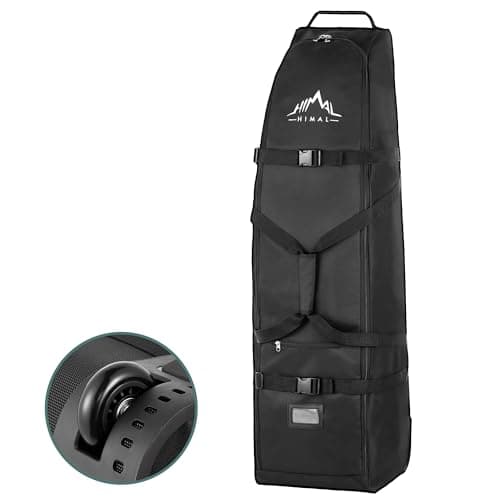
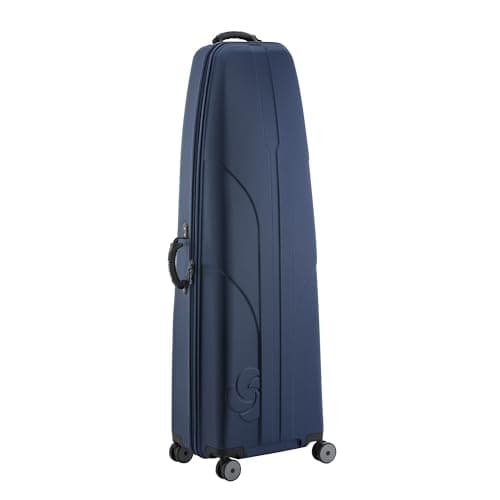
A hard case is a rigid shell that protects against crushing and is the only version that locks meaningfully. It is heavy, it eats into the 50lb allowance, and it is a large rigid box that has to be stored at home and fitted into a rental car at the other end.
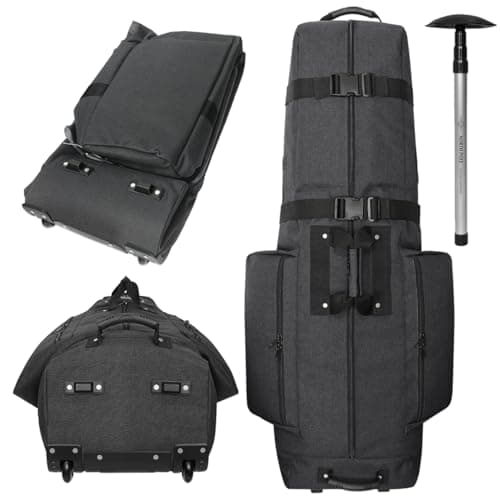
A soft case is padded fabric. It is light, it folds flat for storage, and it survives normal handling perfectly well - but it offers no protection against a heavy item stacked on it, and that is the scenario that snaps shafts.
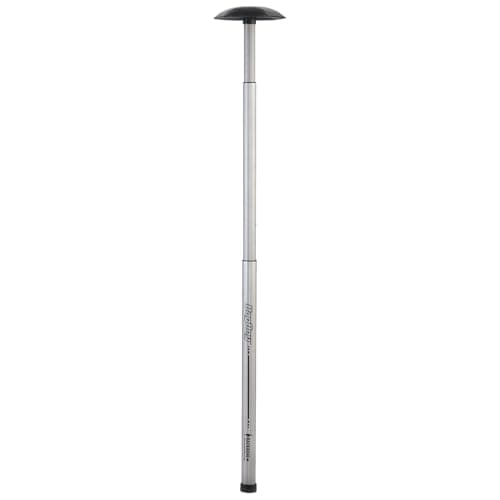
The compromise that most frequent golf travelers actually use is a soft case plus a support rod: a telescopic pole that extends from the base of the bag to above the longest clubhead, so any top-down impact lands on the rod instead of on the driver. It costs a fraction of a hard case and addresses the specific failure that hard cases exist to prevent. The full comparison goes through it properly.
How to pack clubs so they arrive intact
- Take the driver head off if it is adjustable. Most modern drivers unscrew at the hosel. The driver is the longest club and the most expensive, and removing the head takes the vulnerable part out of the equation entirely.
- Put headcovers on everything that has one, and bundle the irons together with a strap or a towel so they cannot rattle against each other.
- Pack soft clothing around the heads, not around the shafts. Shafts are strong along their length; heads chip. Towels, a jacket and the golf shoes all have somewhere useful to go.
- Fit the support rod if the case has one, extended to above the tallest club.
- Weigh it at home. Bathroom scales, stand on them holding the case, and subtract. It takes a minute and it is the difference between a standard bag fee and an overweight charge at the desk.
The questions people ask at the desk
Can you carry one club on board? No. The TSA guidance makes no exception for a single club, and a putter is no more allowable than a driver.
Can you put a tracker in the bag? Yes, and it is one of the genuinely good modern answers to a problem golf travelers have always had. A small Bluetooth tracker in a bag pocket tells you whether the clubs made the connection before the carousel does.
Are golf balls a problem? No. Balls and tees travel fine in checked baggage, and they are heavy for their size - a dozen balls is about a pound and a half - so they are worth leaving out if the case is near the weight limit. Buying them at the destination is almost always easier than flying them.
Is it worth renting instead? For a single round on a trip that is not about golf, usually yes. For a golf trip, no - rental sets are a compromise and the whole point of the week is playing with your own clubs. Gifts for a golf trip covers what else is worth packing.