What actually goes wrong in a baggage hold
It is almost never the bag being dropped. Golf bags survive being dropped. What they do not survive is compression — something heavy stacked on top of them in a cart or a hold, with the load passing straight through the fabric and onto whatever is tallest inside.
The tallest thing inside is the driver, which is also the most expensive single club in the bag. That is why driver shafts are the overwhelming majority of travel damage, and it is why the two covers that cost the least and the most both address the same part of the bag: the top, over the club heads.
What each type is actually good at
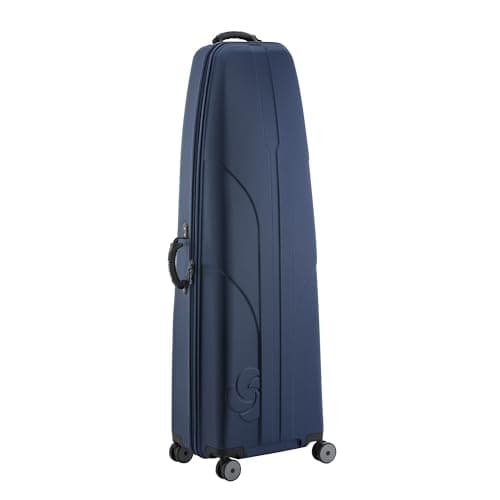
A hard case is a rigid moulded shell on wheels. It takes the compression itself, so nothing reaches the clubs. It is the only cover that genuinely shrugs off being at the bottom of a stack, and a luggage manufacturer builds it the way they build suitcases.
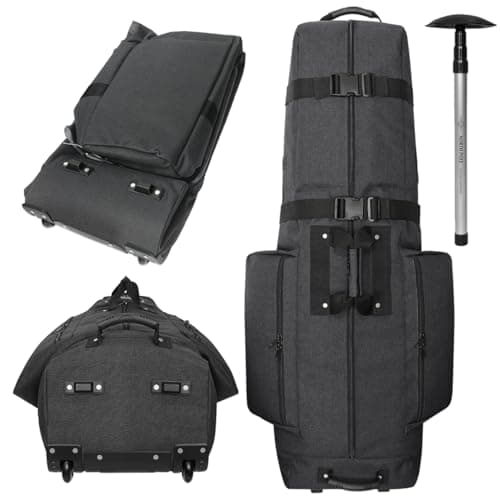
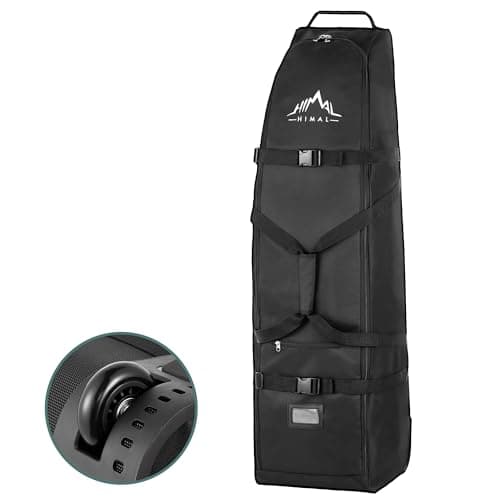
A soft cover is a padded wheeled bag that the golf bag slides into. It relies on the bag inside it for structure, which is a real weakness, and it folds flat when empty, which is a real advantage. The middle option — and the one most golfers should actually own — is a soft cover with thick foam across the top only, which puts the protection where the damage happens and nowhere else.
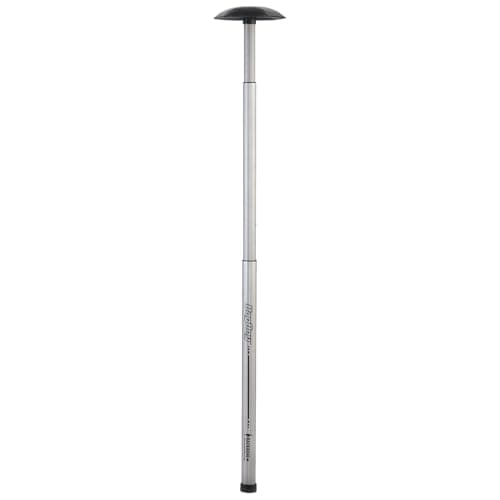
A support pole, usually sold as a stiff arm, is not a cover at all. It is an adjustable rod that extends above the longest club and takes the crushing load. It goes inside a soft cover and it is the single highest-value thirty-five dollars in this category.
The thing that actually decides it: storage
Here is the part the spec arguments skip. A hard case does not compress, fold or nest. It is a large rigid object that has to live somewhere for the fifty weeks a year it is not in use, and for a golfer in an apartment or a house without a garage, that is not a minor inconvenience — it is the reason the thing gets sold.
A soft cover folds to roughly the size of a rolled sleeping bag and goes on a shelf. If you are buying this as a gift and cannot inspect the recipient's storage, soft is the safer call for that reason alone, quite apart from the price.
How many trips a year changes the answer
- One trip a year, or a first trip. A budget soft cover. It is the difference between travelling with their own clubs and renting a set they do not like, and that gap is worth far more than the gap between cover types.
- Two or three trips a year. A soft cover with a padded top, plus a support pole. This is the answer for the large majority of golfers and it is where we would spend a gift budget.
- Six or more, or clubs worth real money. A hard case, if they have somewhere to keep it. At this frequency the protection compounds and the storage problem is one they have already solved.
Two things worth knowing before you buy either
Airlines will carry clubs, but not loose. Clubs travel inside something, and golf bags are routinely accepted as checked baggage. A golfer without a cover is not travelling light; they are renting at the destination.
Measure the car, not just the clubs. A hard case sized for a full bag with the driver in it is longer than many car boots, and a golfer who cannot get it to the airport without folding a seat down will quietly stop using it.
If the trip itself is the occasion rather than the cover, the small things golfers forget and then overpay for at a resort shop are on golf trip gift ideas.