Why golf shoes are harder on a wide foot than ordinary shoes
A round of golf is somewhere around five miles on foot, on uneven ground, in a shoe designed to resist twisting. That combination punishes a bad width fit in three ways that a trainer does not.
The first is time. Shoes that merely feel snug in a shop are genuinely painful at the fourteenth, because feet swell over hours and there is nowhere for a wide foot to go once the upper is at its limit.
The second is sideways load. A golf swing pushes the foot hard against the inside of the shoe - that is the whole reason golf shoes are built stiffer than running shoes. A foot already filling the width gets pressed into the upper on every full swing, which is how people end up with a numb outside edge and a blister below the little toe.
The third is the material. Most golf shoes are waterproof, and waterproof uppers are laminated or coated so they do not stretch and give the way an unlined leather shoe does. The shoe you buy is the shoe you keep. "It will break in" is close to the worst advice in this category.
Only two brands actually publish a width
This is the useful fact, and it reduces a confusing category to a short shortlist.
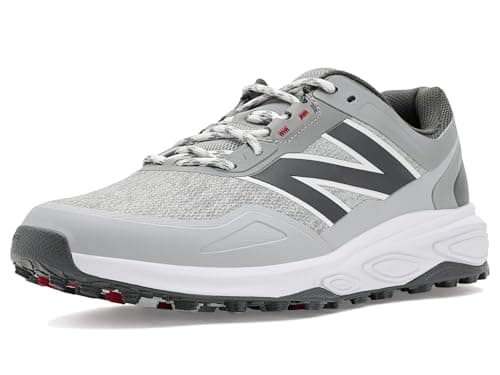
New Balance brought its running-shoe width grading into golf. When it introduced the Fresh Foam Contend it published sizes 8 to 12, 13 and 14 in widths D, 2E and 4E - standard, wide and extra-wide in the lettering New Balance has used for decades. The current third-generation listings carry the same idea in plain words: the same shoe, same colorway, is sold as Medium, Wide, X-Wide and in the largest sizes 3X-Wide. Nothing else in golf goes that far.
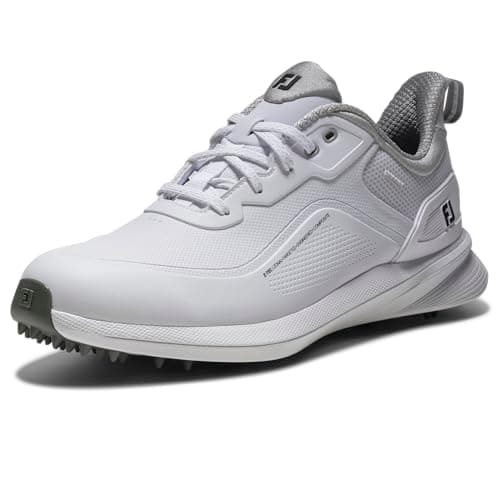
FootJoyis the other one, and it is the brand golfers already know. Retail listings for the Pro/SL - FootJoy's best-selling spikeless shoe - carry narrow, medium, wide and X-wide, and FootJoy's made-to-order MyJoys program goes wider still. The catch is that width availability varies by model and colorway rather than running across the whole range, so the wide version of the exact shoe you like may not exist even though the wide version of its sibling does.
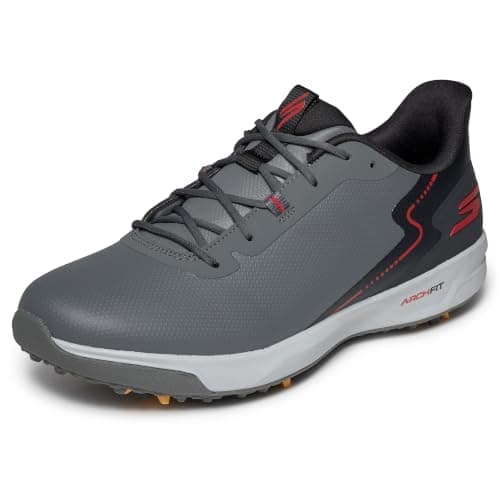
Everything else - adidas, Puma, Nike, ECCO, and most of the Skechers golf line - is sold in one width per size. Those shoes are not necessarily narrow; some are built on a generous last and genuinely suit a wide foot. But you are buying on hearsay rather than on a number, and if it does not fit there is no wider version to exchange into.
What to do when the shoe you want has one width
Sometimes the shoe is the shoe. These are the compromises that actually work, roughly in order of how well.
- Go up a half size, not a full one. Half a size adds a little width along with the length. A full size adds mostly length, and a shoe that is too long lets the foot slide forward under the sideways load of a swing, which creates a different problem and a worse one.
- Choose spikeless over spiked. Spikeless soles are usually built on a softer, slightly more forgiving platform, and they flex across the forefoot rather than holding it rigid over cleat mounting points. Spiked vs spikeless, in full.
- Choose laces over a dial. A BOA dial tightens the whole upper evenly, which is exactly what you do not want on a wide foot - laces let you leave the forefoot loose and take up the slack over the instep instead. BOA vs laces.
- Swap the insole for a thinner one. A thick cushioned insole takes up volume. Replacing it with something flat recovers a surprising amount of room, particularly in depth over the top of the foot.
- Buy from somewhere with a free return. The most useful thing on this page. With golf shoes, ordering two widths or two sizes and sending one back is not indecision, it is the method.
Finding out their width when it is a gift
If you are buying for someone else, the shoe they already own has the answer printed inside it. Look on the tongue or the insole: alongside the size there is often a letter or a word - D or M for standard, E, 2E, W for wide, 4E or XW for extra wide. If there is a number and no letter at all, the shoe was sold in one width and tells you nothing, which is itself worth knowing.
Failing that, the complaint is the data. Someone who mentions that shoes rub their little toe, who buys a size up in everything, or who wears their laces slack at the bottom is telling you they have wide feet without using the word. People with wide feet generally know it.
And if you cannot establish both the size and the width, do not buy golf shoes. We say this on every golf shoe page we publish and it is more true here, not less: a width guess is a two-hundred-dollar parcel going back. A gift card plus a card saying you will go and get them fitted is a better present than a box that does not fit, and anyone who has limped through a round in the wrong shoes will tell you so.
What does not fix it
Stretching. Shoe stretchers and the heat trick work on unlined leather. Golf uppers are usually waterproof laminates or synthetics over a membrane, and stretching those either does nothing or breaks the waterproofing you paid for.
"Relaxed fit" and "wide toe box" marketing. These are real design choices and they do help, but they describe a roomier last rather than a graded width, and they are not measured. A relaxed-fit shoe in one width is still a guess; it is just a more generous guess. Treat it as a fallback, not as an answer.
Wide insoles and spacers. Adding anything inside a shoe that is already too tight makes it tighter. Only subtraction helps.
Two pairs of thin socks. Popular advice, and backwards. One pair of thin socks is the move; two of anything fills the space you are short of.
The three we would actually buy
Below, in order. The first is the only shoe on this site whose maker publishes graded widths, which makes it the answer to the question as asked. The second is the shoe a golfer would recognize and respect, available in wide on much of the range. The third is the comfort-first option for someone who wants a roomy shoe and does not care what is written on the side of it.
All three are spikeless or replaceable-spike shoes with a published waterproof specification, and all three sit a long way below what a flagship tour shoe costs. If you want the whole category ranked rather than the wide-foot question answered, best golf shoes is the page, and do you even need golf shoes is the question to settle before you spend anything at all.