PIN & PUTT

05 / Answers

How to use golf alignment sticks

Two plastic rods, four drills, and the cheapest fix for the most common fault in amateur golf: aiming somewhere other than the target.

A golf glove and ball resting on grass

By Stephen V.

How we pick

The short answer

The short answer

Lay one stick on the ground pointing at the target and set your feet parallel to it - the railway-track drill, which is most of what alignment sticks are for. The second stick does three more jobs: at right angles across the first it fixes ball position, just outside the ball it exposes an over-the-top path, and angled into the ground behind the ball it shows swing plane. They are a practice-ground tool; if the golfer plays competitions, check the USGA rules on what may be set down during a round.

Why aim is the fault worth fixing first

Aiming badly is one of the most common faults in amateur golf and one of the hardest to notice, because a golfer stands to the side of the ball and looks at the target over their shoulder. From that angle, feet that are pointing well right of the target feel like feet that are pointing at it.

What makes it worth fixing before anything else is the knock-on effect. A golfer aimed thirty yards right who keeps hitting the ball at the target is not aiming badly and swinging well - they are compensating with the swing, every time, to rescue an aim error. Fix the aim and the compensation becomes a fault. That is the single most useful thing two plastic rods can do, and it is why they are on every professional practice range.

Drill one: the railway track

Lay one stick on the ground pointing exactly at the target, a few inches outside the ball, and set your feet, hips and shoulders parallel to it.

The key word is parallel, and it is where most people get this wrong. The ball is on the target line; the golfer stands to one side of that line. So the body aims parallel-left of the target for a right-handed golfer, like the two rails of a railway track - the ball on the far rail, the feet on the near one. Aiming the body directly at the flag is already an error.

With two sticks, the second goes along the toes to make both rails visible at once. This one drill is the reason most golfers own alignment sticks, and most never use the other three.

Drill two: ball position

Lay the second stick at right angles across the first, pointing at the ball, so it marks where the ball sits relative to the stance.

Ball position moves with the club - forward in the stance, near the front heel, for a driver, and progressively back toward the middle for shorter irons and wedges. Golfers drift out of position without noticing over the course of a season, and the drift explains a lot of thin and fat shots that get blamed on the swing. The perpendicular stick makes the drift visible in one glance.

Drill three: the path gate

Lay a stick on the ground just outside the ball and roughly parallel to the target line, angled slightly so the near end sits outside the club's approach.

A golfer who swings over the top - the most common cause of a slice - brings the club down from outside the line and will clip the stick on the way to the ball. A golfer coming from inside will not. It is immediate, physical feedback with no interpretation required, which is what makes it more effective than any amount of being told.

The practical caution: use a cheap, flexible stick for this drill, and do not set one where a full-speed club will strike it squarely.

Drill four: swing plane

Push one stick into the ground a few feet behind the ball, angled to match the shaft of the club at address, so it sits roughly along the line the club should travel on the way back.

This is the most advanced use and the one most worth doing under supervision, because swing plane is a shape rather than a position and a stick can only approximate it. It is genuinely useful for a golfer who already knows what they are working on, and genuinely confusing for a beginner who does not.

Three things to know before buying them as a gift

  • They fit in a golf bag. Alignment sticks are typically around 48 inches and slide down the side of a bag next to the clubs. A set that does not fit is a set that lives in a car.
  • They are a practice-ground tool. They come out at the range and go away before a round. If the recipient plays competitive golf, the USGA's rules pages are the place to check what may be set down during play - we are not going to summarize a rule we cannot quote directly.
  • They are one of the best gifts for a golf coach, for a reason that is not obvious: a coach uses them in every lesson, they get bent, lost and left behind, and giving a teaching professional a tool rather than a swing tip is the right side of a line that most golf gifts get wrong. Gifts for a golf coach explains that rule in full.

Where they fit among the cheap practice tools

Alignment sticks are the quiet overachiever of the training-aid shelf: around twenty dollars, no size, no hand, no batteries, and they fix the fault most amateurs do not know they have. Compared with the rest of the category they are the one purchase that is almost impossible to regret.

The step up is a weighted swing trainer, which does something different - it builds tempo and the feeling of the club swinging rather than correcting where the body points - and it needs a clear radius, so it is a garden or range object rather than a living-room one. The full training aids page ranks the category, and whether an indoor putting green is worth it covers the putting half of home practice.
What to buy

Quick picks

#ProductBest forScorePrice
01
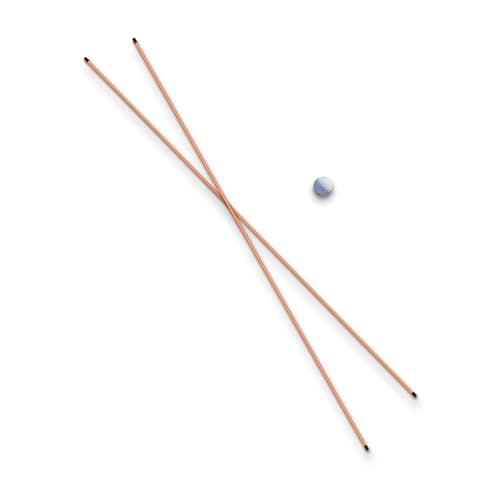
Elevate & Co. Elevate & Co. Golf Alignment Sticks
Elevate & Co. Golf Alignment Sticks

The cheapest training aid that actually works, because it isn't really a gadget.

A golfer trying to improve7.8/10$17.99Amazon
02
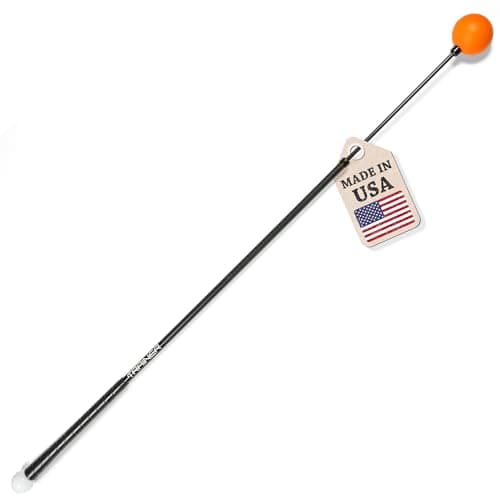
Orange Whip Orange Whip Swing Trainer
Orange Whip Swing Trainer

The training aid you'll actually see professionals using on television.

A serious training gift8.3/10$119.99Amazon

#ad · Live prices from the Amazon product API, checked October 16, 2026. Where we have no verified live price we show none — we would rather leave a gap than print a number that has rotted.

The picks

Every pick, and who it's wrong for

Elevate & Co. Elevate & Co. Golf Alignment Sticks

01A golfer trying to improve

Elevate & Co. Golf Alignment Sticks

The cheapest training aid that actually works, because it isn't really a gadget.

What it is
Two rods you lay on the ground during practice to show where your feet and the club face are actually pointing.
Why a golfer wants it
Aiming badly is one of the most common faults in amateur golf and one of the hardest to see from the inside. Alignment sticks are the standard tool for it, and you'll see them on every professional practice range.
  • 2-pack
  • 34in
  • Practice aid

Skip this if

They never practice. These are a driving-range tool, and for a golfer who only ever plays, they will sit unused.

Check price$17.99

Price checked October 16, 2026. Amazon's is the one that counts.

#ad · we may earn a commission from this link to Elevate & Co. Golf Alignment Sticks

Orange Whip Orange Whip Swing Trainer

02A serious training gift

Orange Whip Swing Trainer

The training aid you'll actually see professionals using on television.

What it is
A flexible shaft with a weighted ball on the end, swung as a warm-up and a tempo drill rather than to hit anything.
Why a golfer wants it
Most swing gadgets are gimmicks. This one turns up in real tour warm-up bags, which is about as good a signal as this category offers.
  • Counterbalanced
  • Flexible shaft
  • Multiple sizes

Skip this if

They have no space to swing it. It needs a proper clear radius — this is a garden or range item, not a living-room one.

Check price$119.99

Price checked October 16, 2026. Amazon's is the one that counts.

#ad · we may earn a commission from this link to Orange Whip Swing Trainer

Same topic

More answers on this topic

FAQ

Questions people actually ask

How do you use alignment sticks for aim?

One stick on the ground pointing at the target, feet parallel to it - not aimed at the flag. Two rails of a railway track: ball on the far one, feet on the near one.

What else can you do with alignment sticks?

Ball position (laid across at right angles), swing path (a gate just outside the ball), and swing plane (angled into the ground behind the ball).

Can you use alignment sticks during a round of golf?

They are a range tool. What may be set down during play is a Rules of Golf question - check the USGA rules pages if they play competitively.

Are alignment sticks worth buying?

Yes - about twenty dollars to fix the most common invisible fault in amateur golf, with no size, hand or batteries involved.

What length should golf alignment sticks be?

About 48 inches, because that fits down the side of a golf bag. A set that does not fit lives in the car.

Are alignment sticks a good gift for a golf coach?

One of the best - used every lesson, constantly lost, and a tool rather than a swing tip. Why that distinction matters.

Sources

Where these facts come from

Specifications are the manufacturer's own published figures, not our measurements. We don't test products and don't claim to.

  • USGA - Rules of Golf — the official rules, including what may be set down during play; this page deliberately points readers there rather than paraphrasing
  • Amazon product data — every price and length figure on this page comes from the live listing, fetched through the Amazon product API

Read next