PIN & PUTT

05 / Answers

Are indoor putting greens worth it?

They are worth it for one specific thing and useless for two others. Knowing which is which is the difference between daily use and a rolled-up mat behind a door.

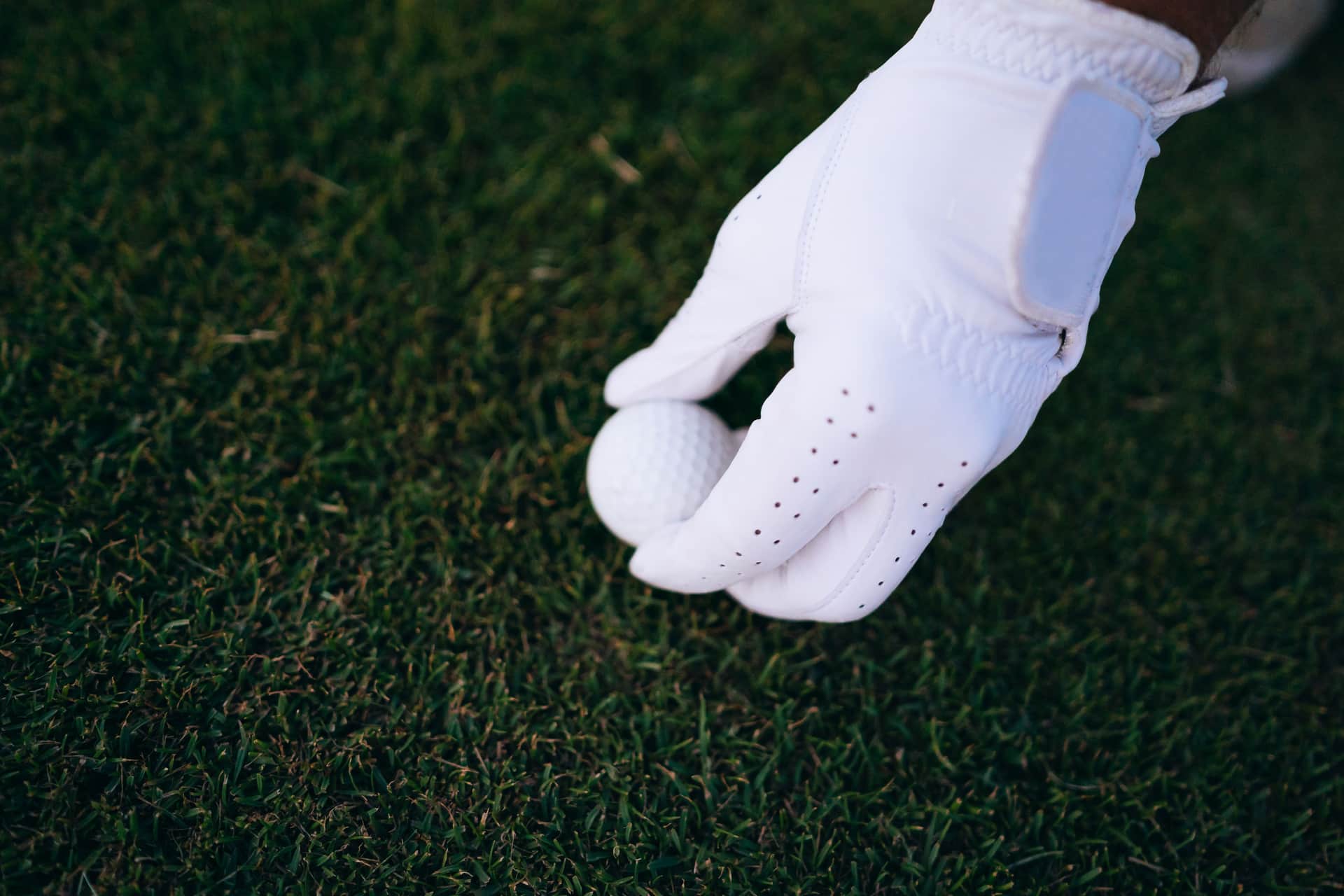
A golf glove and ball resting on grass

By Stephen V.

How we pick

The short answer

The short answer

Yes for the mechanical half of putting - stroke path, face angle at impact, starting the ball on line - because a mat in a hallway buys hundreds of repetitions a week a golfer would never otherwise get. No for judgment: reading slope, speed control and grain all need a real green, and a mat is perfectly flat and perfectly consistent by design. The practical gift questions are floor space - useful mats run 8 to 10 feet - and whether it will be left out, because a mat that gets rolled up stops being used.

What an indoor mat genuinely teaches

Putting splits into two skills that have almost nothing to do with each other. One is mechanical: swinging the putter back and through on a repeatable path, with the face square at impact, so the ball starts where it was aimed. The other is judgment: reading how much a green slopes and how hard to hit it.

An indoor mat is excellent at the first and incapable of the second, and this is not a limitation of cheap mats - it is the nature of the thing. A flat, consistent, repeatable surface is exactly what you want for grooving a stroke, and exactly what makes speed and slope unlearnable, because there is no slope and the speed never changes.

The reason that is still worth buying: short putts are mechanical. A six-footer is not a reading problem, it is a start-line problem, and start line is the thing a mat drills better than a real green because the golfer gets fifty attempts in ten minutes instead of two attempts in four hours.

What it cannot teach, said plainly

  • Speed. A mat has one speed, and it is not the speed of any particular green. A golfer who practices only indoors can arrive at a course with a beautiful stroke and no idea how hard to hit anything.
  • Reading slope. There is no slope. Some mats are molded with a gentle break, which is better than nothing and still a single fixed break rather than a skill.
  • Grain and inconsistency. Real greens are living surfaces that change through the day. That variability is half of what makes putting hard, and none of it exists on a mat.

The honest summary is that an indoor mat makes a golfer better at the putts they should hole and does nothing for the putts they lag. That is still a good trade, because the missed four-footer is the one that actually costs shots.

Mat, or trainer?

These are two different products and the distinction is worth understanding before spending anything.

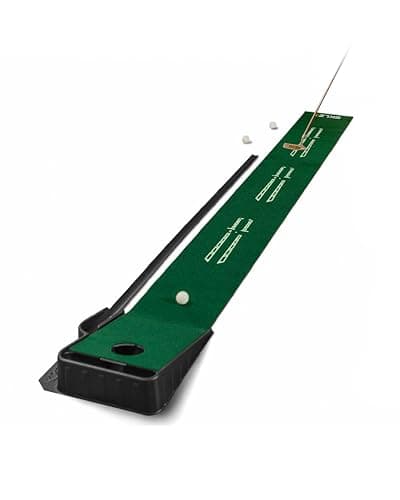
A putting mat is a strip of turf with a hole or a target at one end, usually eight to ten feet long. It gives distance, a roll that is at least roughly like a green, and a ball return so the golfer is not walking back and forth. It needs floor space and it is the version that gets used for long sessions.

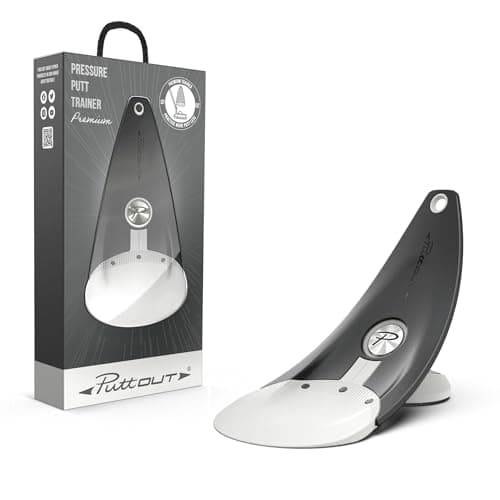
A putting trainer is a small device that sits on any surface and gives feedback on a single stroke - typically by returning a well-struck putt back the exact distance it would have rolled past the hole, and holding a perfectly struck one. It needs almost no space, it fits in a bag for pre-round use, and it is better at short-putt feedback than most mats.

For a gift, the trainer is the safer choice when you do not know the recipient's living situation, and the mat is the better one when you do and they have a corridor. The full comparison lays the two out side by side.

How much floor you actually need

More than people assume, and this is where the gift goes wrong. A mat is only part of the requirement - the golfer also needs room to stand behind the ball and take a stroke, which is another three to four feet beyond the end of the mat.

So a nine-foot mat wants roughly twelve to thirteen feet of clear floor. That is a hallway, a basement, a long living room or a garage, and it is not a studio apartment. If the space is genuinely tight, a trainer on a bit of carpet is not a compromise - it is the right product.

The other practical factor is whether it stays out. A mat that lives rolled up in a closet gets used twice. A mat that lives in a hallway gets used while the kettle boils, which is the entire mechanism by which it does any good. If the recipient shares the space with someone who will object to a permanent strip of green turf in the corridor, that is worth thinking about before buying - and is a real argument for the smaller trainer.

What makes one mat better than another

  • It must lie flat. The most common complaint about cheap mats is that they keep the curl of the box, and a mat with a wave in it is worse than carpet. Heavier backing and a mat that ships rolled face-out rather than face-in both help.
  • Ball return. The difference between a ten-minute session and a two-minute one. Without it the golfer spends the session walking.
  • A consistent, reasonably fast surface. Short dense turf rolls closer to a real green than long fuzzy pile.
  • Alignment guides, used with care. Printed lines help a golfer see whether the ball started on line, which is the whole point. They are also not on a real green, so the useful habit is to use them to check rather than to aim.

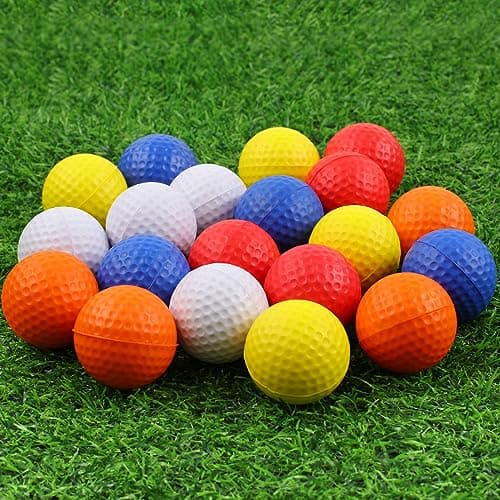
A set of foam practice balls belongs in the same conversation as the mat, for a different room: they let a golfer swing a full club indoors without breaking anything, which a putting mat does not address at all. Indoor golf gifts covers the rest of what actually works in a real house.
What to buy

Quick picks

#ProductBest forScorePrice
01
SKLZ SKLZ Accelerator Pro Putting Mat
SKLZ Accelerator Pro Putting Mat

A putting mat that sends the ball back to you, so practice doesn't mean walking.

Home practice8.3/10$47.19Amazon
02
PuttOut PuttOut Pressure Putt Trainer
PuttOut Pressure Putt Trainer

A practice tool small enough to live in a living room, which is why it gets used.

Practicing indoors8.5/10$29.99Amazon
03
Guirnd Foam Practice Golf Balls (20-pack)
Foam Practice Golf Balls (20-pack)

Eight dollars that turns a small garden into somewhere a child can actually swing.

Practicing indoors or in a garden8.8/10$7.19Amazon

#ad · Live prices from the Amazon product API, checked October 16, 2026. Where we have no verified live price we show none — we would rather leave a gap than print a number that has rotted.

The picks

Every pick, and who it's wrong for

SKLZ SKLZ Accelerator Pro Putting Mat

01Home practice

SKLZ Accelerator Pro Putting Mat

A putting mat that sends the ball back to you, so practice doesn't mean walking.

What it is
A roll-out putting surface with a ball-return ramp at the far end and an alignment guide printed on it.
Why a golfer wants it
The reason people stop practicing putting at home is fetching the ball. A return ramp removes that, and the difference in how often it gets used is the entire value.
  • Ball return
  • Alignment guide
  • Roll-up surface

Skip this if

They have deep carpet. Putting mats need a flat, firm floor to roll true — on thick pile the ball wobbles and the practice is worse than none.

Check price$47.19

$54.9914% off

Price checked October 16, 2026. Amazon's is the one that counts.

#ad · we may earn a commission from this link to SKLZ Accelerator Pro Putting Mat

PuttOut PuttOut Pressure Putt Trainer

02Practicing indoors

PuttOut Pressure Putt Trainer

A practice tool small enough to live in a living room, which is why it gets used.

What it is
A curved plastic ramp that returns a well-struck putt back to you and rejects a bad one, so it gives feedback without needing a hole.
Why a golfer wants it
Putting is roughly 40% of the shots in a round and the easiest thing to practice at home. Most training aids are too big to leave out; this one isn't, and that's the difference between used and unused.
  • Returns made putts
  • Portable
  • No hole required

Skip this if

They have no carpet or hard floor with a straight run. It needs a couple of meters of flat surface, which not every home has.

Check price$29.99

Price checked October 16, 2026. Amazon's is the one that counts.

#ad · we may earn a commission from this link to PuttOut Pressure Putt Trainer

Guirnd Foam Practice Golf Balls (20-pack)

03Practicing indoors or in a garden

Foam Practice Golf Balls (20-pack)

Eight dollars that turns a small garden into somewhere a child can actually swing.

What it is
Regulation-diameter foam balls that fly a fraction of the distance of a real one.
Why a golfer wants it
The limiting factor for a junior golfer is somewhere to hit balls. Foam balls remove it: a hallway, a garden or a garage all become practice, and nothing gets broken.
  • Listing states: 41mm
  • 20-pack
  • Limited flight

Skip this if

You expect them to behave like real balls. They are deliberately limited-flight, so they teach contact rather than distance.

Check price$7.19

$7.9910% off

Price checked October 16, 2026. Amazon's is the one that counts.

#ad · we may earn a commission from this link to Foam Practice Golf Balls (20-pack)

Same topic

More answers on this topic

FAQ

Questions people actually ask

Do indoor putting greens actually help?

Yes for stroke and start line, which is where short putts are missed. No for speed and slope - a mat is flat and consistent by design.

How much space do you need for an indoor putting green?

Mat length plus three or four feet to stand in - so a nine-foot mat needs about thirteen feet of floor. Less than that, buy a trainer instead.

What is the difference between a putting mat and a putting trainer?

A mat is turf and needs a corridor. A trainer is a small device that gives feedback on one stroke and fits in a bag. Compared here.

Are indoor putting greens a good gift?

Good if you know they have the floor and will leave it out. A mat that gets rolled up stops being used - if unsure, buy the compact trainer.

Can you practice putting on carpet instead?

You can, but carpet is slow and the pile pushes the ball offline - which ruins the one thing indoor practice is good for.

Do putting mats with a slope or break help?

A little. One fixed break is variety, not green reading - the skill is judging an unfamiliar slope.

Sources

Where these facts come from

Specifications are the manufacturer's own published figures, not our measurements. We don't test products and don't claim to.

  • Amazon product data — every price, length and material figure on this page comes from the live listing, fetched through the Amazon product API

Read next