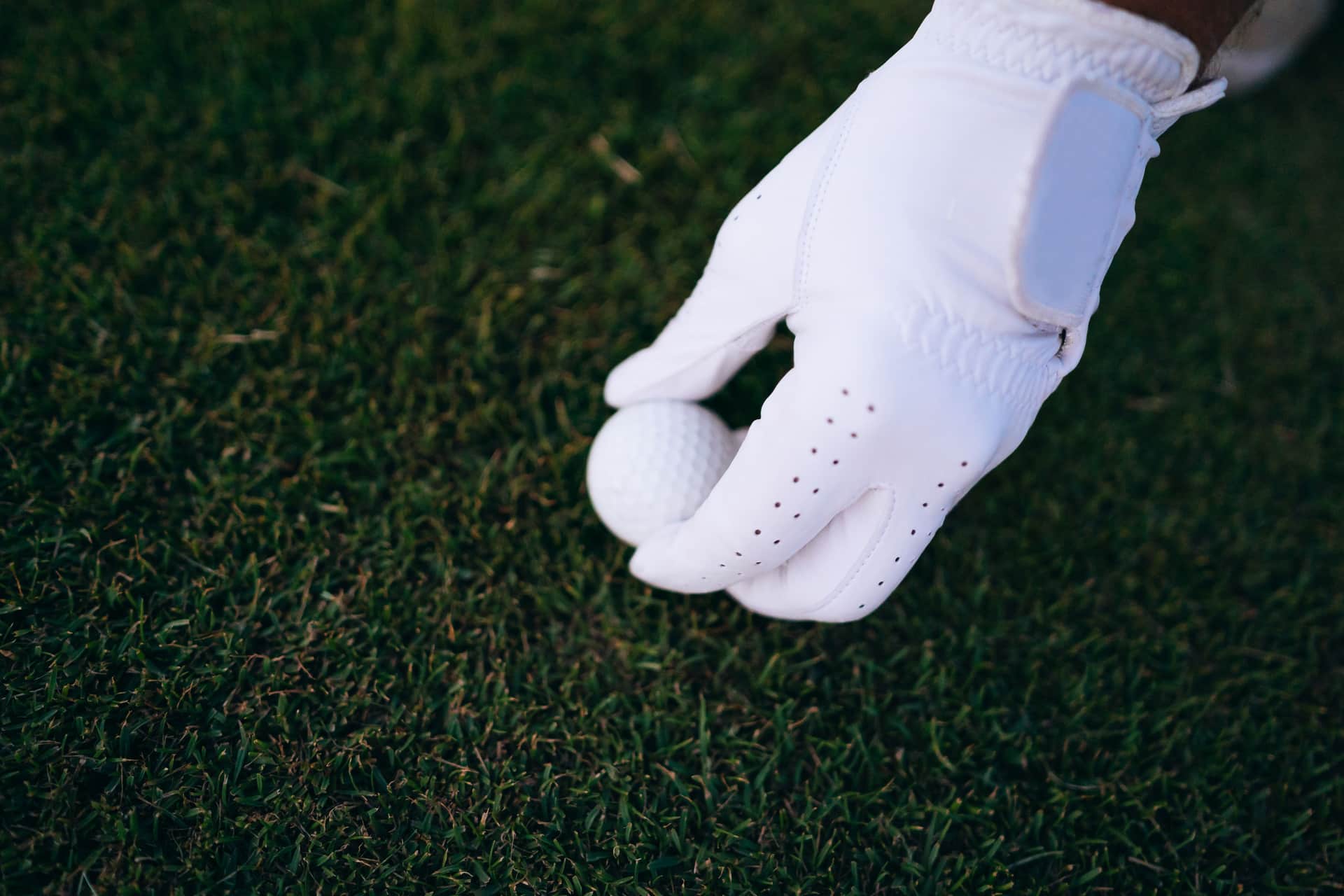
What a glove actually does
Two things, and only two.
It improves grip.A golf swing accelerates the club to a considerable speed, and the hands have to hold on through that without squeezing so hard that the arms tense up. A glove's palm material grips the rubber of the club grip better than skin does, particularly when the hand is sweaty.
It prevents blisters. The repeated friction of a club grip against the same part of the palm builds calluses over time, and blisters before that. A glove takes that wear instead of the hand.
That's the whole list. A glove doesn't make anyone hit the ball better or further, and any claim otherwise is marketing.
Who needs one most
Beginners, more than anyone. New golfers grip too hard — it's practically universal — which means more friction, more blisters, and more benefit from a glove. It also removes one small thing to worry about.
Anyone playing in heat or damp.Sweaty hands and a rubber grip is a bad combination, and it's the situation where a glove most obviously earns its place.
Golfers with grip strength issues— arthritis, an old injury, or simply age. There are gloves built specifically for this, with padding over the palm's pressure points, and they keep people playing longer. That makes them a genuinely thoughtful gift for an older golfer rather than a generic one.
Who plays without one
Some very good golfers don't wear a glove at all — Fred Couples is the famous example. The reasoning is usually feel: nothing between the hand and the club is the most direct connection possible.
That works if you have well-developed calluses and a light grip. For most amateur golfers, neither is true, which is why the large majority wear one.
What this means for buying one as a gift
Gloves are one of the best-value golf gifts there is: cheap, always needed, and consumable in a way that makes duplicates useful rather than awkward. A golfer who plays weekly goes through several a year — they stiffen, the palm goes shiny, the thumb splits — and most people put off replacing them.
Two things to get right before you buy: the hand (a right-handed golfer wears it on the left — see which hand does a golf glove go on) and the size, which is printed on the cuff of one they already own.
Our golf glove guide has the picks, including the two-packs that make the most sense as a gift and the padded ones built for arthritic hands.