Why this is a materials question
A golf glove has one job: stop the club turning in the hand. It does that through friction between the palm material and the rubber grip, and moisture destroys friction.
Leather is the premium glove material because it is thinner and the hand feels closer to the club. It is also skin, and it behaves like skin: it soaks up sweat, goes slippery while saturated, and then dries hard and shiny. A golfer with sweaty hands in a leather glove gets two or three good holes, a slick middle, and a glove that comes out of the bag next week stiff as cardboard. Synthetic blends hold less water, keep more of their grip while damp and survive being soaked and dried repeatedly.
The full materials comparison, without the sweat problem attached, is on leather vs synthetic golf gloves.
Two gloves beats one better glove
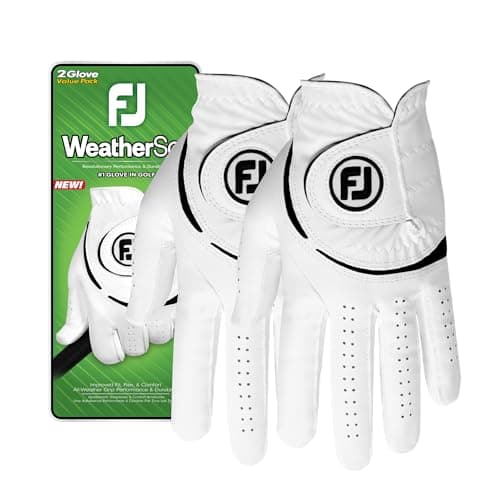
This is the practical answer and almost nobody buys it deliberately. No glove stays dry through four hours of humidity. What works is swapping at the turn: the damp one goes on the outside of the bag to dry in the air, the dry one goes on, and the second half of the round feels like the first.
Which is why a two-pack is the gift rather than an upgrade in material. It costs about what one premium leather glove costs and it solves the problem the leather glove cannot.
Where a rain glove fits
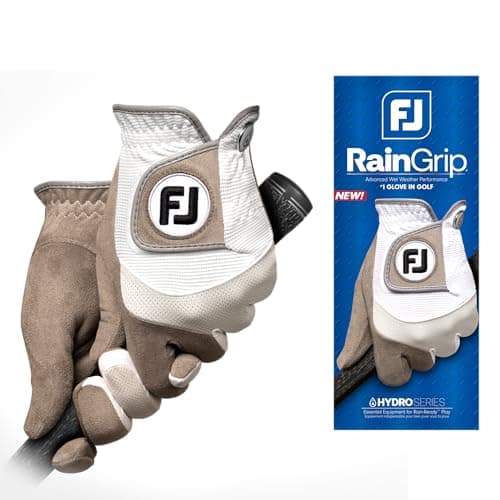
A rain glove is a different product, made from a knit that FootJoy publishes as gripping more securely when damp — which sounds like marketing and is how the material actually works. They are sold as a matched pair for both hands, because the hand without a glove is the one that slips in genuinely wet conditions.
For a gift, they have an unusual advantage: very few golfers buy them for themselves, so they are rarely a duplicate. They are also useless to a fair-weather golfer, so only buy them if you know the recipient plays through weather.
The thing that helps more than any glove
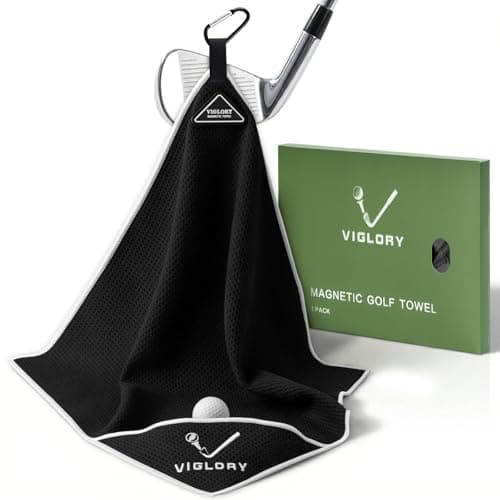
A towel. A golfer with sweaty hands is also putting sweat onto the grips, and a wet rubber grip is slipperier than a damp glove. Wiping hands and grips every few holes does more for control than any glove in this category, and it costs about a sixth of one. The catch is the towel has to be reachable, which is what the magnetic and clip-on versions are for.
Before you buy any glove as a gift
Two things make a glove unusable rather than merely imperfect, and both are invisible if you do not play.
The hand. Golfers wear one glove, on the weaker hand — so a right-handed golfer wears it on the LEFT. Buying the wrong hand makes the gift useless. The full explanation is on which hand a golf glove goes on.
The size. Gloves run small to extra large, plus cadet sizes for a wider palm with shorter fingers, and a glove must fit tightly to work. The only reliable method is reading the size off one they already own — how to size a golf glove covers it. If you cannot do either, buy the towel and give the glove money to something with no size on it.