Why it matters, in one paragraph
The grooves cut into the face of an iron or a wedge exist to channel away grass and water at the moment of impact, so the ball can grip the face and spin. Spin is what makes a shot stop on a green instead of bouncing through it.
Pack those grooves with dried mud and the face behaves like a smooth one. The ball comes off with less backspin, flies a little further than expected and runs on landing - which is the worst kind of error, because the golfer cannot see the cause. They only see a ball that went through the back of the green and have no idea why. That is the whole argument for cleaning clubs, and it is why a cheap brush is the best-value piece of golf equipment there is.
The five-minute method at home
- Fill a bucket with warm, not hot, water and a squeeze of washing-up liquid. Hot water can soften the epoxy that holds a head onto a shaft, which is the one genuinely destructive thing in this process.
- Stand the irons in it head-down for about five minutes, with the water level below the hosel - the socket where the head meets the shaft. The point is to soften what is in the grooves, not to soak the club.
- Scrub the face with a nylon brush, working along each groove rather than across it. A tee or a wooden toothpick clears anything stubborn.
- Rinse and dry immediately with a towel. Drying is the part people skip and it is the part that prevents rust.
- Wipe the grips with a damp cloth and let them air dry. Grips get slippery from skin oils rather than dirt, and a wipe restores most of the tackiness people think they have lost permanently.
What not to do
- Do not soak woods, drivers or putters. Painted crowns and the composite construction of a modern driver do not want to be sat in water. Wipe them with a damp cloth instead.
- Do not use a dishwasher. It comes up often and it is a genuinely bad idea - the heat and the detergent attack the epoxy, the ferrules and any paint fill in the lettering.
- Keep steel bristles off the face. Steel is for clearing packed material out of grooves, not for scrubbing a club face, and it will mark a soft forged iron or a painted crown. Most golf brushes are deliberately two-sided for this reason: nylon on one side, steel on the other.
- Do not put clubs away wet. Damp clubs in a zipped bag in a garage are how rust starts, which brings us to the next section.
Rust, and what to do about it
Rust on an iron head is almost always cosmetic rather than structural, and it almost always comes from the same cause: a wet club put back in the bag and left. Surface rust on the sole or the back of a head affects nothing except how the club looks.
A nylon brush and warm soapy water remove light surface rust. Heavier spotting needs a mild abrasive, and a dedicated club polish is the safe version of that - it is formulated to be gentler than the household abrasives people reach for. What matters far more than removing it is preventing it, which is a towel and a dry bag rather than a product.
One category of rust is not cosmetic: a rusty shaft at the point it enters the head, or rust under a loose ferrule, is a repair question for a club shop rather than a cleaning question.
Cleaning during a round, which is where it actually happens
Almost nobody cleans a full set at home every week. What golfers actually do - and what the tour players you see on television do after every single shot - is clean the one club they just used, immediately, before the dirt dries.
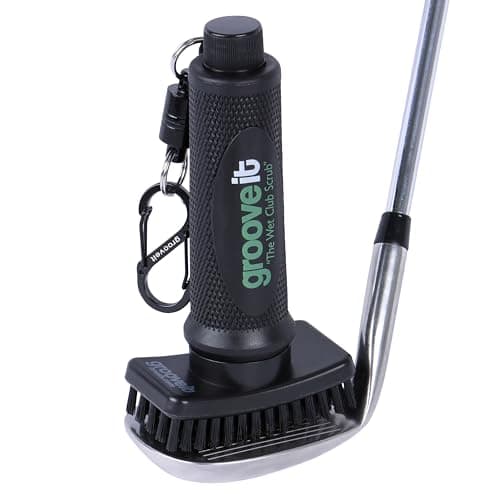
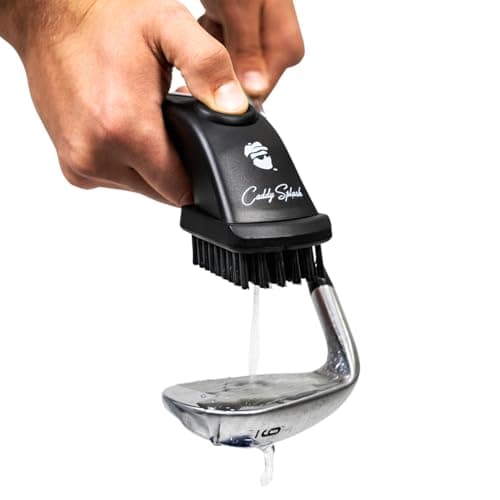
That is a ten-second job and it needs two things: water and a brush. A damp towel does half of it. A water brush - a brush with a small reservoir in the handle and either a pump or a push button to wet the bristles - does all of it, and it is the reason this guide has products attached at all.
The honest distinction, and the only one that matters when buying: a dry brush scrapes, a water brush cleans. Dried mud needs wetting before it will come out of a groove, and a golfer who has to walk to a water cooler to wet a brush will not do it.
What to look for in a cleaning tool
- An anti-leak design, stated by the maker.This is the category's main failure mode. A reservoir brush lives in a bag pocket next to a phone and a glove, and a leaking one ruins an afternoon. Only some listings claim it; prefer those.
- A retractable zip-line clip. It keeps the brush on the outside of the bag where it will actually be used, rather than in a pocket where it will not.
- Nylon on one side, steel on the other. Nylon for faces and woods, steel for grooves only.
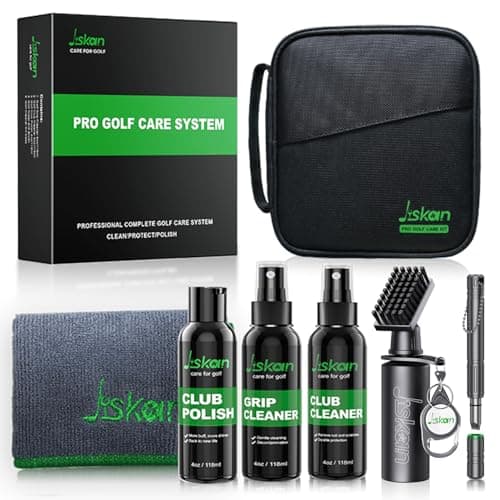
- A groove sharpener only if the recipient knows what it is. Boxed cleaning kits often include one. In the wrong hands it reshapes grooves rather than clearing them, which can take a club outside the equipment rules for competition. If you are giving a kit to a beginner, tell them to leave that tool in the case.
If you are buying this as a gift rather than for yourself, the useful thing to know is that a club brush is one of the few golf purchases with no size, no hand and no brand loyalty attached - which is why it turns up on gifts for beginners and stocking fillers alike.