The three facts, and why you cannot skip them
Golf balls, gloves, towels and rangefinders are forgiving gifts because they fit everybody. A driver fits one person. Every listing on this page is a specific combination of three things, and the listing you click is not the same product as the one next to it even though the photographs are identical.
- Hand. A left-handed golfer cannot use a right-handed driver. The face points the wrong way; there is no adapting to it. The left-hand version of any given driver is a separate listing with its own stock, and it is the one that runs out first - checking listings for this page, one model shipped immediately in right hand and was quoted at one to two months in left. Every pick on this page is the right-handed build unless its name says otherwise.
- Flex. How much the shaft bends during the swing. Too stiff for the golfer and the ball goes low, right and short. Makers publish flexes as senior (sometimes A or light), regular, stiff and extra stiff, and a beginner belongs in senior or regular almost without exception.
- Loft. The angle of the face, in degrees. Low loft is for people who generate their own height through speed. Beginners are not those people.
The hand is the fact you cannot guess and cannot work around. If you do not know it, ask - and ask about which way round they stand rather than which hand they write with, because those disagree more often in golf than in anything else. Plenty of right-handed people play left-handed because that is the set they were first handed. If the person you are buying for is left-handed, we have a whole page of gifts for left-handed golfers, including the sets that actually exist in that hand.
A beginner's driver problem is a slice, not a distance shortage
Driver marketing sells yards. The thing that actually ruins a new golfer's round is the slice: for a right-hander the ball starts left and curves hard right, finishing in the trees or the next fairway. It happens because the clubface is open - pointing right - at the moment it meets the ball, and at driver length a small amount of open face becomes a very large amount of sideways.
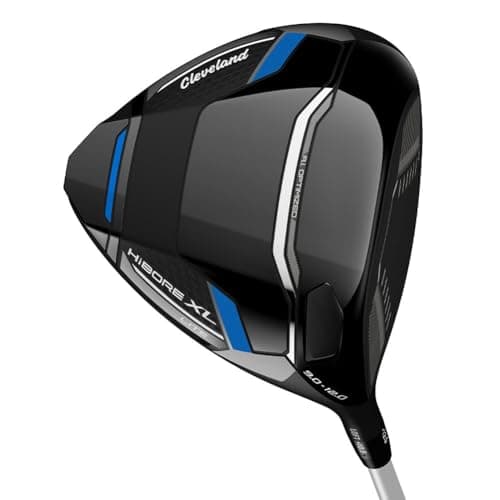
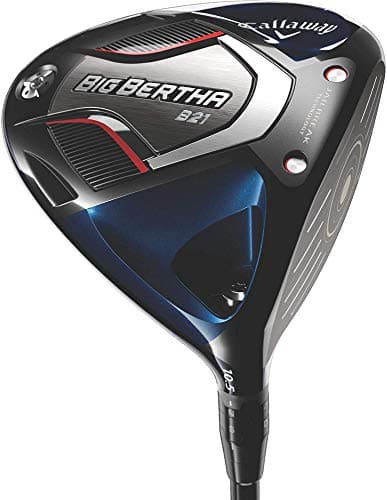
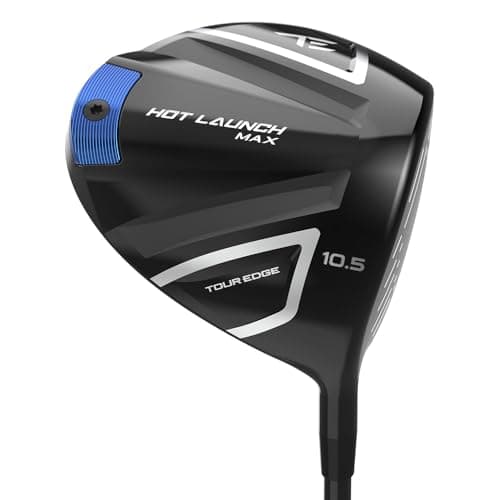
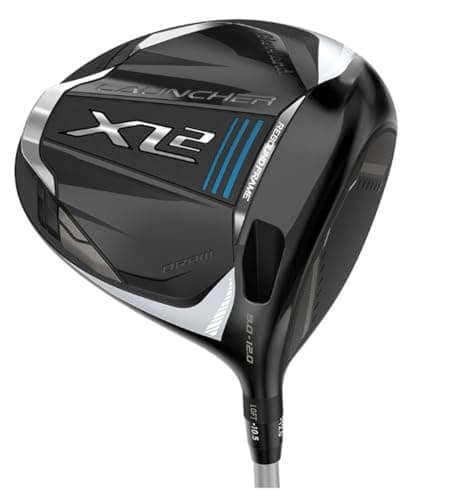
This matters for your purchase because manufacturers sell two versions of the same head: a standard one and a draw-biased one. Draw bias means weight is moved toward the heel so the face rotates closed more readily through impact. Cleveland sells the Launcher XL 2 and the Launcher XL 2 Draw and states the Draw model has a reworked chassis specifically to help golfers square the face. Callaway publishes internal draw-bias weighting on the Big Bertha B21. Tour Edge sells a Max and an offset Max D.
For a gift that distinction is worth more than any amount of carbon in the crown. The draw-biased version costs the same, and it is aimed at the miss your golfer is already making. The only reason to avoid it is if they hook the ball - miss left - which beginners essentially never do.
Loft: buy more than feels right
Driver lofts run from about 9 to 12 degrees. The instinct is to buy low, because low loft sounds powerful and the clubs tour players use are 9 degrees or less. That is exactly backwards for a beginner.
Loft is how the ball gets into the air. A fast swing creates height on its own through speed and spin, so a strong player can afford a shallow face. A slower swing cannot, and a 9-degree driver in the hands of someone swinging at ordinary speed produces a low shot that lands early and stops. More loft also reduces sideways curve for simple geometric reasons, which means the higher-lofted club is both longer and straighter for the golfer you are buying for.
Buy 10.5 degrees as a default and 12 degrees for an older or slower golfer. Every pick on this page is 10.5 or above, and that is deliberate.
Flex, in plain English
A driver shaft is a spring. It loads during the downswing and unloads through the ball, and the flex rating describes how readily it does that. A shaft too stiff for the golfer never loads, so the face arrives open and low. A shaft too soft for a strong golfer loads unpredictably and the club feels like it is arriving late.
The honest rule for a gift buyer: unless the person you are buying for is young, strong and hits the ball a long way, choose regular. If they are over about sixty-five, or they tell you they have lost distance, choose senior. Those two options cover nearly every beginner, and the penalty for being one step too soft is much smaller than the penalty for being one step too stiff.
Graphite rather than steel, always, on a driver. Every club on this page is graphite because nothing else is sold in this category - lighter shafts let the head move faster, which is the whole point.
What "forgiveness" actually means
Forgiveness is the one specification worth paying for, and it is the one nobody explains. It means how little the club punishes a strike away from the middle of the face. The technical measure is moment of inertia, usually shortened to MOI - resistance to twisting. A head that twists less on a heel strike loses less speed and sends the ball less sideways.
Big heads are forgiving heads, which is why every driver here is at or near the 460cc volume limit the rules allow, and why the models aimed at beginners have names like XL and Max. The figures manufacturers publish are relative rather than absolute: Cleveland states a 12 percent increase in high-low MOI over the previous generation on the Launcher XL 2. That is a real number about a real improvement and it tells you nothing about how it compares to a Callaway. Nobody publishes a comparable one.
Which is the honest limit of this page. We compile what manufacturers publish and we have no lab, so we will not tell you that one of these is four yards longer than another. What we will tell you is that all five are built for the same kind of golfer, that the differences between them are small, and that hand, flex and loft matter more than any of it. How we pick, in full.
What the money buys, and where it stops
A driver is the most expensive single club in the bag and this page spans a wide range. Roughly, the money goes like this.
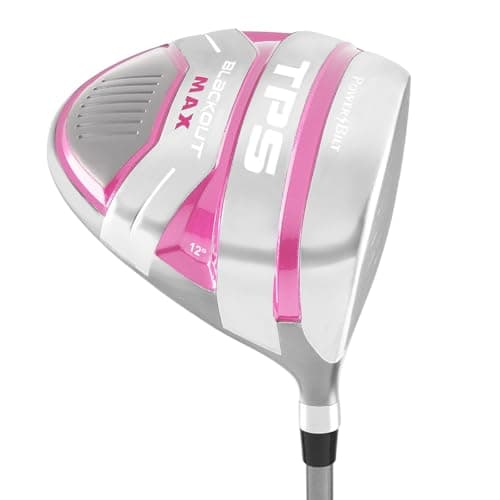
At the bottom - well under a hundred dollars - you get a playable club from a brand nobody on the course recognizes, usually with a fixed hosel and a basic shaft. That is a reasonable first driver for someone who may not stick with golf, and it is where the women's pick here sits.
In the middle, two to three hundred, you get a current or recent game-improvement head from a real golf company, an adjustable hosel, and a shaft chosen to launch the ball rather than to save money. Every other pick on this page is here, and this is where a beginner should be buying.
Above that, four hundred and up, you are buying this season's flagship. The gains are real and they are small, they are measured in a fitting bay by people who can repeat their swing, and a beginner cannot access them. Spending it anyway is a perfectly good way to give a generous present, but do not believe it will straighten the ball out.
A note on last season: several picks here are a model year or more old, and that is the best value in golf equipment. A driver two generations back was a flagship when it launched and is now half price. The honest caveat is availability - old listings go out of stock without warning, which is why every price on this page is fetched live rather than typed in.
Adjustable hosels, and why they are not for you
Most mid-priced drivers now have an adjustable hosel: a sleeve at the base of the shaft that lets you change loft in half-degree steps. Cleveland publishes a 9 to 12 degree range on the Launcher XL 2; Callaway publishes an Optifit hosel with a three-degree span.
It is a genuinely useful feature and it is not a feature you should use. Changing it needs a torque wrench, which is included, and knowledge of what the change does, which is not. Buy the loft you want and leave the sleeve alone. Where adjustability earns its keep is later: if your golfer ever goes for a fitting, the club can be tuned to them instead of replaced.
What we left off, and why
Non-conforming and "illegal distance" drivers. They exist, they are cheap, and they are a trap. A non-conforming head breaks the equipment rules, which means any round played with it does not count for a handicap and it cannot be used in a club competition. Giving one to a beginner who then joins a club is giving them a club they have to replace.
Used drivers. Often the best value in the category and a bad gift. You cannot assess a shaft from a photograph, hand and flex on second-hand listings are frequently wrong, and there is no return path when it is.
Anything at 9 degrees. Low-loft heads appear at good prices because they are the ones nobody buys. There is a reason nobody buys them.
Driver-and-fairway-wood combinations. A beginner needs one club that goes a long way off a tee, not two. If they need more than that they need a whole bag, and best beginner golf sets is the better page - a complete set costs little more than a single driver here and solves eleven problems instead of one.
If you cannot confirm the three facts
Then do not buy a driver. This is the one gear category where we would rather talk you out of the purchase than sell you a coin flip, because a driver in the wrong hand or the wrong flex is not a slightly disappointing gift - it is an unusable object that cost several hundred dollars and has to be sent back.
The gifts that work instead, in rough order of how much they feel like a driver: a driver headcover, which fits every driver ever made and sits on top of the bag where their playing partners see it; a rangefinder, which is the big-ticket golf gift with no fit at all; or a dozen balls in the brand they already play. If you want the driver to be the gift, a card promising to go and buy one together is a better present than a guess, and every golfer who has been handed the wrong club knows it.