Measure the child, then read the box
Junior golf clubs are advertised by age and built to a height. Every set on this page has an age on the listing because that is what a gift buyer searches for, and every one of them also publishes a height range, which is the number that actually decides the fit. Those two numbers come apart constantly: a tall eight-year-old and a small eleven-year-old are the same golfer as far as the clubs are concerned.
So before you buy anything, stand the child against a wall and get their height. It takes a minute and it is the whole decision. If you are buying at a distance and cannot measure, ask for the height rather than the age — a parent will know it, and asking does not give the present away the way asking about golf would.
Then buy toward the TOP of the band rather than the middle. Children in the 8-to-12 range grow through a set in something like eighteen months, and a set that is very slightly long is survivable in a way that a set two inches short is not.
Why a club that is too long is the thing that ends it
This is worth spelling out, because it is invisible if you have never swung a golf club. A club that is too long for the person holding it forces them to stand further from the ball than they should, and from there the clubhead arrives on a flatter path and the strike comes off the bottom edge. The ball scuttles along the ground. It happens on nearly every swing, it does not improve with practice, and the child concludes that they are bad at golf rather than that the clubs are wrong.
Adult clubs cut down are a related trap. Shortening a shaft stiffens it, which is the opposite of what a slow junior swing needs — junior sets use deliberately soft graphite shafts for exactly that reason. A cut-down adult iron is heavy, stiff and unforgiving all at once. If someone offers you a bag of old clubs to shorten, it is a kind offer and a bad set of clubs.
The four bands, and what each one actually needs
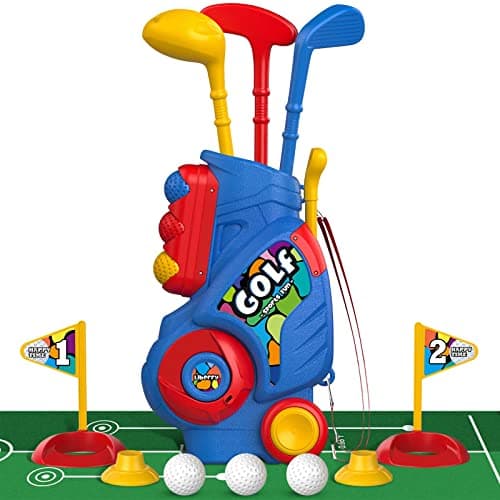
- Roughly one to four. A toy. The point at this age is swinging at something indoors without breaking a window, and real junior clubs are heavier than the child. The Liberry set is honestly labeled as a toy and is the right thing to buy.
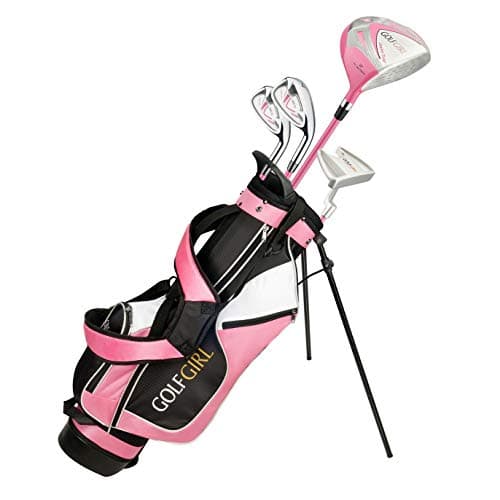
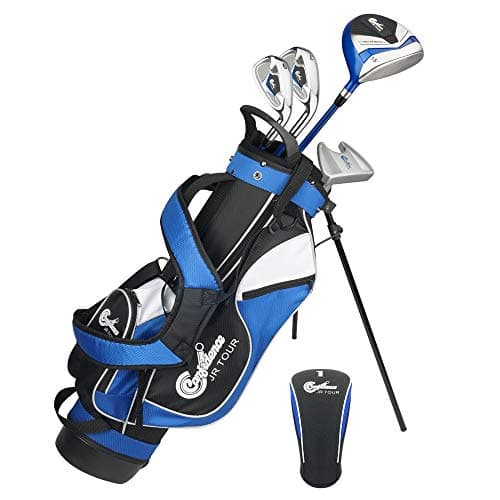
- Four to seven, up to about 4ft 6in. A first real set — a driver, a couple of irons, a putter and a stand bag, on junior-flex shafts. Golf Girl publishes exactly that band for the V3.
- Eight to twelve, 4ft 6in to 5ft 1in. The biggest band and the one most gift buyers are in. This is the age golf either sticks or does not, and whether the child can get the ball in the air is most of that.
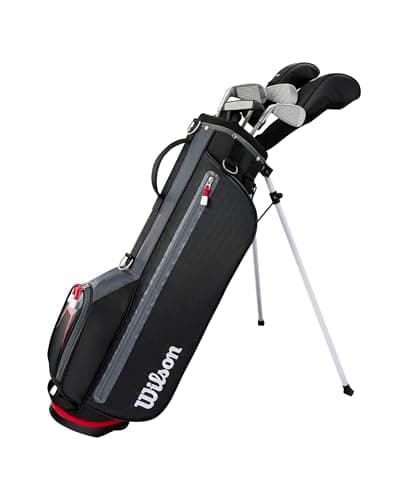
- Twelve and up, or a child already in club competitions. More clubs than a starter set carries, and a name in the bag they recognize. The Wilson Profile Junior in large is that set. It is also three times the price, which is a lot to spend before you know golf has taken.
Handedness, and the question you have to ask
Junior sets are sold by hand, and the listings we link are the right-handed ones. Roughly one child in ten is left-handed, and a left-handed child handed right-handed clubs cannot use them at all — this is not a fit compromise, it is an unusable gift. Left-handed junior sets exist in most of these lines; you simply have to select the left-hand listing.
The complication is that handedness in golf is not always the same as handedness writing. Plenty of right-handed people play left-handed and the reverse. If the child has played before, ask which way round they stand. If they have never played, go with their writing hand, which is the convention and is right most of the time.
What else to put in the bag
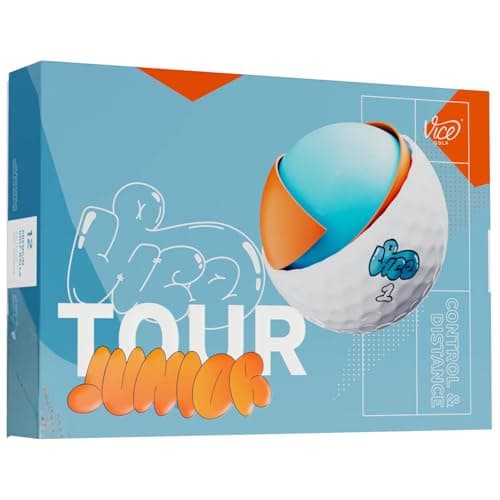
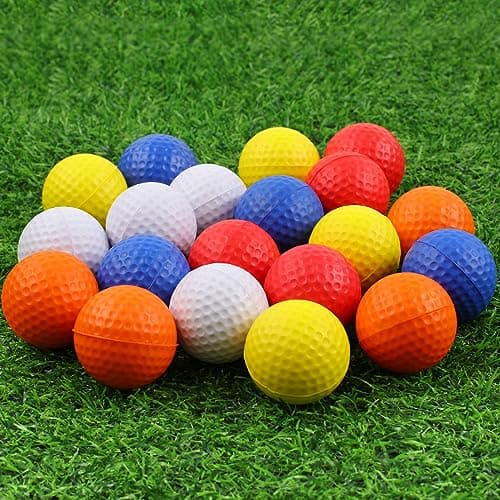
Two things turn a set of clubs into something a child uses. The first is a ball soft enough for a slow swing to compress — a firm adult ball barely deforms at junior swing speeds and genuinely does not go as far. The second is somewhere to hit. The limiting factor on junior golf is almost never equipment; it is that a driving range costs money and needs a lift. Twenty foam balls and a garden solves it for under ten dollars, which is why they sit on this page next to sets costing thirty times as much.
If you want the wider junior-gift spread rather than the clubs specifically — balls, markers, cheap accessories, things that go in a stocking — that is on golf gifts for kids, which sorts by what a child actually wants rather than by what fits them. For a teenager who has outgrown all of this, golf gifts for teens is the right page.
What we left off, and why
No single clubs. A junior who needs one club needs a 7-iron, and a 7-iron on its own is a strange gift that cannot play a hole. No custom-fitted junior clubs, which are a real thing and a genuinely good thing, and also require the child present at a fitting — not a purchase you can make for someone else. No used sets, because junior shafts are the part that matters and you cannot assess a shaft from a photograph.
And no adult beginner set described as suitable for a tall teenager. If you are buying for someone who has stopped growing, the adult sets on best beginner golf sets are the right page and a far better use of the money.