The ceiling is the constraint, not the budget
Start here, because it decides everything else. A golfer needs roughly ten feet of ceiling height to make a full swing with a driver indoors, and about the same again in width to swing without catching a wall. A standard eight-foot garage ceiling is not enough for a driver, though it is often enough for irons.
If the person you are buying for has a garage, a basement with height, or a garden they can hit into, the launch monitors on this page are all viable. If they have a normal living room and nothing else, buying one is buying a box that stays in the box — and the swing-sensor option is not a consolation prize, it is the correct answer for that house.
Launch monitor versus swing sensor
These are two genuinely different products that get sold under the same heading, and the difference matters.
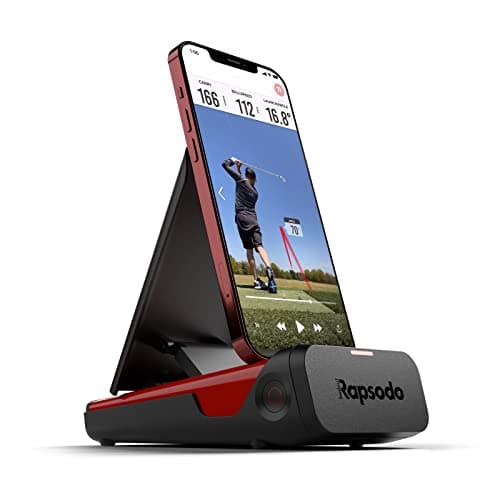
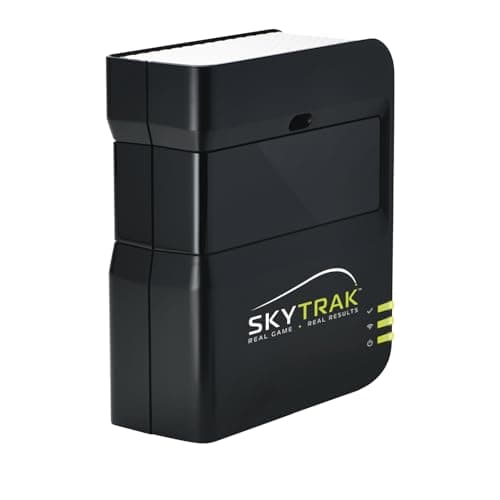
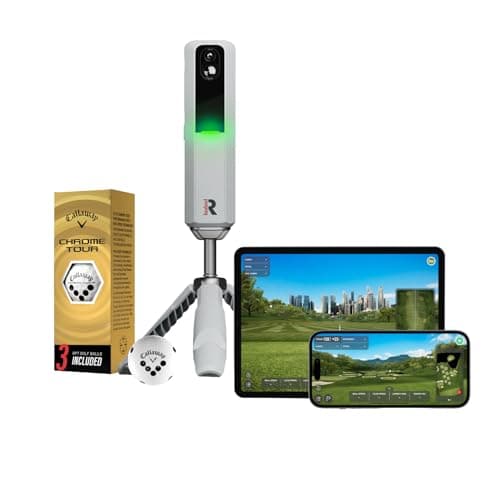
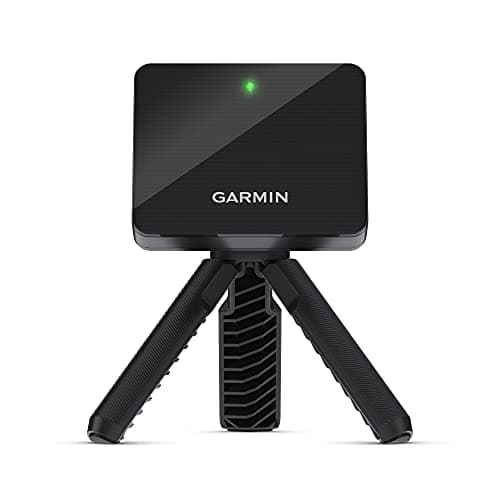
A launch monitor measures a struck ball: ball speed, carry distance, often spin. It tells the golfer what actually happened, which is the thing they cannot find out any other way. It requires hitting a real ball into something.
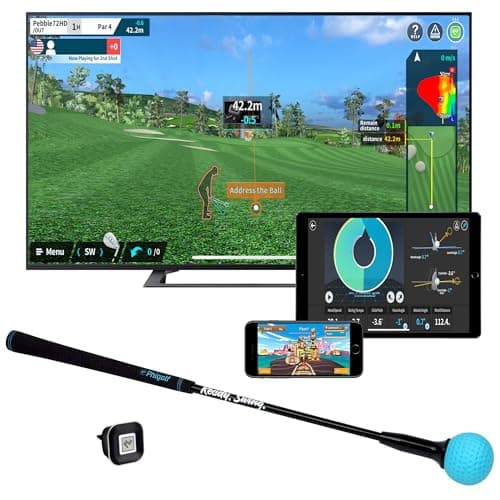
A swing sensor reads the club through the swing and simulates the result. No ball is struck, so no net is needed and it works indoors anywhere. It cannot tell them what the ball did, because there was no ball. As a game and a winter practice-swing tool it is excellent; as measurement it is not the same category.
Radar or camera
Among launch monitors there is a second split. Radar units track the ball in flight and want space behind and in front of the ball to see enough of it. Photometric units photograph the ball in the first inches after impact, which means they cope better with tight indoor spaces.
For a garage setup with limited depth, that difference is practical rather than academic. For someone using it mostly at a driving range, radar is generally the cheaper route to good numbers.
What else the setup needs
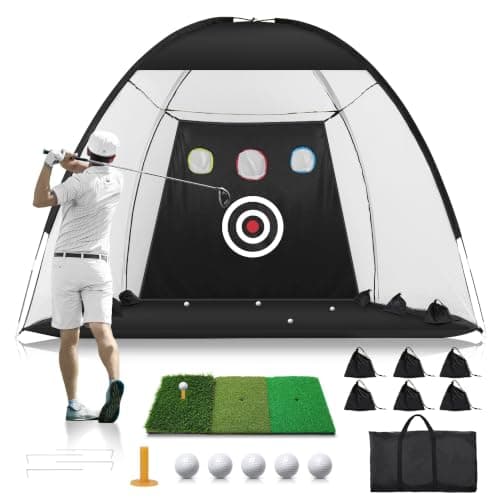
The monitor is not the whole purchase, and this is where budgets get away from people. A usable home setup also needs a net rated for full swings, a hitting mat that will not wreck their wrists, and something to display the software on — a tablet, a laptop or a projector.
A net and mat package is around $50 to $200 and is a legitimate gift by itself for a golfer who already owns a monitor, or for anyone who just wants somewhere to hit balls in the garden. Some simulation software is also sold separately from the hardware, which is worth checking on the listing before you assume the gift is complete in one box.
Who this is actually a good gift for
Someone who has mentioned wanting one. That sounds glib, but this is a several-hundred to several-thousand-dollar device with a real setup burden, and it is the one category on this site where a surprise is riskier than a conversation.
The strongest cases are a golfer who lives somewhere with a long winter, a golfer who has a garage and has already put a net in it, and the golfer who owns everything else — because a home setup is the one thing left that they do not have. The weakest case is a casual player who plays six times a summer, for whom this is an expensive object that gathers dust next to the bikes.
If the budget is the problem
A net and a mat on their own turn a garden into a practice area for well under a hundred dollars, and they are what most golfers actually need. Adding a training aid — alignment sticks or a putting trainer — makes a complete, genuinely useful gift for a fraction of a launch monitor, and it will be used far more often.
Before you spend anything in this category, price the whole project rather than the device. A net or screen, a hitting mat and roughly ten feet of ceiling are not included with any of these and routinely double the budget - how much does a golf simulator cost goes through the four tiers and the costs nobody quotes.
None of these include the thing that stops the ball
Worth stating plainly, because it is the most expensive surprise in this category: every launch monitor here measures a golf shot and none of them catch it. Indoors that means a net, and outdoors at a range it means nothing at all. If the gift is meant to work at home on day one, the practice nets page covers the net and the hitting mat it needs, including the ceiling-height number that rules most garages out before anything else does.