Measure the ceiling before you buy anything
This is the check that decides half of this category, and it takes thirty seconds. A golf swing needs meaningful clearance above the head at the top of the backswing, and a standard residential ceiling does not provide it. People discover this by putting a wedge through a light fitting.
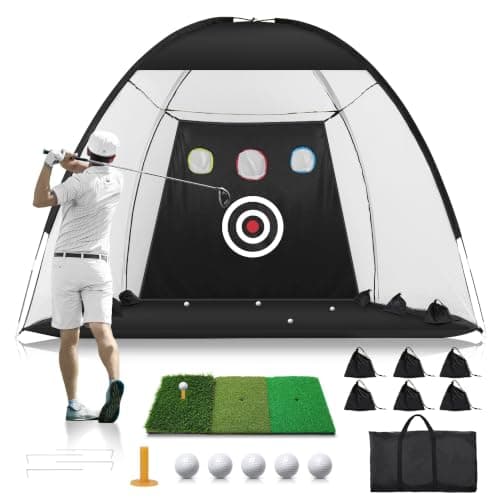
So the category splits cleanly in two. Putting and short-game gifts work in any room with a few feet of floor — no height needed, no risk to the ceiling, and they can be left out permanently, which is the single biggest factor in whether practice gear gets used at all. Full-swing gifts — nets, hitting mats, launch monitors — need a garage, a basement with real height, or a backyard. Buy one for an apartment with an eight-foot ceiling and it goes back in the box.
Why putting is the highest-value indoor gift
Putting is roughly forty percent of the strokes in a round and the part of the game most golfers practice least, because doing it properly means driving to a course. It is also the only part of golf that transfers honestly to a carpet: the stroke is short, slow and repeatable, so a living-room rep is close to a real one in a way a living-room drive never is.
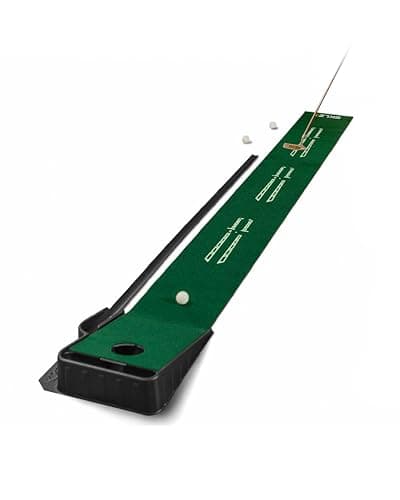
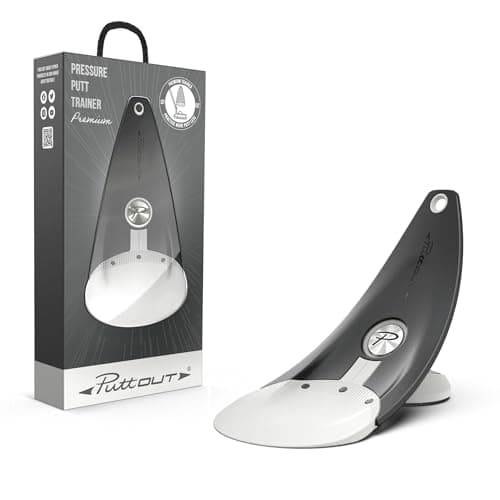
The practical difference between the options is what happens after the ball stops. A mat with a return sends it back to you; a trainer that returns made putts does the same and adds feedback on whether the pace was right. Either removes the walking, which sounds trivial and is actually the reason indoor putting gear either gets used daily or gets put away in February.
Putting mat versus putting trainer goes through which suits which golfer properly.
Foam balls, and the thing they're actually for
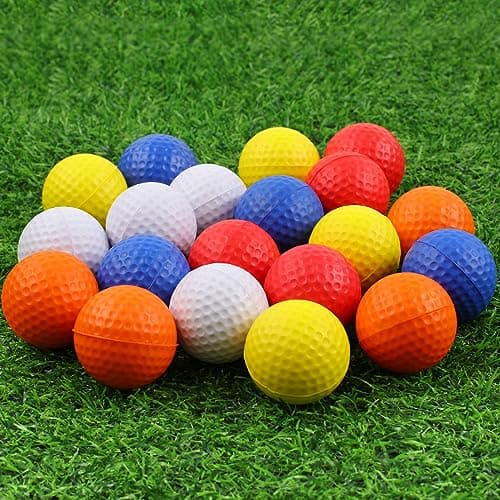
Limited-flight foam balls are the cheapest way to make a small space usable, and their purpose is regularly misunderstood. They are not a worse golf ball. They are a tool for practicing contact — whether the club met the ball cleanly — in a room where a real ball would go through a window. Nobody should expect distance from them, and a golfer who understands that gets a lot of value for very little money.
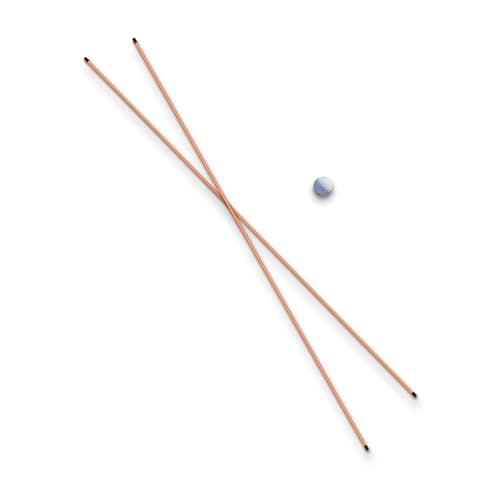
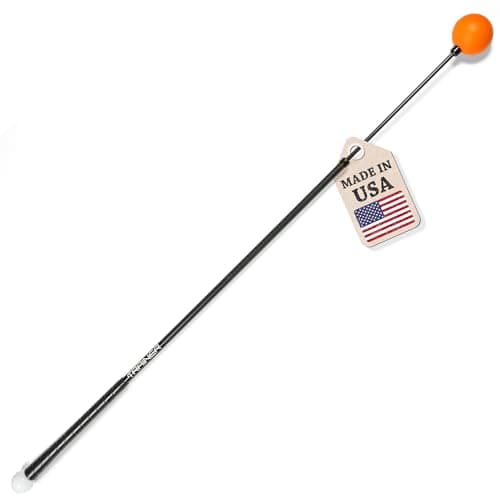
Alignment sticks belong in the same bracket for the same reason: they cost almost nothing, they lie on the floor pointing at a target, and they are what tour players use on the range. They aren't really a gadget, which is exactly why they get used.
The expensive end: know what you're buying
"Golf simulator" covers three genuinely different products and the price gap between them is enormous, so it's worth being clear before you spend:
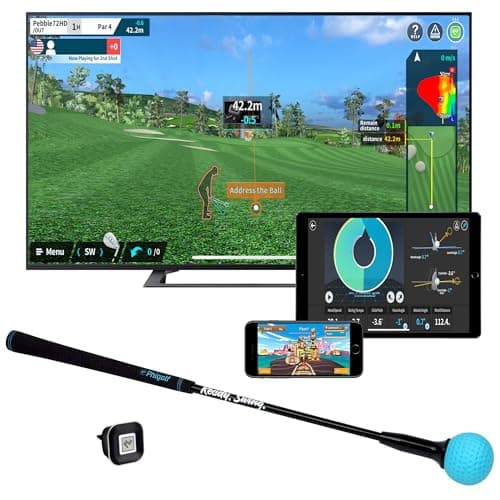
- A swing sensor attaches to the club or the grip and drives a game on a phone or a TV. It is not measuring the ball at all, it is measuring the club. Cheapest by a distance, and by far the easiest to fit in a normal room.
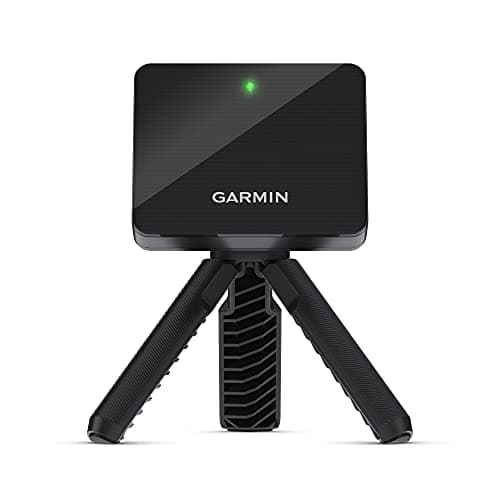
- A launch monitor measures the actual ball flight with radar or a camera and reports real numbers. This is the one a serious golfer wants, and it needs space in front of the ball to work — several feet indoors, which is why it usually means a garage.
- A full simulator setup is a launch monitor plus a screen, a projector and an enclosure. That is a room-sized purchase and a project, not a gift.
Our golf simulator guide ranks these properly. As a gift, the honest advice is that a swing sensor delights someone who wants to play golf in the winter, and disappoints someone who wanted real numbers — the two are not the same person, and the box does not always make the difference obvious.
Who this is the wrong gift for
Practice gear carries a message, and the message isn't always welcome. For a golfer who plays a handful of social rounds a year, a training aid can read as a comment on their game rather than a present — the safer choice there is something that makes a round more pleasant, which is what the gifts golfers actually use page is full of.
For someone actively trying to improve, it is the opposite: this is the category they think about and don't buy. If that is your golfer, gifts for a serious golfer covers the rest of what works.
If a simulator is where this is heading, the honest budget is bigger than the device price: the net, the mat and the ceiling height decide whether any of it works. How much does a golf simulator cost prices the four tiers and names the room measurements to take first.
The putting half of this list has one question attached to it that is worth answering before you spend anything. Are indoor putting greens worth it? goes through what a mat genuinely teaches, what it cannot, and the floor-space number - mat length plus three or four feet - that decides whether it gets left out or rolled up.
The two pages that go deeper than this one
This page is the spread of options. If the indoor gift is going to be a putting surface - and for most houses it should be, because putting needs no ceiling height and makes no noise - best indoor putting greens ranks those properly and does the floor-space arithmetic for each one. If the house genuinely has the room for a full swing, best golf practice nets is the other half, and it starts with the ceiling-height figure that rules most garages out.