The net is half the gift
This is the thing the category gets wrong and the reason this page exists. A practice net catches a golf ball. It does not give the golfer anything to hit off, and a golf swing needs a surface.
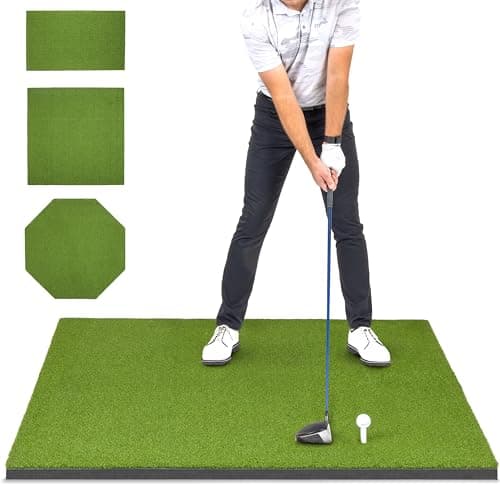
There are only three surfaces available at home, and two of them are bad. Hitting off a lawn works, once - a proper iron shot takes a strip of turf out of the ground with it, and twenty shots is twenty divots in someone's grass. Hitting off concrete, a patio or a thin doormat is worse: the club has nowhere to go, so the shock goes into the hands, the wrist and the elbow instead. The third surface is a hitting mat, and that is the whole argument for making it a ranked pick on this page rather than a footnote.
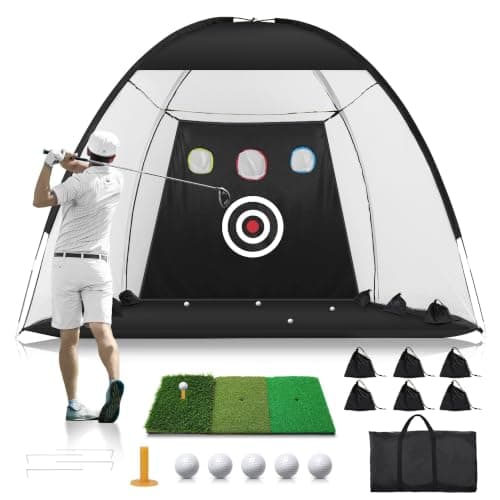
So the complete gift is a net plus a mat. There are two honest ways to get there. Buy a net-and-mat bundle, which is the cheapest route and comes with a thin folding mat that is genuinely fine for a beginner hitting a hundred balls a month. Or buy a good net and a proper mat separately, which costs roughly twice as much and is the right call for someone who will be out there every week for years.
What you should not do is give a bare net and leave the recipient to work out the rest. They will hit off the lawn, the lawn will suffer, and the net will go behind the shed.
Measure three things before you buy anything
A practice net is one of the few golf gifts that can physically not fit, and none of the three numbers that matter are printed on the box as requirements. Spend five minutes with a tape measure and this gift becomes very hard to get wrong.
- Ceiling height - about 10 feet. This is the one that catches everyone. The clubhead travels a long way above head height on the backswing and the follow through, and a driver needs more room than an iron. A standard garage ceiling is typically well under ten feet, so unless you have measured theirs, treat an indoor net as a chipping-and-pitching proposition and an outdoor net as the full-swing one.
- Depth - the net, plus eight to ten feet behind the ball. The golfer stands back from the net, not against it. Hitting into a net from three feet away is unpleasant and does not tell them anything, because the ball hits the netting before it has done anything. Eight to ten feet of standing room behind the ball is the realistic minimum.
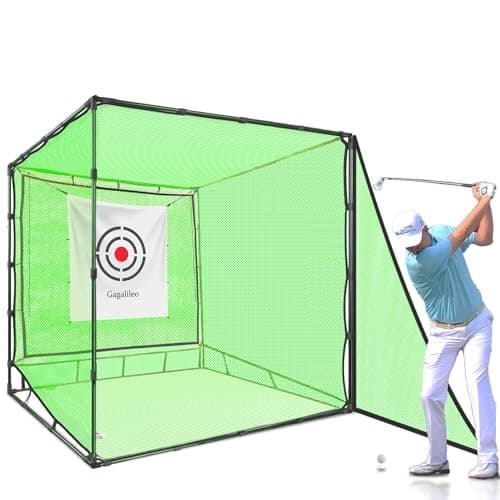
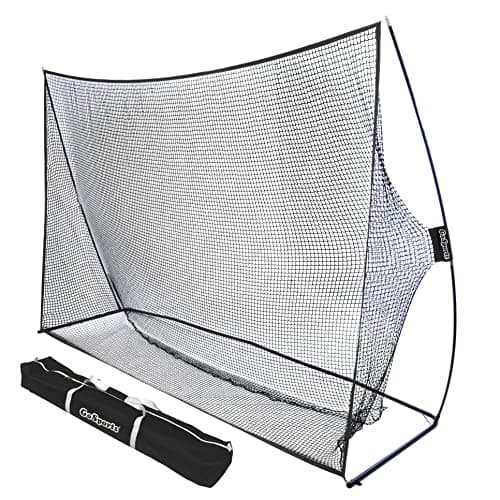
- Width - what is on either side.A flat net catches the shot they meant to hit. The shot that actually needs catching is the one that leaves sideways, and that is a window, a car or a neighbor's fence. If there is anything breakable within about thirty feet to the side, the enclosed cage on this page is the right shape rather than the cheap flat net.
None of this needs any golf knowledge, which is the point. If you can find out the ceiling height of the space and what is beside it, you can choose correctly on this page without knowing anything about their swing - the same logic that makes gifts with no size needed the lowest-risk category on this site.
Ball return: the feature that decides whether it gets used
Every net here catches a ball. Only some of them give it back, and that difference matters more than build quality, netting ply or anything else on a spec sheet.
Without a return, practice goes like this: hit twenty balls, stop, walk forward, bend down twenty times, carry them back, start again. Nobody does that for long. It is the single most common reason a net that cost real money sits folded against a garage wall.
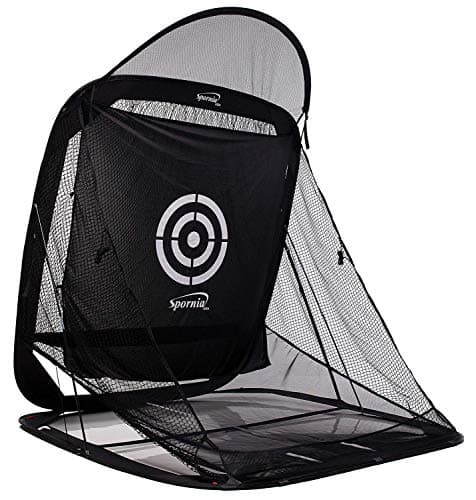
With a return, the netting is angled so a struck ball rolls back to roughly where the golfer is standing. They stay in one spot and keep swinging, which is what practice is supposed to look like. It is why the Spornia costs what it costs, and why the enclosed cage includes a sloping floor.
The honest counter-argument: a return matters in proportion to how often they will practice. For a golfer who will use it twice a month, a bucket of fifty balls achieves the same thing - hit fifty, collect once. For a golfer who wants to swing for fifteen minutes after work, a return is worth more than every other upgrade combined.
Full swing, or short game?
These are two different gifts that get sold on the same shelf, and the cheap one is often the better present.
A full-swing net is what most people picture: a big net, a mat, a driver, a satisfying thump. It needs outdoor space or a very tall garage, and it is the gift for someone with a yard and an actual practice habit.
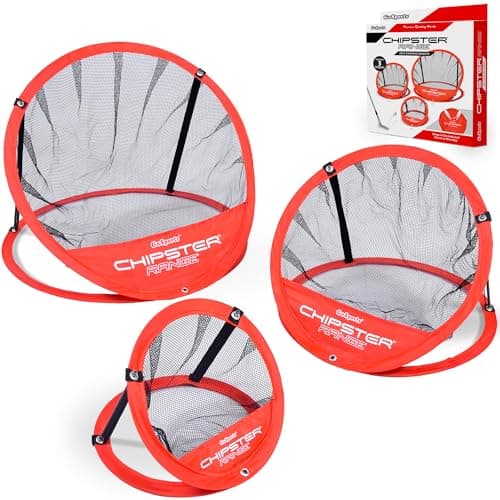
A chipping target is a pop-up ring aimed at from twenty or thirty feet with a wedge. It needs a hallway or a lawn, costs under thirty dollars, and goes back in its case in ten seconds. It is also pointed at the part of the game where amateurs lose the most shots: the fifty yards around the green, not the tee.
If you do not know whether they have the space for a full-swing setup, the chipping target is the much safer buy, and it is the one most likely to be in regular use a year later. The same reasoning applies indoors, where an indoor putting green beats a hitting net for anyone without a tall ceiling - putting is 40% of the shots in a round and the only part of golf that can be practiced on a carpet.
What the listings will not tell you
- Noise. A golf ball into netting is loud, and it is loud repeatedly. In an apartment, a row house or a shared yard this is a real constraint, and it is the reason a lot of nets get retired rather than worn out.
- Nets wear out at the strike point. Any net takes a concentrated beating in one small area. Heavier netting - the cage on this page states five-ply - lasts longer, and a net described as light and portable is making a trade you should know about.
- Wind. A pop-up net on a light frame is a sail. It needs staking down, and a steel-framed structure is the version that stays where you put it.
- Balls are not included, and range balls are the wrong ones. A net setup wants cheap, durable balls rather than a premium dozen. If you are building the whole gift, add a box of mid-tier balls rather than a sleeve of tour balls - a net eats balls faster than a course does.
- Assembly. The pop-up nets go up in minutes. The steel cage is an afternoon with an allen key and ideally two people, which is worth knowing before it arrives as a surprise.
Where the money goes
Under thirty dollars buys a chipping target, which is a genuinely good small gift and the only thing in this category that fits in a stocking. The rest of that bracket is on golf gifts under $50.
Fifty to a hundred dollars is where this category is at its best value, and it covers either a bundled net-and-mat set or a wide net on its own. For a first home setup this is the right band and there is no need to go further.
A hundred to two hundred dollars buys a proper standalone hitting mat to pair with the net, which is the upgrade a golfer notices every single swing. Spend here before spending on a bigger net.
Beyond two hundred dollars you are buying a ball return, a steel frame or an enclosure - all three of which are about how often and how safely the thing can be used rather than about the quality of the practice. That is a real upgrade for a committed golfer and overkill for a curious one. At that budget it is worth comparing against a golf simulator or launch monitor, which answers a completely different question: a net tells a golfer nothing about where the ball went, and a launch monitor is the thing that does.
Who this gift is wrong for
Worth saying plainly, because a practice net is a large, awkward, non-returnable object when it misses.
Someone with no outdoor space and a normal ceiling. There is no version of a full-swing net that works in an eight-foot room. Buy a putting green or a training aid instead - both are designed for exactly that constraint.
Someone who plays twice a year and enjoys it that way. A net is equipment for a person who wants to get better. Giving one to a social golfer reads as a comment on their game, which is the mistake golf gift mistakes to avoid covers in full.
Someone who already goes to a range they like. The range has better balls, more space and a bay roof. A net wins on convenience, not on quality, so it is a gift for the golfer who cannot easily get to a range rather than one who already has a habit.
If any of those describe your golfer, the honest redirect is gifts for golfers who have everything or a consumable they will definitely use.