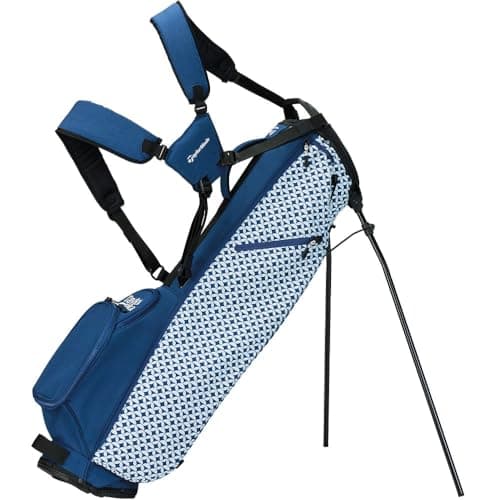
What a stand bag is, and the one thing to check before buying one
A stand bag has two legs that flip out when it is set down, so it stands upright on its own instead of lying on wet grass. It is designed to be carried on the back, which is why it has two shoulder straps rather than one, and it is deliberately smaller and lighter than the other kind of golf bag.
The other kind is a cart bag: bigger, heavier, no legs, built to sit strapped to the back of a buggy or a trolley. The two are not interchangeable, and this is the whole reason to check before you spend. If the golfer rides a cart every round, a stand bag is a downgrade, not a gift. The tell is easy — fold-out legs. Look at a photograph of them with their clubs, or at the bag in the garage. Our stand vs cart bag comparison covers the decision in full, and the main bag roundup covers both types.
Weight is the spec. Everything else is a trade against it
A golfer walking eighteen holes carries the bag for roughly four hours and five miles, with a set of clubs, a dozen balls, a rain jacket, a bottle of water and a sandwich in it. Nothing else about a stand bag survives contact with that fact.
Which is why the marketing is a poor guide. Bags are sold on divider count and pocket count, and both of those add weight. Every extra full-length divider is another tube of fabric and plastic running the length of the bag; every extra pocket is another zip and another panel. The honest way to rank a carry bag is lightest-first and then ask what you gave up, which is the order this page is in — the two ultralight bags are near the bottom not because they are worse but because the trade they make is a real one.
How to choose, by what the golfer actually does
They walk most rounds with a full set: the TaylorMade FlexTech Carry. It is the all-round answer and the one we would give without more information. Double strap, carry weight class, a name they will recognize.
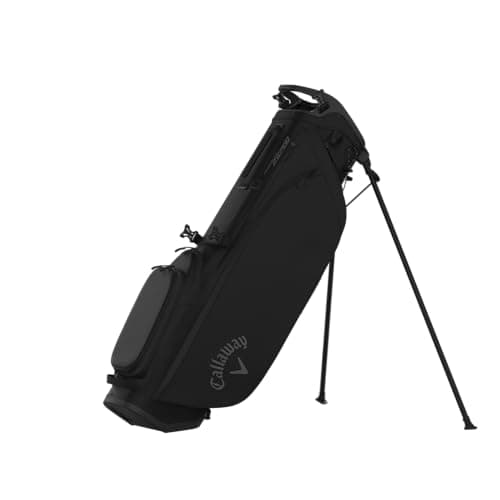
They walk and count every ounce: the Callaway Hyperlite Zero. Callaway builds that line around minimizing weight rather than maximizing storage, and the disqualifier is exactly that — ultralight bags get light by having less of everything, so a golfer who packs a jacket, a cooler and three dozen balls will find it cramped.
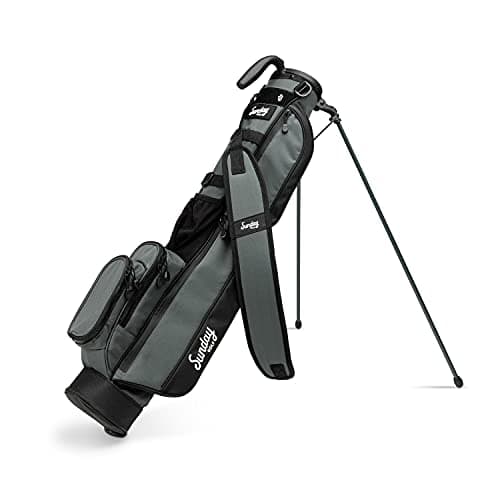
They already own a bag they like: the Sunday Golf Loma, as an addition rather than a replacement. Sunday Golf publishes a 31-inch body holding six to seven clubs, which is wrong for a serious round and close to perfect for a quick nine, a range trip or a walkable par-3 course. A lot of golfers do not own a small bag and would not think to buy one.
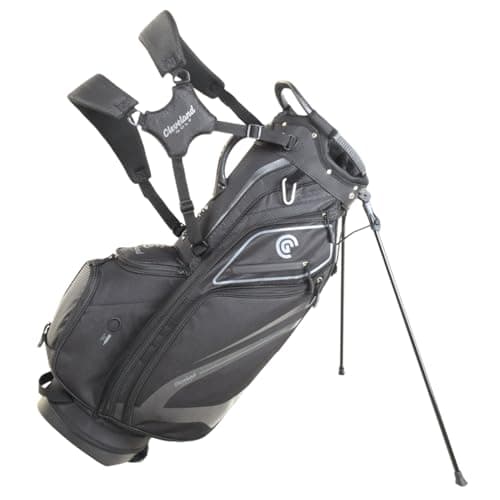
You want a real golf-brand bag without flagship money: the Cleveland lightweight stand bag. The gap between a cheap unbranded bag and a good one is mostly strap comfort and zips that survive a season, and this sits on the right side of that line.
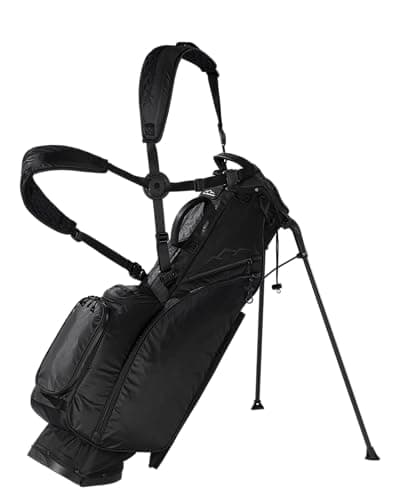
They walk constantly and own everything already: the Sun Mountain Eclipse 2.5. Sun Mountain effectively invented the modern stand bag and publishes a four-way top on this line. It is the most expensive pick here, and the honest note on it is in its own disqualifier — buying this for somebody who turns out to ride a cart is an expensive miss. Note also that this listing is the 2025 model year and Sun Mountain has since released a 2026 version of the same bag.
Four-way or fourteen-way: a smaller decision than it looks
The number on the top of the bag is the number of club compartments. Fourteen means every club gets its own slot and nothing clatters; four means clubs share and the grips tangle slightly. Fourteen-way tops are heavier and the dividers eat internal space.
For a carry bag, four to five ways is the norm and is genuinely fine — walkers accept the clatter to lose the weight. A golfer who wants fourteen full-length dividers almost always wants a cart bag, which is the signal to go and read the divider comparison before you buy anything at all.
The honest risk in giving a bag
A golf bag is visible, personal and chosen. It sits beside the golfer for four hours and their playing partners see it every week, which makes it closer to giving luggage than giving equipment. Replacing a functional bag somebody picked out themselves is a harder gift to land than it looks, and the two situations where it lands cleanly are narrow: the bag is visibly worn out, or they do not own a bag of that type at all.
If neither of those is true, the gift that reads the same way at a quarter of the price is a push cart — which solves carrying rather than replacing the thing that carries. And if you are not sure they walk at all, the entire decision is parked by our page for golfers who walk.
If the fold-out-legs test came back the other way and the golfer rides every round, this is the wrong half of the category. Start instead at best golf cart bags, which ranks the bags built to sit strapped to a cart, where weight stops mattering and the divider top takes over.
If the budget is the binding constraint rather than the shape of the bag, the cheapest honest tier has its own page: best golf bags under $100. Every pick there qualified for the band on a fetched price, and all of them are carry bags - under $100 a cart bag cuts exactly the structure and hardware that make a cart bag worth having.