First question, and it is not about the bag
Golf bags come in two shapes that are not interchangeable, and the entire value of this page depends on picking the right one. A stand bag has two legs that flip out so it stands up on its own, and two shoulder straps, because it is built to be carried on a back. A cart bag has no legs, is noticeably bigger and heavier, and is built to sit strapped to a riding cart or a push trolley.
Give a cart bag to a golfer who walks and carries, and you have handed them something heavier than what they own with nowhere to put a shoulder. Give a stand bag to a golfer who rides every round, and you have taken away pockets they use. The tell is easy to find in any photograph of them with their clubs: fold-out legs near the bottom of the bag mean stand bag, no legs means cart bag. If the photo shows the bag strapped to the back of a buggy, you are on the right page. Our stand bag versus cart bag comparison walks through the decision in full, and the stand bag roundup is the other half of this one.
The three things that decide a cart bag, in order
A cart bag is the one piece of golf equipment with no weight limit worth worrying about, because it never leaves the cart. That changes the whole ranking: features that are a liability on a carry bag are free here, which is why cart bags are sold on specs rather than on ounces.
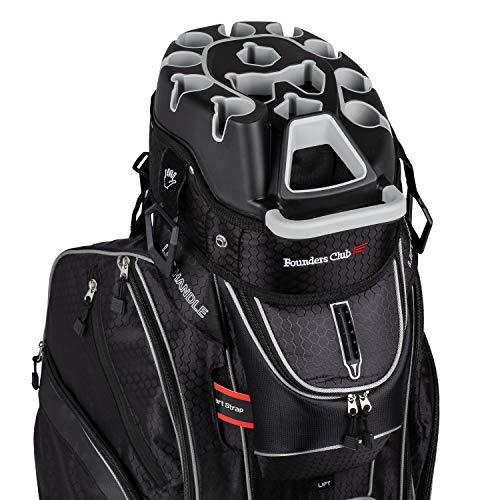
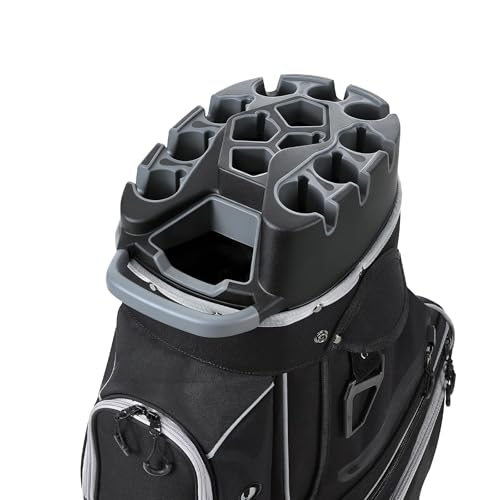
1. The divider top. This is the only spec a golfer notices on every single hole. A 14-way top means every club in a full set gets its own slot — the Rules of Golf cap a set at fourteen clubs, which is where the number comes from — and the important word in the spec is full-length. A full-length divider runs the whole depth of the bag, so shafts cannot cross below the top and grips cannot tangle. A top that is divided only at the collar lets the clubs rejoin as a bundle an inch down, which produces exactly the rattle the fourteen slots were supposed to stop. Every pick on this page states a 14-way top; four of them state full-length dividers. Our 4-way versus 14-way explainer covers why the answer flips depending on whether the bag is carried.
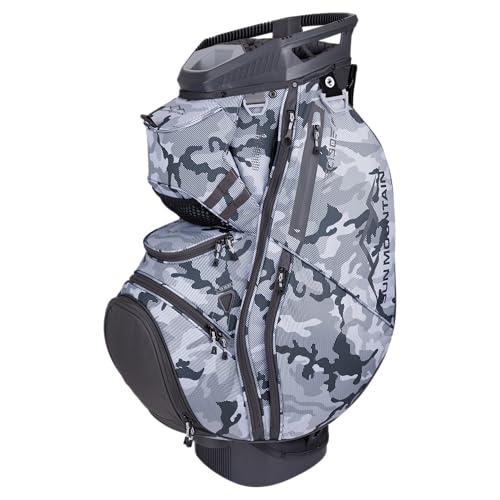
2. The cart-strap pass-through.The detail that separates a cart bag from a big bag. It is a channel molded or sewn across the back of the bag that the cart's own strap runs through. Without it, the strap crosses the back of the bag wherever it lands, and where it lands is usually straight across a pocket the golfer then cannot open without unstrapping the bag. Sun Mountain publishes a cart-strap pass-through on the C-130, which is a large part of why it is the top pick.
3. The putter well. A stiffened tube on the outside of the top, separate from the fourteen slots, that a putter lives in. It exists because a putter grip is fatter than the others and a putter head is an awkward shape, so a putter dropped into a normal slot grinds against its neighbors all round. Three picks here publish a rubberized putter well, meaning the lining is a grippy rubber rather than fabric. If you are buying a cart bag and a putter in the same year, buy them in that order — our putter roundup is the companion page to this one.
Pockets, and the cooler question
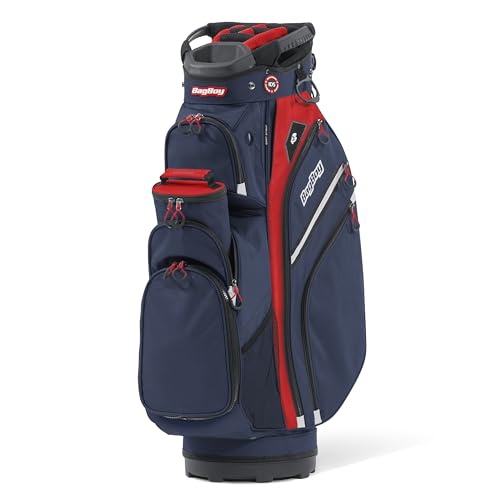
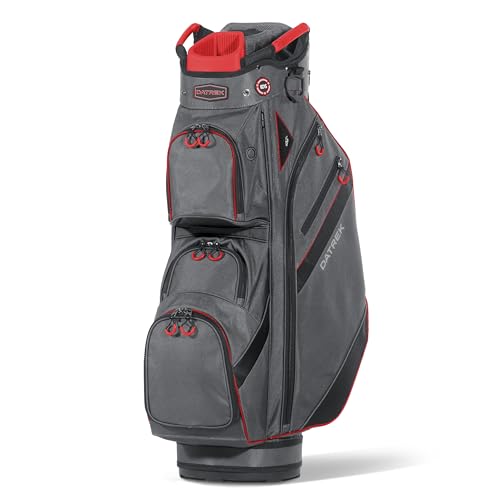
Pocket count is where cart bags stop being about golf and start being about storage, and since there is no weight penalty, more is genuinely better. The C-130 lists eleven pockets, the Bag Boy nine, the Datrek seven. What matters is not the number but whether there is a dedicated place for the four things that otherwise rattle around loose: a rangefinder, a valuables pocket that zips, a glove pocket that lets a wet glove dry, and a full-length pocket that a rain jacket actually fits in.
The insulated pocket deserves its own paragraph because nearly every cart bag now claims one, and most of them are a sewn-in foil lining that holds three cans, cannot be drained and smells of warm beer by August. The Bag Boy Chiller Pro publishes its cooler as removable, which is the difference between a feature used every round and a feature used twice: it comes out to be filled, emptied and washed. If the golfer already carries a separate golf cooler bag they like, this spec is worth nothing to them and you should buy on the divider top instead.
What to ignore on the spec sheet
Advertised capacity in liters. Cart bag listings quote volume inconsistently and nobody buys a bag because it holds forty-three liters rather than forty.
Weight, within reason. A cart bag is two to three pounds heavier than a carry bag and that is the trade you are making deliberately. A golfer who cares about the weight wants a stand bag.
Colorway, unless you know. Cart bags are sold in a lot of colorways and the same model can be four different prices depending on which one is in stock. Buy the plainest version available rather than guessing at taste — and note that the price beside each pick here is the price of the specific colorway we checked, so a different color may sit a few dollars either side.
Anything described as a hybrid. Hybrid bags have short legs and a lighter build, which makes them a worse cart bag and a worse carry bag at the same time. They exist for golfers who genuinely split their rounds between walking and riding, and that is a judgment only the golfer can make.
Choosing by what the golfer actually does
They ride every round and their current bag is a tired carry bag. This is the clean case, and the gift lands. Buy the C-130 or the Bag Boy — the full feature list, from a maker whose name is on the bag.
They push a trolley rather than ride. A cart bag works on a push cart, but check the trolley first: three-wheel push carts have a bracket sized for a specific bag footprint and a very wide cart bag can sit awkwardly. If you are not sure, buy the push cart or the Datrek, which is the narrowest of the full-spec bags here.
It is their first cart bag and they play twice a month. Buy the Founders Club. The divider top is the part they will notice, and paying double for better zips solves a problem they do not have yet.
You are buying for a golfer with more than one bag already. Buy the VEVOR, or buy nothing. A second cart bag is storage, and there are better gifts at that price — our guide to the golfer who owns everything exists for exactly this reader.
They play in a wet climate several times a week. Spend on the hardware tier. Zips and strap anchors are where a cheaper bag gives ground, and they give it fastest on a bag that is soaked and loaded every few days.
The honest risk in giving a bag
We said this on the stand bag page and it is just as true here: a golf bag is visible, personal and chosen. Giving one is closer to giving luggage than to giving equipment, and replacing a bag somebody picked out themselves is harder to land than it looks. Two situations land cleanly — the bag they have is visibly worn out, or they do not own a bag of this type at all. If neither is true, the better gift is something that solves a problem rather than replaces a decision: a push cart, a trunk organizer for the gear that lives in the car, or a smaller item and the money saved.
One more practical note. A cart bag is a large box to wrap and a large box to post, and bag listings move in and out of stock by colorway faster than most golf products. If this is a dated gift, order it with room to spare, and keep the care guide in mind if what you are really looking at is a bag that needs an afternoon rather than replacing.
What we are not recommending
Tour-staff bags. The enormous bags caddies carry on television. They are heavy, expensive, and designed for somebody who has a caddie.
Bags sold as a set with clubs. The bag in a boxed set is built to a price and is the first part of the set to be replaced. If you are buying for a beginner, buy the set and let the bag be the bag.
Electric trolley bags.A bag matched to a specific powered trolley is only right if you know the trolley, and then the manufacturer's own bag is usually the answer.