Who this is a great gift for
A beginner, without qualification. The single biggest reason people try golf and quit is that the first few months are genuinely difficult and nobody shows them anything. An hour with a professional at the start replaces about a year of guessing, and beginners are the group least likely to book a lesson for themselves because they feel they should be able to hit the ball first. That is backwards, and a gift is the thing that cuts through it.
Anyone who has said they want to improve. If the recipient has complained about their slice, mentioned a lesson, or talked about their handicap as a problem, the risk in this gift disappears. They have told you what they want; you are buying it.
A junior. Group junior coaching is cheap, sociable, and the best version of this gift by a distance. The child gets other children to play with, which matters more at that age than any instruction.
A couple, together. A playing lesson for two is a different and better product than two individual lessons, and it is one of the few golf gifts that is also an afternoon out. See golf gifts for couples for the rest of that idea.
Who it is the wrong gift for
A long-time golfer who has not asked. This is the case to think about carefully. Someone who has played for twenty years has a swing they have made peace with, and a voucher for instruction can read as a sentence about it - particularly from a partner or a child. It is not that they would be offended, exactly; it is that the gift carries an implication the giver did not intend and cannot take back on the day.
Anyone whose golf is social rather than competitive. Plenty of golfers play four hours a week to be outside with their friends and have no interest whatsoever in being better at it. For them a lesson is homework.
A golfer with an injury or a limitation they have not discussed. Instruction assumes the body can do what the instructor asks. If the recipient has a back, shoulder or wrist problem they are quietly managing, a lesson is a complicated thing to receive.
Someone you are not close to. The same gift from a spouse and from a colleague lands completely differently. For a professional relationship, this is not the category - golf gifts for coworkers is.
The four logistics that decide whether it gets used
More lesson gifts die on logistics than on sentiment. All four of these are worth sorting before you buy.
- Give a certificate, not a slot.A booked time is a commitment you made on someone else's behalf, and if they cannot make it the gift becomes an inconvenience. A gift certificate at a named facility hands them the when - and the whether.
- Check how long it is valid. This is the one that catches people. An expiry date three months out, given at Christmas, means a lesson in frozen February or no lesson at all. Ask about the expiry before you pay, and prefer the facility that is generous about it.
- Make it local to them, not to you. Obvious and routinely got wrong. Thirty minutes of driving converts a gift into an errand.
- Buy from a specific instructor or club, not a voucher marketplace. The value of this gift is the person giving the lesson. A generic experience voucher that has to be redeemed against whatever is available is a worse product and a more annoying one.
One more, on quantity: a series of three or four lessons is a far better gift than one, for a beginner especially. A single lesson is a diagnosis; a block is a change. If the budget only reaches one, that is still worth giving - but three is where it starts to work.
Give something to open alongside it
A certificate in an envelope is a thin thing to unwrap, however good the gift inside it is. Pair it with one small physical object that connects to the lesson and the whole thing lands properly.
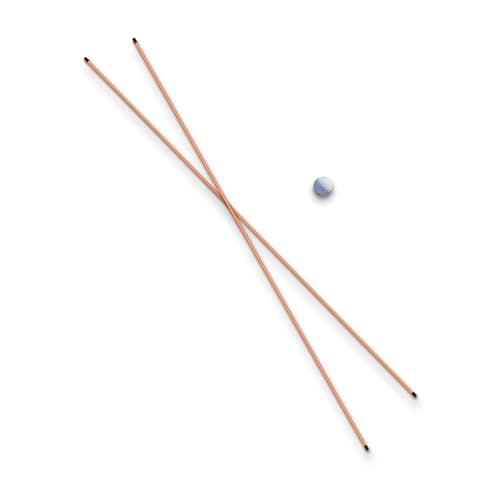
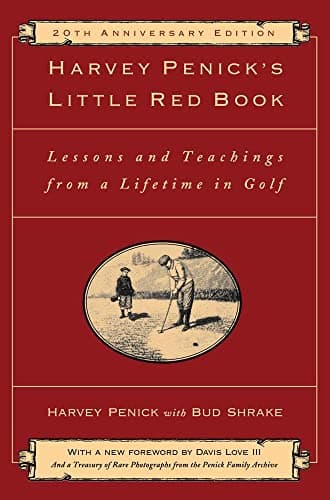
The two below are the ones that fit. Alignment sticks are what the instructor will use in the lesson and what the recipient will be told to practice with afterwards - giving them in advance is the rare case of buying a training aid that is not a hint, because a coach specifically asks for them. Harvey Penick's Little Red Book is the other: a teaching book by a teacher rather than a swing-fix manual, and the one most instructors would be pleased to see a student holding.
Neither is the gift. Both are the thing to wrap.
If lessons are not right, what does the same job
The underlying instinct behind this gift is usually "I want to help them enjoy golf more", and there are cheaper, lower-risk ways to do that. A rangefinder removes guesswork from every shot without commenting on the swing. A launch monitor or simulator lets them practice at home on their own terms. Green fees at a course they have not played are an experience gift with none of the implication. And for a beginner with no equipment at all, the honest truth is that a set of clubs that fits them does more for their enjoyment than any single lesson.
If you are buying for the instructor rather than the student, that is a different page entirely: golf gifts for a golf coach.