The thing to understand before you buy anything
A golf hand warmer is not a glove, and it is not worn while swinging. Every product on this page works in the gaps.
That sounds like a technicality and it is the entire buying decision. Think about what a round of golf is actually made of. Four hours, eighteen shots or so from a decent player and rather more from most, each one taking about two seconds. The rest - three hours and fifty-odd minutes of it - is walking, waiting on a tee, standing beside a cart, watching somebody else line up a putt. Cold hands are not a swing problem. They are a standing-still problem, and they only become a swing problem because hands that have been cold for twenty minutes cannot feel the grip when it is finally their turn.
So the question is never "what keeps hands warmest." It is "what keeps hands warm in the gaps and gets out of the way instantly." A heavy mitten that takes ten seconds to remove fails that test. A pouch at the waist passes it, because the hands simply leave.
Four different products are sold under one phrase
Search this category and you get four genuinely different objects with the same name, which is why most roundups on the subject read like a list of near-identical things. They are not near-identical. They do different jobs.
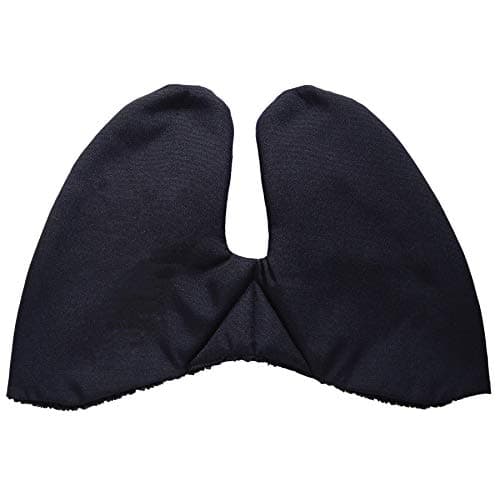
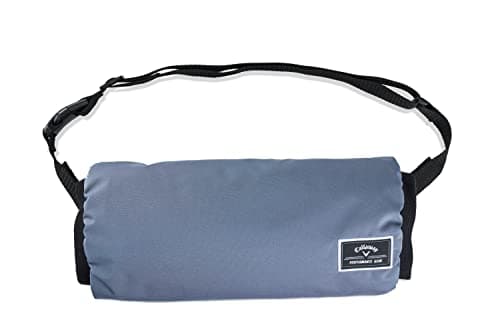
1. An unheated pouch. A fleece-lined muff worn on a belt or a strap, with both hands going in from either side. It has no heat of its own - it traps body heat and holds a disposable warmer. This is the format tour players use in winter and the default right answer for a gift.
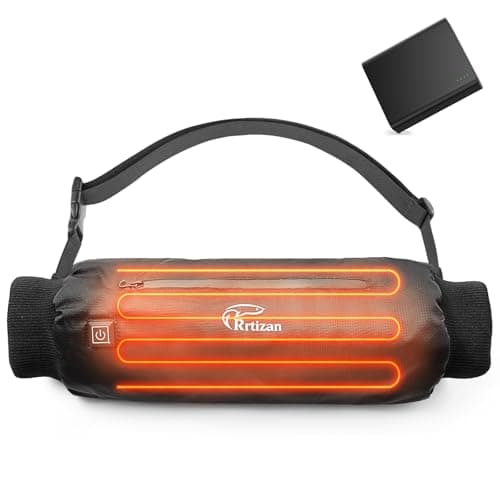
2. A heated pouch. The same object with heating elements and a battery. Nothing to re-buy, a published temperature, and one more thing to charge.
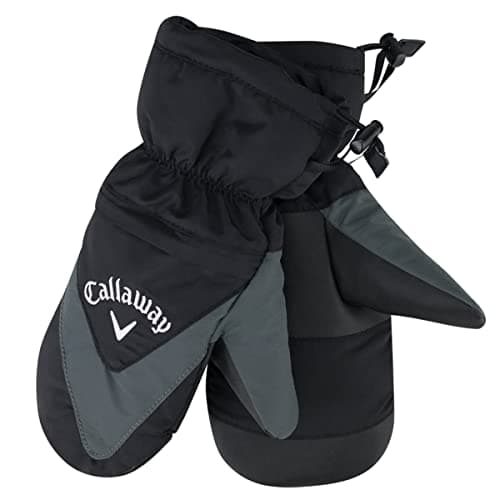
3. Cart mitts. Open-ended mitts that fix over a push-cart or trolley handle. The hands slide in and stay there for the whole walk. Useless to anyone who does not push a cart, and close to perfect for anyone who does.
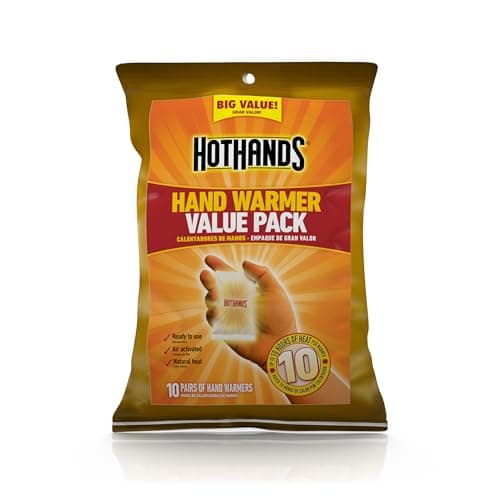
4. A loose heat source. Disposable air-activated warmers or rechargeable electric ones. These go inside any of the above, or in a pocket, or in a glove. They are the cheapest thing in the category and the thing the other three are designed around.
The mistake a gift buyer makes is buying one item from one of those groups and assuming it is complete. An unheated pouch with no warmers in it is a fleece bag. A box of disposables with nothing to put them in is better than nothing but loses most of its heat to the air. The complete gift is one pouch and one box, which together cost less than a dozen premium golf balls.
How to choose, in one question
You do not need to know their size, their handicap, which hand they swing or what brand they like. You need to know how they get round the course, and you can usually answer that from memory.
They ride a cart: buy the pouch. Riders are stationary and exposed for long stretches, in wind, often with wet hands from a towel. The pouch is the top pick on this page for exactly this golfer, who is also the most common one.
They push a trolley: buy the cart mitts. Both hands are on a metal handle for three or four miles. Nothing you can wear solves this as well as something attached to the handle, and the mitts also keep the leather glove dry, which matters because a soaked glove is both useless and expensive.
They carry their bag: buy the pouch, or mittens if you know their size. A carrier has a strap on one shoulder and no handle to attach anything to, and a waist pouch is the only format that does not interfere with the carry.
You genuinely do not know: buy the pouch and a box of disposables. It is the only answer that is correct for all three.
Disposable or rechargeable - and one real warning
This is the second decision and it is less obvious than it looks.
Disposablesare iron that rusts on purpose. Kobayashi, who manufacture HotHands, publish the mechanism and the numbers: the contents are "iron powder, water, salt, activated charcoal and vermiculite," the warmers are air-activated, they give "up to 10 hours of heat" with the range across the product line running "anywhere from 100F to 180F," and they are "designed for one-time use and then disposed of in regular garbage." There is nothing to charge, nothing to remember and no battery, and they cost a few dollars for a season.
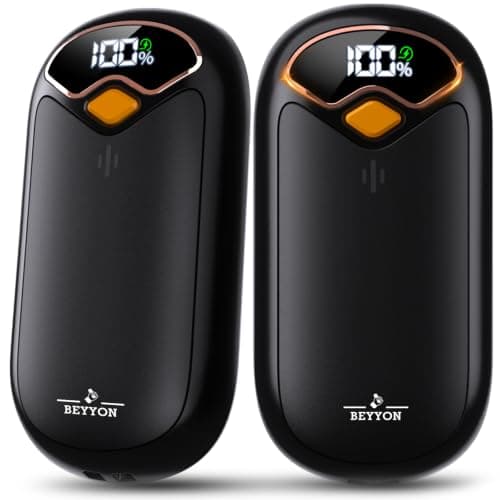
Rechargeablesare cheaper across several winters, have a charge indicator, and reheat on demand. They are also lithium-ion devices, and this category has a genuine, documented safety history that a gift buyer deserves to know about: Kobayashi published a recall of their own HotHands Rechargeable Hand Warmers, model number H163650 sold from July 2025 through August 2026, over "the risk of the lithium-ion battery overheating and igniting," and noted that the units share the same battery and electrical components as the separately recalled OCOOPA warmers. Owners were told to stop using the product immediately and not to dispose of it in regular trash, recycling or a retail battery drop-off.
That is not a reason to avoid rechargeable warmers, and we have kept one on this page. It is a reason to buy a current listing rather than old stock, to charge it somewhere visible rather than overnight on a bedside table, and to hand it over knowing what it is. If any of that makes you uneasy about a gift, the disposables have no battery at all, and that is a legitimate reason to prefer them.
Are hand warmers allowed in golf? Yes - but keep them away from the ball
Worth knowing, because it is the one way a hand warmer can actually cost somebody something, and almost nobody giving one as a gift has heard of it.
Warming your hands is not regulated. Warming the ballis. The Rules of Golf prohibit making a stroke at a ball whose performance characteristics have been deliberately altered, and the published rule gives "scuffing or heating the ball" as its examples - Rule 4.2a(2), and the penalty is disqualification.
In practice that means one habit to avoid: do not keep spare golf balls in the same pocket as an active warmer during a round. In a casual round nobody is going to disqualify anybody, but in any kind of competition it is a real exposure, and the fix costs nothing - balls in one pocket, warmer in the other. If you are buying this for someone who plays club competitions in winter, it is worth mentioning when you hand it over.
What a hand warmer cannot fix
Two things, and both are cheap to solve alongside it, which is why they belong on this page rather than on someone else's.
A wet grip. The reason cold golf feels unplayable is rarely the air temperature on its own - it is a cold hand on a damp rubber grip, which is slick as well as cold. No warmer helps with that, because the moisture is on the club rather than on the hand. The fix is a dry towel kept somewhere it stays dry, which on a winter round means under the hood of the bag rather than clipped to the outside of it. If they only own one towel, a second one is a better companion gift to a hand warmer than anything else at the price.
A soaked glove. Leather stiffens as it dries and never quite recovers, so a glove that gets wet in November is effectively a glove spent. This is the quiet case for the cart mitts over the pouch for anyone who walks in the rain, and the case for a spare glove in the bag regardless - how many gloves a golfer needs works through why winter is the month the answer stops being one.
Neither of those is an argument against a hand warmer. They are the two things that, bought at the same time, turn one accessory into a kit that actually changes a cold round - and both cost less than the warmer does.
What to look for, in the order it matters
1. Does it match how they get round? Covered above, and it is the only criterion here that can make a gift useless rather than merely imperfect. A set of cart mitts given to someone who rides is a gift with nowhere to attach.
2. Does it come off in one second? The whole category lives or dies on this. A pouch at the waist and mitts on a handle both pass: the hands leave and the object stays. Anything worn on the hands has to be removed and then put somewhere, and that is the friction that stops it being used by the back nine.
3. Is there a heat source, and is it included? Check whether the pouch is heated or simply insulated. If it is insulated, it needs disposables, and a gift that needs a second purchase before it works is not finished.
4. Waterproof or water-resistant on the outside. Cold golf is usually wet golf, and a fleece pouch that soaks through has stopped insulating. This is where the golf-brand products genuinely earn their price over generic ones - waterproofing is the specification they actually publish.
5. Published numbers, where any exist.Most of this category is sold on the word "thermal," which means nothing. Where a listing gives a temperature range and a runtime, that is worth more than an adjective, and we have put the one pick that publishes both on the page partly for that reason.
Who this gift is wrong for
Someone who stops playing in October. A large share of golfers simply do not play in the cold, and for them a hand warmer is a shelf object. The tell is whether they talk about the course in December at all. If the honest answer is that golf is a summer thing in their house, buy them something for the off-season instead - an indoor putting green or a good golf book is the better version of the same thought.
Someone who plays somewhere it is never cold. Obvious, and worth saying, because this is a gift chosen in a cold place for somebody who may not live in one.
Someone who already has three. This is a commonly duplicated gift, particularly the branded pouches, which get handed out at corporate days and winter league events. It is also small enough to live unnoticed in a bag pocket. If you can look in the bag, look.
Anyone who needs the present to feel like an occasion. At this price it is a superb stocking stuffer or Secret Santa gift and a thin main present. The standard fix applies: pair the pouch with the disposables, or with a winter glove, and it becomes a complete cold-weather kit rather than one accessory.
How we picked
Format first - one of each of the four kinds of product in this category, rather than six versions of the warmest one - then whether the thing leaves the hands instantly, then what the listing or the manufacturer actually publishes, then price.
We have not tested any of these in cold weather and we do not claim to have. The temperature and runtime figures on this page are the manufacturer's or the listing's own published claims and are attributed as such in every case; the HotHands figures come from Kobayashi's published FAQ rather than from a retailer, and the recall details come from the recall notice Kobayashi published themselves. Where a product is sold only on the word "thermal," we have said so rather than inventing a number for it. How we pick sets out the method in full.