Why the putter is the only club worth giving
This site talks people out of buying clubs more often than into it, and the reason is specs. A driver needs a loft and a shaft flex. Irons need a lie angle and a length. Both need a swing speed somebody has measured. Get any of it wrong and you have bought an expensive object the golfer cannot use.
A putter has none of that. It is swung at walking pace, it has effectively no loft decision, there is no flex to pick because the shaft barely bends, and nobody is getting fitted for one before they can use it. It needs a hand and a length, and both are findable. That is why it is the one club on the whole site we are comfortable telling a gift buyer to go ahead with.
It is also the club that gets used most. A golfer shooting in the nineties takes somewhere around a third of their shots with the putter, more than any other club in the bag by a wide margin, which means the gift gets picked up on every single green of every single round.
The two specs you have to get right
Hand. Putters are built right-handed or left-handed and the two are not interchangeable — the head is shaped and weighted for one direction. On Amazon they are separate listings rather than a dropdown, which is why every pick on this page names the hand its listing is sold in. Most of them are right-handed, because that is what the market is. If the golfer is left-handed, confirm before ordering: a left-handed golfer sometimes putts right-handed, and the only way to know is to look at a photo or ask somebody who plays with them.
Length. Putters come in fixed lengths, normally 33, 34 and 35 inches, and 34 is the default most golfers use. Rough guidance: 33 suits a shorter golfer, 34 covers most adults, 35 suits a taller golfer or one who stands more upright. Length is the one putter spec that is awkward to fix afterwards — it can be cut down by a shop, which changes the feel, but it cannot be made longer. If you have no idea, buy 34.
Everything else people worry about is either not a real decision or is the golfer's own taste, which you cannot buy for and should not try to.
Mallet or blade, decided in one glance
There are two head shapes and the difference is visible from across a room.
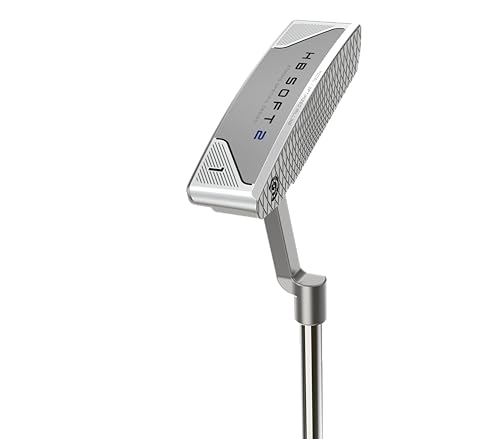
A blade is the thin, traditional shape — a narrow bar of metal behind the face. It is what putters looked like for a century, it is what most tour putters still look like, and it gives the clearest feedback: a putt struck off the toe feels obviously different from one struck in the middle.
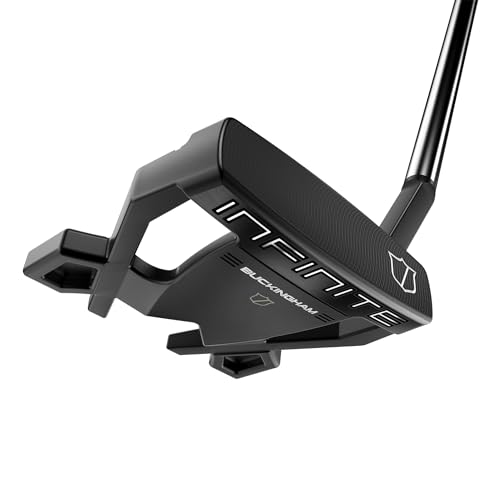
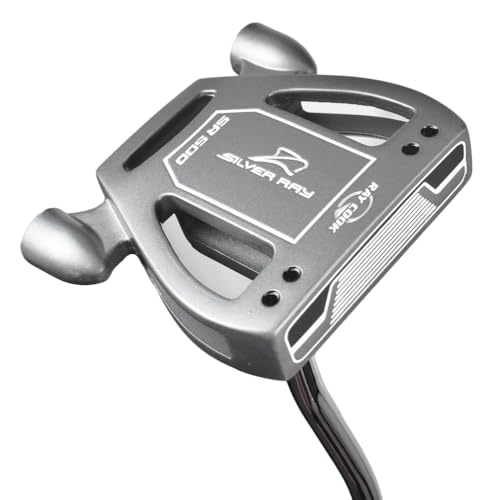
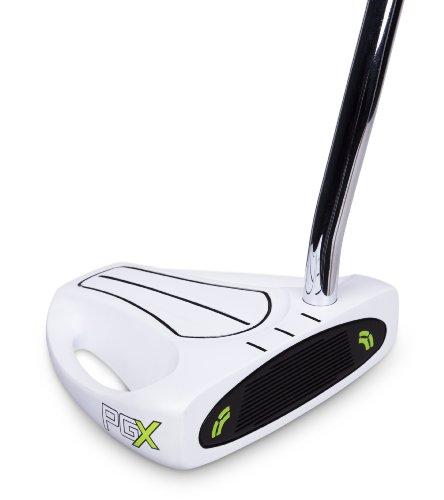
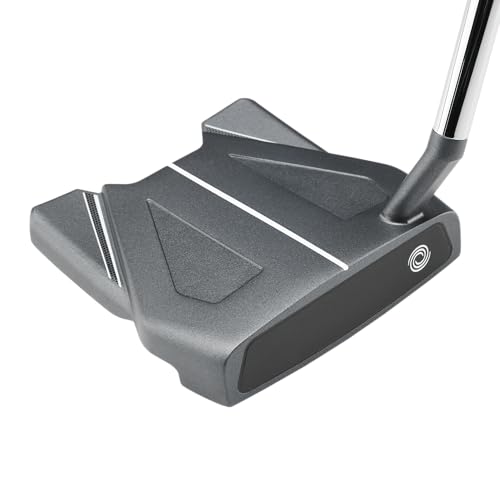
A mallet is the large, deep shape, sometimes with wings or a fork at the back. The extra mass sits far from the face, which makes the head resist twisting when the strike is off-center. The practical effect is that a slightly mis-hit putt rolls closer to the line a pure strike would have taken. Mallets also carry longer alignment lines, which is a genuine help for a golfer who struggles to aim.
How to choose: find a photograph of their bag. If there is a thin putter head in it, buy a blade, because a golfer with a blade has usually tried mallets and rejected them. If there is a big mallet head, buy a mallet. If they do not own a putter of their own, or they are new to golf, buy a mallet — the forgiveness and the alignment line are worth more than tradition to a golfer who is still learning where the middle of the face is.
Putter preference is the most stubborn opinion in golf, which is both the risk and the reason head shape leads this page rather than price.
What more money actually buys
The honest answer is: less than in any other club. A putter has no moving parts, no composite face and no adjustable hosel. Between the cheapest pick here and the dearest there are three real differences.
The face.Premium putters are milled — cut from a solid block rather than cast — which is what golfers mean when they say a putter feels soft rather than clicky. Cleveland's Huntington Beach line is the cheapest route to a genuinely milled face, which is why it is on this page. Whether a golfer can tell the difference depends entirely on how much they putt.
The name. This is not nothing in a gift. Odyssey is the most recognized putter brand there is, and a golfer unwrapping one knows immediately what it is. A budget mallet performs its job honestly and does not do that.
The finish and the headcover. Premium putters arrive with a proper cover; cheaper ones sometimes do not, and a putter in a bag without a cover scratches the other thirteen clubs. If the putter you buy ships bare, add one — it is a few dollars from the headcover page and it is the difference between a gift that looks complete and one that does not.
What more money does not buy is holing more putts on its own. The gap between a $70 mallet and a $400 one is far smaller than the gap between either of them and ten minutes a day on a mat.
The grip, and why oversized keeps appearing
Two of the picks here are listed with an oversized grip and it is worth a line on why. A thicker grip fills the hands and reduces how much the wrists can do, and quieting the wrists is the standard prescription for the golfer who stabs at short putts. It is a real effect and it is why oversized grips went from a curiosity to a default inside a decade.
It is also a taste thing. A golfer with a feel-based putting stroke may dislike it. If you know they putt well and simply want a better object, buy the standard grip; if their putting is a running joke in the group, the oversized grip is on your side. A grip can also be changed later for about twenty dollars, which makes it the one spec on this page that is not a commitment.
Choosing by who you are buying for
A golfer who plays regularly and owns a putter they like. Be careful. This is the one case where a putter is a risky gift, because you are competing with a club they chose. Buy the Odyssey only if theirs is visibly old or you have heard them talk about changing. Otherwise buy a putting trainer instead — it improves the putting without replacing the putter.
A beginner, or a golfer using whatever came in a boxed set. The clean case. Buy the Pinemeadow or the Ray Cook: a real mallet, a clear alignment line, and no sense that the money was the point.
A traditionalist. Buy the Cleveland blade. Milled face, plainest head in the range, nothing on it that needs explaining.
A taller golfer. The 35-inch Wilson is the pick, and the only one here listed at that length. For most other golfers 34 is the number.
A golfer who already has a cart bag with a putter well. Worth noting because it is a small, nice touch: the fatter grips sit better in a dedicated putter well than in a crowded 14-way top, and a new putter is a good reason to point out that the well exists.
What we are not recommending
Long and armlock putters. Putters that run up the forearm or anchor against the body are a technique choice, not an upgrade, and the rules on anchoring make them a decision only the golfer can take.
Counterfeit premium putters. The most-faked club in golf is a premium blade putter, and the giveaway is a well-known model at a price no retailer would charge. If a listing claims a flagship tour putter for under a hundred dollars, it is not one.
Custom-stamped or personalized putters. Engraving makes a club unreturnable, and a putter is the one club a golfer is most likely to want to swap.
A used premium putter as a surprise. Tempting, because the resale market is huge and a five-year-old flagship costs what a new budget mallet does. But you cannot verify length, lie or wear from a photograph, and a putter is a gift that has to look new when it is opened.
The same reasoning applies one club further down the bag. A putter is the club a golfer uses most; the wedge is the one they are most likely to be missing entirely, because a boxed set almost always stops at a pitching wedge. Best golf wedges covers which loft fills that gap, and why a cavity back beats a tour blade as a gift.