How this page is filtered
Every watch below qualified for the under-$200 band on a price we fetched from the Amazon product API, never one typed into a template. A watch with no verified price does not appear, and one that moves above $200 drops off rather than sitting under a heading it cannot afford. The number beside each pick is a separate request-time read with its own checked date.
In this category the filter removes more than it keeps. Golf watches run from about a hundred dollars to well over five hundred, and the expensive end is where the marketing lives — so a page that caps the price is doing most of the editorial work before a word is written. The premium models are on the main golf watch page, where they belong.
What a golf watch actually does
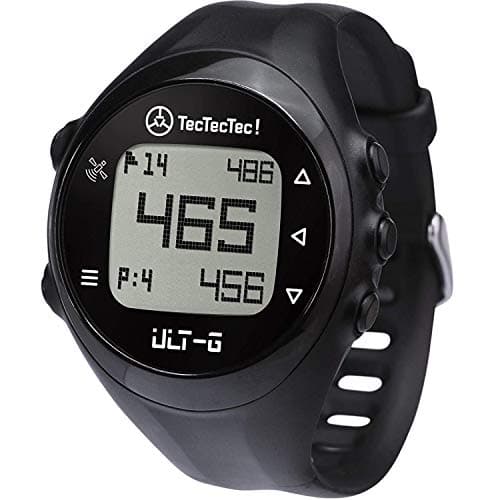
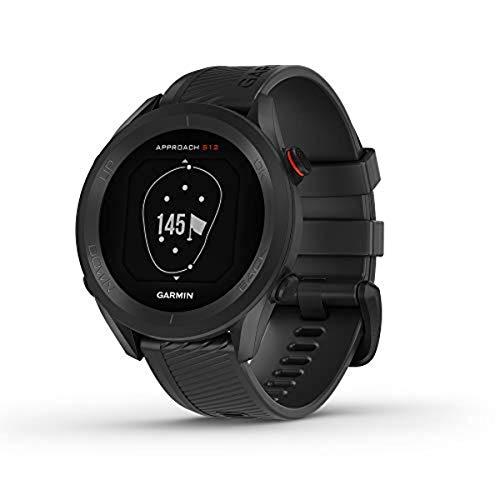
A golf GPS watch knows which course it is on and where it is on it, and shows the golfer how far it is to the green. That is the product. Specifically it shows three numbers — distance to the front, the middle and the back of the green — and those three numbers are the entire reason the category exists.
Why three? Because a green is twenty to thirty-five yards deep, which is two to three clubs. A golfer with only the middle number will be short every time the flag is at the back and long every time it is at the front. Front, middle and back lets them aim at the part of the green the flag is actually on. Any watch that gives you only one number is giving you a third of the product.
The second thing a watch does is keep score, which sounds trivial and is not — it is the feature golfers actually use every round, and it removes the paper card and pencil from the equation.
Watch or rangefinder — buy the watch for this golfer
The site has a whole page on rangefinders and a direct comparison, so the short version: a laser rangefinder is more precise and needs to be aimed at the flag; a watch is less precise and needs nothing at all.
For a gift, the watch usually wins, and the reason is behavioral rather than technical. A rangefinder lives in a pocket or a bag pocket and has to be taken out, aimed and read, which means a casual golfer stops bothering by the back nine. A watch is already on the wrist. The golfer who benefits most from a yardage — the one who does not know their own distances well — is also the one least likely to keep using a device they have to fetch.
Buy the rangefinder instead if they are a serious player who already knows their numbers, or if they have ever complained about GPS yardages being approximate.
The subscription trap, and how this band avoids it
GPS golf devices split into two camps and the split is not visible in a product photo. Some include course data for the life of the device. Others include it for a period and then charge annually for the app that unlocks the better features.
For a gift this matters more than for a self-purchase, because the recipient is the one who meets the renewal screen months later. It is one of the quiet advantages of this price band: both the budget pick and the undulation pick publish no subscription at all, and the top pick's course maps are included. If you want a gift with no future decisions in it, that is a real reason to stay under $200 rather than a consolation for doing so.
What $200 does not buy, stated plainly
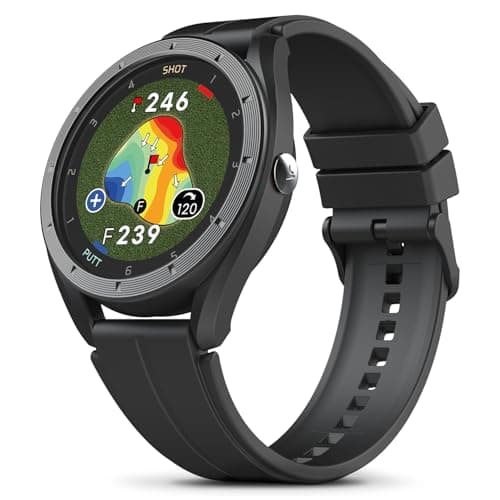
A color map of the hole. The premium watches draw the hole on a color touchscreen with the hazards marked. It is genuinely nice and it changes nothing about the shot, because the three numbers are the decision.
Smartwatch and fitness functions. Notifications, heart rate, sleep tracking, activity rings. If the recipient wants a smartwatch, buy them a smartwatch; a golf watch bought as a half-smartwatch disappoints twice.
Multi-day battery. Expect to charge these every few rounds rather than every few weeks. In practice a golf watch is charged the night before golf, which is a habit rather than a problem.
Shot tracking and club recommendations. These need sensors in the clubs or a subscription, usually both.
The one spec to check before you order
Band size and wrist size. This is the only way a watch gift goes physically wrong, and it is also the only spec a listing can resolve for you. Most watches at this price ship one silicone strap sized for an average adult wrist; a notably small or notably large wrist needs the listing checked, and an aftermarket strap is a cheap fix rather than a return.
Everything else about a watch is hand-agnostic and size-agnostic, which is what makes it one of the safer technology gifts on this site — unlike shoes or gloves, where getting the size wrong means the gift is never used.
Who should not get one
A golfer who already wears a GPS watch or uses a phone app religiously. A second device is not an upgrade, and app users have usually chosen the app.
A golfer who plays the same course every week and knows every yardage on it. There is nothing to learn, and a launch monitor or a putter does more for them.
A beginner in their first season. Yardages assume you have distances to compare them to. Start with clubs and balls.