PIN & PUTT

04 / Gear / Best Launch Monitors

Best golf launch monitors

A launch monitor measures the shot. A simulator draws a golf hole around it. They get sold together and they are not the same purchase, so this page covers only the first one.

#ad — we earn a commission if you buy through this link, at no extra cost to you, and it does not change our picks. Full disclosure.

Our top pick · Best all-round launch monitor

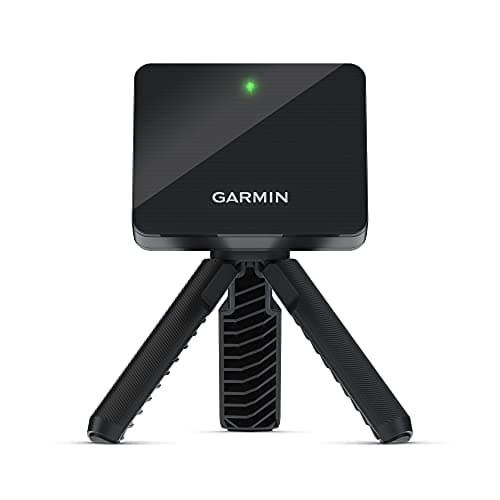
Garmin Approach R10

The default recommendation in this category, and the one with the fewest asterisks.

Why we picked it, and who it's wrong for

Check price$407.99

#ad · Live price, checked November 22, 2026. Amazon's is the one that counts.

Golf irons lined up against a dark background

By Stephen V.

How we pick

The short answer

The short answer

Buy the Garmin Approach R10 — a portable radar that works indoors and out, from the company whose golf GPS this site already recommends, at a price that does not require a dedicated room. The budget pick is the Rapsodo Mobile Launch Monitor, the cheapest device here that measures a real golf shot rather than guessing at one — iOS only, so check the phone first. Measure the ceiling before you buy: radar needs the ball to fly a few yards to read it, and a low garage is the one thing that makes this gift unusable.

Prices checked November 22, 2026

The short answer

Quick picks

#ProductBest forScorePrice
01
Garmin Garmin Approach R10
Garmin Approach R10

The default recommendation in this category, and the one with the fewest asterisks.

Best all-round launch monitor8.0/10$407.99Amazon
02
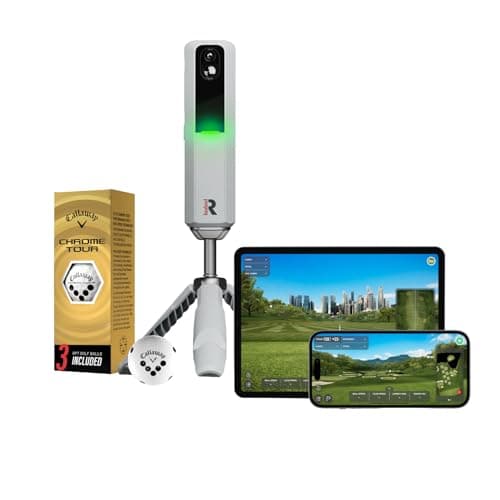
Rapsodo Rapsodo MLM2PRO
Rapsodo MLM2PRO

Two cameras and a radar in one box, and it ships with the balls it wants to read.

The serious home setup8.0/10$399.98Amazon
03
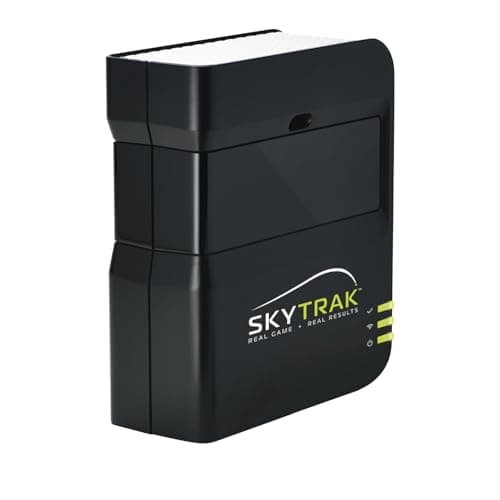
SkyTrak SkyTrak Launch Monitor
SkyTrak Launch Monitor

Camera-based rather than radar, which is why it works in a garage with a low ceiling.

Best for indoor use7.8/10Check price
04
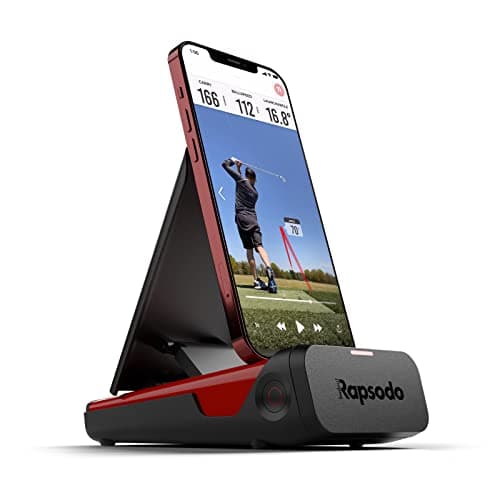
Rapsodo Rapsodo Mobile Launch Monitor (MLM)
Rapsodo Mobile Launch Monitor (MLM)

The cheapest device on this page that measures an actual golf shot.

Best entry-level launch monitor8.3/10Check price

#ad · Live prices from the Amazon product API, checked November 22, 2026. Where we have no verified live price we show none — we would rather leave a gap than print a number that has rotted.

The picks

Every pick, and who it's wrong for

Garmin Garmin Approach R10

01Best all-round launch monitor

Garmin Approach R10

The default recommendation in this category, and the one with the fewest asterisks.

What it is
A portable radar launch monitor that works at the range or into a net at home, with a home-simulator course mode.
Why a golfer wants it
It reads the ball rather than the club, works on both phone platforms, and Garmin's course-play mode turns a net in a garage into something that holds a golfer's attention through a winter.
  • Garmin publishes: portable radar
  • Home simulator mode
  • Indoor and outdoor use

Skip this if

They have nowhere to hit a ball. A launch monitor without a net and a mat is a range accessory, and the full home setup costs more than the monitor does.

Check price$407.99

$499.9918% off

Price checked November 22, 2026. Amazon's is the one that counts.

#ad · we may earn a commission from this link to Garmin Approach R10

Rapsodo Rapsodo MLM2PRO

02The serious home setup

Rapsodo MLM2PRO

Two cameras and a radar in one box, and it ships with the balls it wants to read.

What it is
Rapsodo's dual-technology monitor, combining camera and radar measurement, supplied with marked premium balls for spin reading.
Why a golfer wants it
It is the point where a home setup stops being a toy: real spin numbers, video capture of the swing, and simulated course play indoors.
  • Rapsodo publishes: camera and radar
  • Includes marked premium balls
  • Video capture

Skip this if

Nobody in the house has ever mentioned wanting one. This is a several-hundred-dollar device with a real setup burden — a superb gift for a golf obsessive and a doorstop for anyone else.

Check price$399.98

$699.9943% off

Price checked November 22, 2026. Amazon's is the one that counts.

#ad · we may earn a commission from this link to Rapsodo MLM2PRO

SkyTrak SkyTrak Launch Monitor

03Best for indoor use

SkyTrak Launch Monitor

Camera-based rather than radar, which is why it works in a garage with a low ceiling.

What it is
A photometric launch monitor: it photographs the ball at launch instead of tracking it down-range with radar. This is SkyTrak's original unit — the line has since moved on to the SkyTrak+ and then the ST MAX — which is why it now sells for a fraction of what it launched at.
Why a golfer wants it
Radar units want room behind and in front of the ball to see flight. A camera unit reads the first few inches, so it copes with indoor spaces where a radar device struggles.
  • SkyTrak publishes: photometric technology
  • Ball speed, carry, spin
  • Indoor capable

Skip this if

The gift needs to work out of the box with nothing further to buy. SkyTrak's fuller simulation features are sold as software on top of the hardware — check what is included before you buy.

Check price on Amazon

No buyable offer at the last check (November 22, 2026). We show nothing rather than a stale number.

#ad · we may earn a commission from this link to SkyTrak Launch Monitor

Rapsodo Rapsodo Mobile Launch Monitor (MLM)

04Best entry-level launch monitor

Rapsodo Mobile Launch Monitor (MLM)

The cheapest device on this page that measures an actual golf shot.

What it is
A small radar unit that sits behind the ball and reports carry distance, ball speed and club speed to an iPhone or iPad.
Why a golfer wants it
It answers the question every golfer actually has — how far do I hit this club — and it does it at a driving range, with no simulator room required.
  • Rapsodo publishes: iOS only
  • Carry, ball speed, club speed
  • Radar unit

Skip this if

Theirs is an Android household. Rapsodo states this model is iPhone and iPad only, and that is not something you can work around.

Check price on Amazon

No buyable offer at the last check (November 22, 2026). We show nothing rather than a stale number.

#ad · we may earn a commission from this link to Rapsodo Mobile Launch Monitor (MLM)

What to know

Before you buy

What a launch monitor is, and what it is not

A launch monitor is a small box you set on the ground a few feet behind or beside the ball. It measures what happened to the shot — how fast the ball left, how far it carried, how fast the club was moving — and sends those numbers to a phone or tablet. That is the whole product.

A golf simulator is a different thing that usually contains one. A simulator takes those numbers and draws a golf hole on a screen so the golfer can play a round indoors, which means a net or an enclosure, a projector, a mat and some floor area. The two words get used interchangeably in marketing copy and they are not interchangeable in a living room, which is why this site keeps them on separate pages: this one ranks the measuring devices, the simulator page covers the play-a-course setups, and the sub-$1,000 cut covers the band most gift buyers are actually in.

The reason a launch monitor is a good gift is narrower than the marketing suggests, and it is worth saying plainly. A golfer who takes lessons, goes to the range, or talks about their swing has no way of knowing whether a change helped. A launch monitor answers that for them, every swing, in their own garden. A golfer who plays eight social rounds a year and never practices will use it twice.

Radar or camera — and why the ceiling decides

There are two ways to measure a golf shot, and the difference matters more than any spec on the box.

Radar units — the Garmin and both Rapsodo picks — bounce a signal off the ball in flight and work the rest out. They are cheaper to build, they work outdoors at a driving range, and they need the ball to actually travel: typically several yards of flight before the reading settles. In a garage with a low ceiling the ball hits the net almost immediately and a radar unit has very little to read.

Camera units — the SkyTrak pick, which its maker describes as photometric — photograph the ball in the first few inches off the face and calculate the flight from that. That is why it is the indoor answer: it needs the ball to leave, not to fly. It is also why it is the more expensive technology.

So the buying question is not which is better. It is where will they hit balls? Outdoors, a garden or a range — buy radar, the top pick. Indoors in a garage or basement with a low ceiling — buy the camera unit. Both — buy radar and expect to use it outside.

What the numbers mean, one paragraph each

Ball speed is how fast the ball leaves the face. It is the number that correlates most directly with distance, and the one that improves when a strike finds the middle of the clubface.

Club speed is how fast the head was traveling before impact. Comparing the two gives the efficiency of the strike, which is the single most useful thing an amateur can learn: two golfers with identical club speed can be forty yards apart purely on contact.

Carry is how far the ball flew before it landed, and it is the number that ends arguments. Most amateurs believe they hit the ball considerably further than they do, because they remember the best one. Carry is also what makes a rangefinder useful — a yardage means nothing if you do not know which club covers it.

Spin is the hardest to measure and the most frequently overstated. Some devices estimate it rather than read it, and the premium picks here either read it with a camera or ship marked balls that make it readable. If a listing is vague about spin, assume it is estimated.

The subscription question, asked before you buy

This is the sharpest difference between this category and golf watches, where the site can usually promise no ongoing cost. Several launch monitors put their best features — simulated courses, shot video, club-by-club history — behind an annual software fee, so the hardware price on the listing is not the price of the experience in the advertising.

For a gift that is a real problem, because the recipient discovers the bill, not the giver. The honest handling is to buy the device for what it does without a subscription and let them decide about the rest. Every pick here measures and displays shot data out of the box; read each pick's own notes for what its maker gates behind a plan.

What you still need, and it is not on this page

A launch monitor is useful only where a ball can be hit safely. If the recipient has nowhere to do that, the gift is incomplete, and a practice net and hitting mat is the cheaper and more useful half of the pair. A golfer who can already hit balls in the garden gets more from the monitor; a golfer who cannot gets more from the net.

One rules note, because it comes up: a launch monitor is a distance-measuring device, and the Rules of Golf govern what a player may use during a competitive round. For practice at home or at a range none of that applies, and nobody is going to be disqualified from their Saturday fourball for owning one.

Who should not get one

A beginner. The numbers only become interesting once the strike is consistent enough for them to mean something, and this is an expensive way to be told you topped it. The money does more as a complete set or lessons.

A golfer with nowhere to hit. Covered above, and it is the most common failure of this gift.

A golfer who plays for the walk and the company. There is nothing wrong with that golfer — most golfers are that golfer — and a device that produces a spreadsheet of their failings is not a present for them. Buy them something for the cart instead.

FAQ

Questions people actually ask

What is the difference between a launch monitor and a golf simulator?

A launch monitor measures the shot and sends the numbers to a phone. A simulator uses those numbers to draw a golf hole on a screen, which also needs an enclosure, a projector, a mat and floor space. Every simulator contains a monitor; a monitor is not a simulator.

Do I need a high ceiling for a launch monitor?

For a radar unit, yes — it needs the ball to fly several yards before the reading settles. A camera unit reads the first few inches off the face, which is why it is the indoor answer. Measure the ceiling first; it is the one thing that makes this gift unusable.

Is a launch monitor a good gift for a beginner?

No. The numbers mean something only once the strike is consistent, and this is an expensive way to be told you topped it. A complete set or a net does more at the same money.

Will they have to pay a subscription?

Possibly. Several makers gate simulated courses and shot video behind an annual fee, so the hardware price is not the price of the advertising. Every pick here measures and displays data out of the box — the per-pick notes say what is charged beyond that.

Sources

Where these facts come from

Specifications are the manufacturer's own published figures, not our measurements. We don't test products and don't claim to.

  • Amazon product data — every price on this page, and every spec attributed to a listing, comes from the live Amazon listing through the Amazon product API
  • USGA - Rules of Golf — the equipment and distance-measuring-device rules referenced on this page

Read next