How this page is filtered
Every wedge below qualified for the under-$100 band on a price we fetched from the Amazon product API, not one we typed into a template. A club with no verified price does not appear here at all, and one that moves above $100 drops off rather than sitting under a heading it cannot afford. The figure beside each pick is a separate, request-time read carrying its own checked date.
That filter does real work in this category, because wedges are listed loft by loft and hand by hand. The same model at 56 degrees and at 58 degrees are two different listings at two different prices, so the same model can sit inside this band in one loft and above it in another on the same afternoon. A page with hand-typed prices would be wrong about half its own picks within a month.
Three of the six picks here are clubs the registry did not hold before this page was built, so this is not a cheap slice of our main wedge roundup — it is a different set, chosen because of what the cap makes possible rather than in spite of it.
Read the sole of their wedges first. Everything else is secondary
This is the only instruction on the page that can save you from getting the gift wrong, and it takes thirty seconds in their garage.
Loft is stamped on the bottom of the club. Turn a wedge over and there is a number on the sole: 48, 52, 54, 56, 58, 60. That number is the loft — the angle of the face — and it is what makes one wedge different from another. Write down every number you find.
Then buy the gap. Almost every complete set sold to a beginner stops at a pitching wedge, somewhere around 44 to 48 degrees. That leaves the shortest club in the bag still quite a long club, and the shots inside 50 yards are played with it badly. The clubs that make those shots easy — a gap wedge at 50 to 52, a sand wedge at 54 to 56, a lob wedge at 58 to 60 — are sold separately, and most casual golfers never get around to buying one.
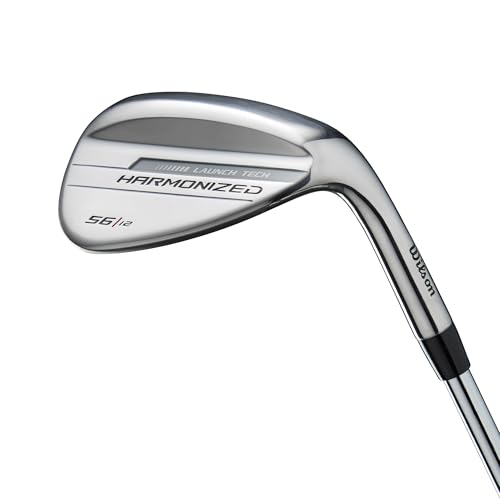
If you cannot check, buy 56 degrees. It is the most useful single loft and the one most likely to be missing. Two of the picks below are 56-degree clubs for exactly that reason.
And check the hand. Every listing on this page is right-handed. A left-handed golfer cannot use any of them, at all, and this is the one mistake that makes the gift worthless rather than merely redundant. The tell is which side of the ball they stand on, or which hand the glove goes on — our glove-hand guide explains that, and the answer there tells you the answer here.
What $100 buys in a wedge, and what it gives up
This is the unusual good news of the category. A wedge is a short club with a simple head and a steel or graphite shaft, and it does not carry the engineering cost of a driver. The under-$100 band is therefore not the bottom of the market in the way it is for a golf bag or a rangefinder — it reaches clubs from real golf companies.
What you still get: a cavity-back design from a specialist wedge maker, a milled or engraved face, stainless steel, and a named grind. All four of those appear in the listings below.
What you give up: three things, honestly.
1. Choice of loft and bounce combinations. The premium end of the category sells the same model in six lofts and three sole grinds. Down here you take the loft that is in stock in the hand you need, which is why the picks below are specified by their exact listing rather than as a model family.
2. Shaft quality. A $40 wedge has a serviceable stock shaft. It is not a problem for the shots a wedge is used for — these are not full-speed clubs — but it is where the money went.
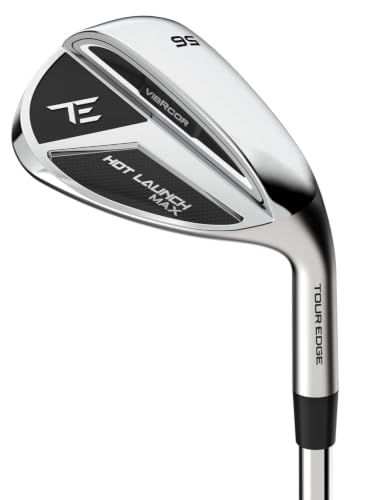
3. Resale and upgrade path. A Cleveland or a Tour Edge wedge holds some value and will not embarrass anybody. A marketplace three-wedge set has no resale value at all, and a golfer who gets serious will replace it.
One wedge or a set of three?
The band makes both possible, and they are different gifts.
One good wedge fills one specific gap with a club from a brand the recipient recognizes. It is the better gift for a golfer who plays regularly, keeps a handicap, or would notice the name on the back of the club. It is also the safer gift when you have managed to read their existing lofts and know exactly which number is missing.
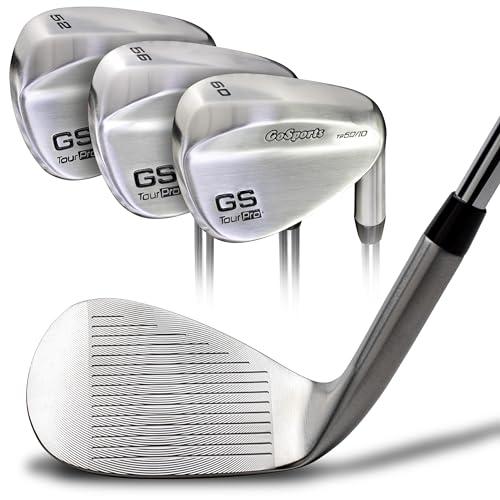
Three wedges at once fills the whole gap in one purchase — gap, sand and lob — for less than any single brand-name club on this page. It is the better gift for a casual golfer with nothing shorter than a pitching wedge, because three clubs changes their short game more than one better club would.
There is a condition on the set, and it is the kind of thing this site prints rather than buries. The three-wedge set below is sold as a non-conforming club: its grooves are cut deeper and sharper than the Rules of Golf permit, which is where the extra spin comes from. That is legal to own and legal to play in a friendly round among people who do not care. It is not legal in a club competition or in any round submitted for a handicap, and a serious golfer will spot it on the box. If the recipient posts scores, buy the Cleveland.
Cavity back, wide sole, bounce: the three words in the listings
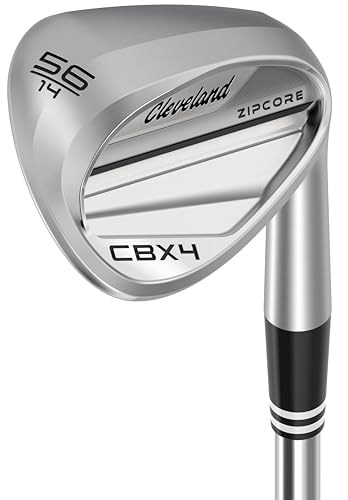
Cavity back means the weight behind the face is pushed out to the edges of the head instead of sitting in the middle. A strike that misses the center twists the head less, so the shot loses less. For anybody who is not a low handicapper this is the single most useful feature a wedge can have, and it is the whole argument for the top pick.
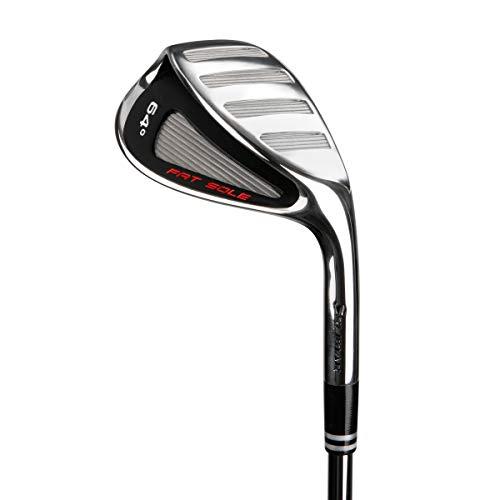
Wide sole or fat sole means more metal along the bottom of the club. It stops the leading edge digging into the ground on a slightly heavy strike — the club skids instead — which is exactly the mistake amateurs make with a lob wedge. It is why the cheapest club on this page is also one of the easiest to hit.
Bounce is the angle between the sole and the ground. More of it skids through sand and soft turf; less of it suits firm ground and tight lies. You almost never know which the recipient needs, which is why no pick on this page is chosen on bounce — if a listing names it we quote it, and otherwise the sole shape is the thing to read.
How we ranked these
Brand credibility and forgiveness first, because a wedge gift goes wrong by being unrecognizable or unhittable rather than by being expensive. Then what the loft actually fills, which is why a gap wedge and a lob wedge both appear rather than three sand wedges. Then value, which is where the three-wedge set earns its place despite the groove caveat.
Every score here is a judgment reasoned from the published listing, never a measurement. How we pick says that in those words, and nothing on this page claims we have swung these clubs.