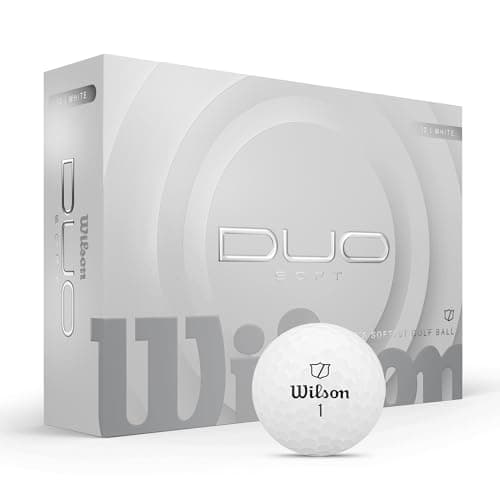
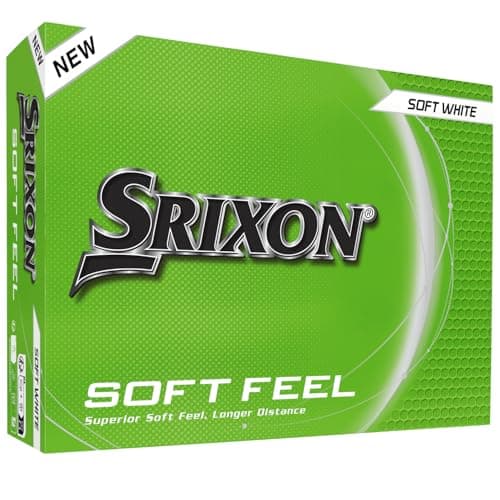
What the Supersoft is, in the words of its own listing
Callaway sells the Supersoft as a 2-piece, low compression ball in a twelve-ball box. Both of those phrases are doing real work and neither is explained on the packaging, so here they are.
Two-piece means the ball is a solid core with a cover over it, and that is all. The expensive balls — covered on our ball page — have three, four or five layers, each tuned to behave differently at different swing speeds, under a soft urethane skin that grips the grooves of a wedge. A two-piece ball has none of that complexity. It is also far more durable, far cheaper, and does not care how cleanly it is struck.
Low compression means the ball is built to squash. Compression is how much a ball deforms when it is hit: a low-compression ball is designed to be compressed by a slower swing, and a high-compression ball needs speed to work and feels like a rock without it. This is the single most useful ball spec for a gift buyer, because it is the one that maps to the recipient rather than to the ball.
The word "soft" on the box refers to feel at impact, not to the build. It is also where the confusion in Callaway's own range comes from: the Supersoft and the Chrome Soft share a word and are not the same kind of ball at all, which is why the site has a page comparing the two.
The three honest reasons to buy something else
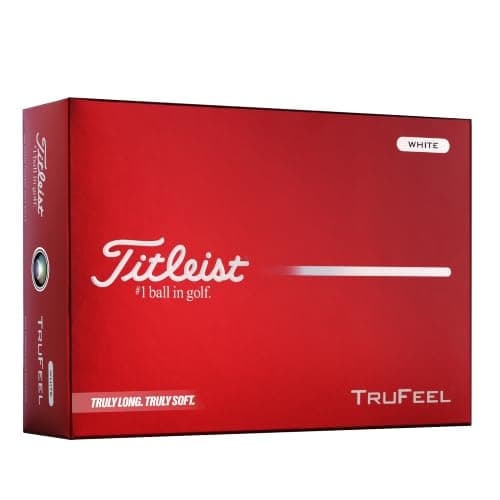
1. Brand loyalty, which is stronger in balls than anywhere in golf. Golfers pick sides on equipment in a way that looks baffling from outside, and the ball is where it shows most. A golfer who has played Titleist for fifteen years will thank you politely and the box will go in the garage. The tells are the driver headcover, the glove, and what is already in the ball pocket. The answer is the TruFeel: the same simple two-piece idea with that script on the box, at well under half what a Pro V1 dozen costs.
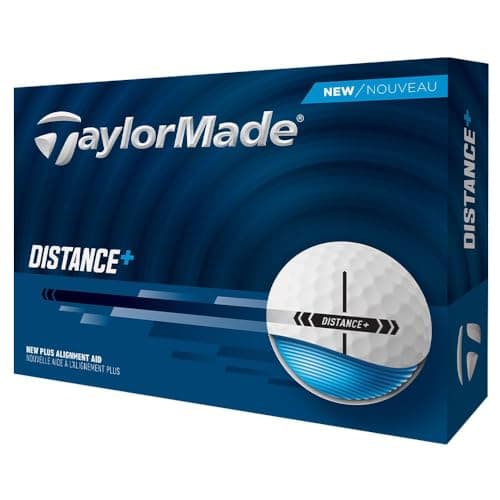
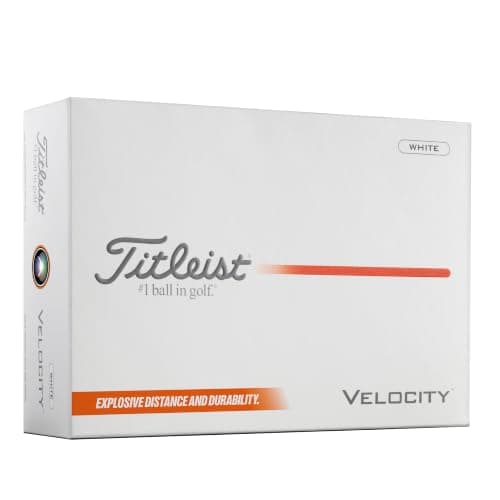
2. They want distance, not feel."Soft" is a feel preference and a substantial number of golfers do not share it — they want the ball to go further and they do not care what it sounds like off the face. For that golfer a firmer distance model is the better gift, and two picks here are built explicitly for it. The disqualifier is specific and worth respecting: do not buy a distance ball for a golfer who talks about their short game, because the firmer cover is the part that stops the ball holding a green.
3. The swing is slower still, or brand new. If the recipient is older, or a beginner, or has been told their swing speed is low, the lowest-compression ball on the page is the right one and it is also the cheapest. A golfer losing six balls a round is better served by a ball they do not mind losing — which is the reverse of how most gift buyers reason about this category. The seniors page covers this in full.
What is not a reason to switch
Price alone, downwards. There is a floor in this category, and below the recognized budget brands sit unbranded dozens that any golfer identifies instantly. A ball nobody has heard of reads as a gift chosen on price, and this site keeps one of them on its ball page specifically to tell you to walk past it.
Price alone, upwards. If the recipient has a slow or moderate swing, a premium multi-layer urethane ball at double the price does not perform better for them. It performs better for a golfer who can compress it. Paying more to get less suited equipment is the most common expensive mistake in this category.
Color. Yellow and matte balls are a visibility preference, available across most of these models, and not a reason to change ball.
How to choose between the five without asking them anything
You know nothing at all.Buy the top pick. It is the Supersoft's nearest equivalent from a ball specialist and it suits the broadest range of golfers.
You have seen a Titleist anywhere near their bag. Buy the TruFeel. Brand loyalty outweighs every specification on this page.
They are new to golf, older, or you know the swing is slow. Buy the very-low-compression budget pick.
They have ever said they want to hit it further. Buy a distance model — and read its skip reason first.
The dozen is part of a bigger gift. Buy whichever recognized brand is cheapest on the day and spend the difference on a glove or a towel. A box of balls plus one useful accessory reads as more thought than a box of balls alone.
One thing to avoid completely
Recovered or "lake" balls sold by the dozen. The price is tempting and the condition cannot be inspected through the packaging, and a ball that has spent a winter in a pond is not the ball it was. For practice they are fine; as a gift they are the one purchase in this category that cannot be defended.
Custom printing is the other trap, for a different reason: it makes the box unreturnable, which is a bad combination with guessing at a brand preference. Our guide to personalized balls covers when it does work, and the short version is: when you are certain about the brand.